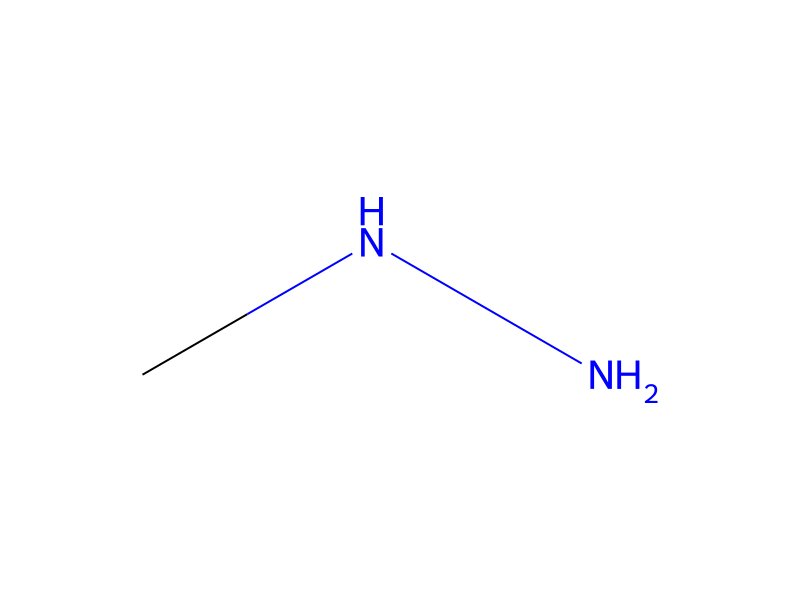
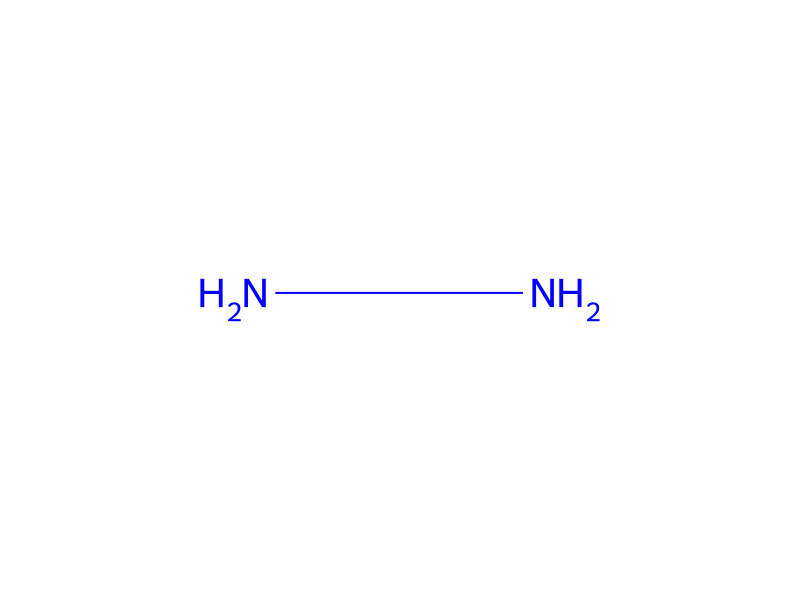
[CH:1]([CH:19]1[CH2:24][C:23](=[O:25])O[C:20]1=[O:21])=[CH:2][CH2:3][CH2:4][CH2:5][CH2:6][CH2:7][CH2:8][CH2:9][CH2:10][CH2:11][CH2:12][CH2:13][CH2:14][CH2:15][CH2:16][CH2:17][CH3:18].[CH3:26][NH:27][NH2:28].[NH2:29][NH2:30]>O.C1(C)C=CC=CC=1>[CH3:26][N:27]([C:20](=[O:21])[CH:19]([CH:1]=[CH:2][CH2:3][CH2:4][CH2:5][CH2:6][CH2:7][CH2:8][CH2:9][CH2:10][CH2:11][CH2:12][CH2:13][CH2:14][CH2:15][CH2:16][CH2:17][CH3:18])[CH2:24][C:23]([NH:29][NH2:30])=[O:25])[NH2:28]Into a 250 mL three-necked round-bottomed flask, equipped with a mechanical stirrer, Dean-Stark water trap, addition funnel, thermocouple to temperature controller, heating mantle, and a nitrogen blanket is charged 75 mL of toluene and 17.1 grams (0.05 mole) of octadecenyl succinic anhydride. In the addition funnel is charged 2.3 grams (0.05 mole) of methylhydrazine. The hydrazine is slowly added dropwise to the stirred reaction media at room temperature over a five minute period. The reaction media showed little exotherm. The temperature is then raised to reflux the toluene to the Dean-Stark trap. The reaction media are refluxed until water is no longer removed and the infrared analysis of a sampled product shows all the anhydride has been converted to succinhydrazide. The reaction media are now cooled to room temperature and placed on a Roto-Evaporator to remove the toluene solvent. The reaction product is now filtered through a bed of Celite filter-aid to yield 18.4 grams of a clear yellow liquid.