Sodium Hydroxide → 1-{2-[(3-Chloropropyl)sulfanyl]-5-nitrophenyl}hydrazine
Reaktionsgleichung

[Cl:1][CH2:2][CH2:3][CH2:4][S:5][C:6]1[CH:11]=[CH:10][C:9]([N+:12]([O-:14])=[O:13])=[CH:8][C:7]=1[NH2:15].[N+:16]([O-])([O-])=O.[Na+].[Sn](Cl)Cl.[OH-].[Na+]>Cl>[Cl:1][CH2:2][CH2:3][CH2:4][S:5][C:6]1[CH:11]=[CH:10][C:9]([N+:12]([O-:14])=[O:13])=[CH:8][C:7]=1[NH:15][NH2:16]Komponenten
Edukt 4

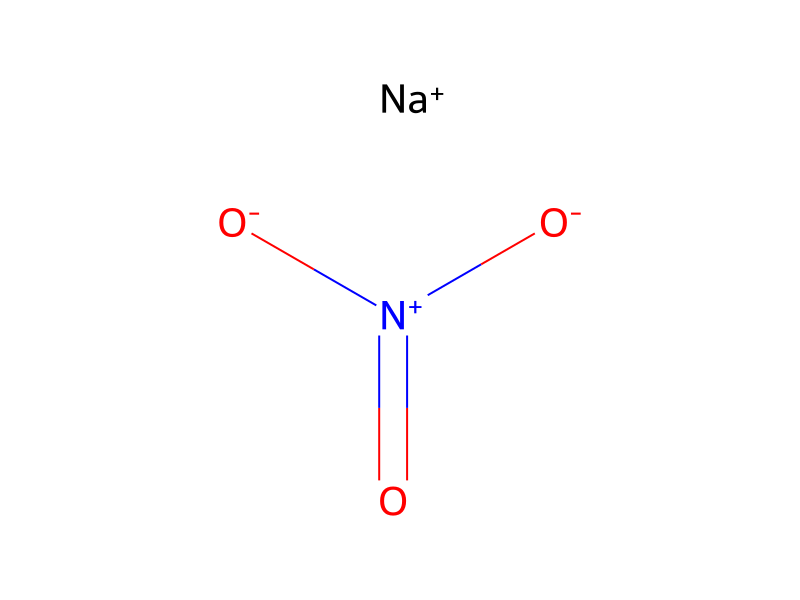
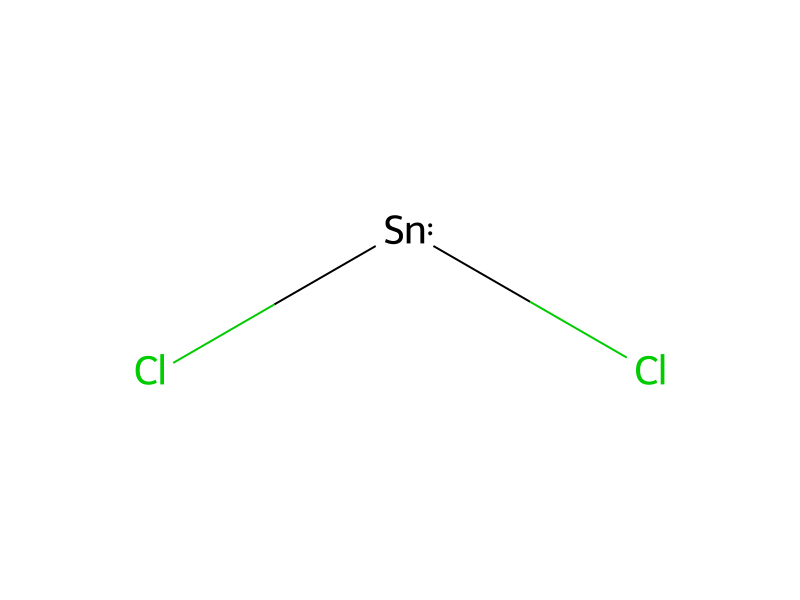

Produkt 1

Reagenzien, Katalysatoren, Lösungsmittel 1

Reaktionsbedingungen
- Temperatur
- 0 °C
Versuchsvorschrift
2-[(3-Chloropropyl)sulfanyl]-5-nitrophenylamine (100 mg, 0.44 mmol) was dissolved in hydrochloric acid (1.8 mL) in an ice bath, 1 M aqueous sodium nitrate (0.5 mL) was added dropwise. This was stirred at 0° C. for 1.5 hours. 0.25 M tin (II) chloride in hydrogen chloride (3.28 mL) was added dropwise. After addition the reaction was allowed to warm to room temperature, and stirred for 1.5 hours. The reaction was basified with 50% sodium hydroxide until pH of 14 and extracted with ethylacetate (3×50 mL). The solution was concentrated to a residue, taken up in minimal chloroform and 1 M hydrogen chloride in ether was added until percipitation. The solution was filtered and dried to give 1-{2-[(3-chloropropyl)sulfanyl]-5-nitrophenyl}hydrazine (100 mg, 85%). 1H NMR (CDCl3, 300 MHz): δ7.94 (d, 1H, J=2.5 Hz), 7.3 (dd, 1H, J=8.5 Hz, J=8.4 Hz ), 7.38 (d, 1H, J=8.4 Hz), 6.28 (s-broad, 1H), 3.73 (s-broad, 2H), 3.63 (t, 2H, J=6.3 Hz ), 3.00 (t, 2H, J=7 Hz), 2.01 (q, 2H, J=6.5 Hz) ppm.
Aufarbeitung
- additionAfter addition the reaction
- temperatureto warm to room temperature
- stirringstirred for 1.5 hours
- extractionextracted with ethylacetate (3×50 mL)
- concentrationThe solution was concentrated to a residue
- addition1 M hydrogen chloride in ether was added until percipitation
- filtrationThe solution was filtered
- customdried
Quellen und Nachweise
- ORD-Eintrag
- ord-e17d9ca2073e4a8cb8f60a4e82bdb9ce
- Quelldatensatz
- uspto-grants-2004_03
- Patentnummer
- US06713471B1
Notizen zur Reaktion
Wird geladen…