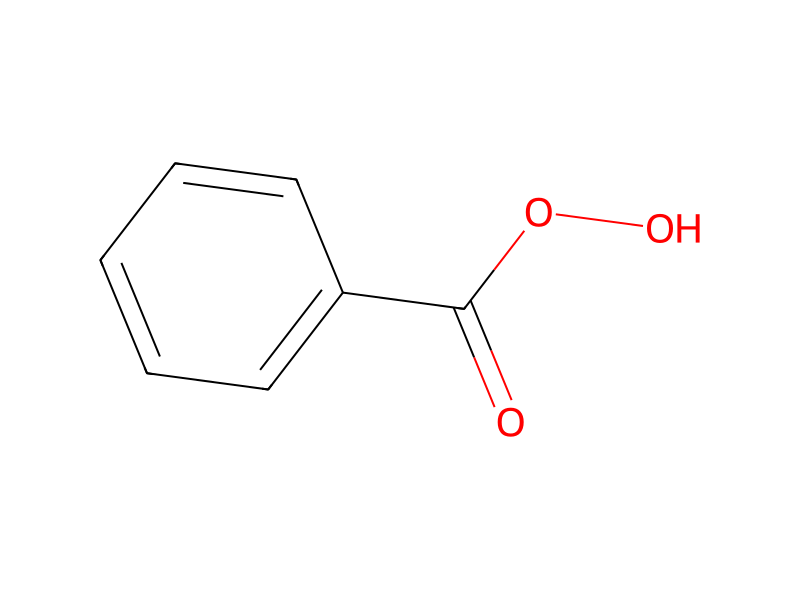
[CH2:1]([O:3][C:4]([O:6][C:7]1[CH:15]=[CH:14][CH:13]=[CH:12][C:8]=1[C:9](Cl)=[O:10])=[O:5])[CH3:2].[C:16]1([C:22]([O:24][OH:25])=[O:23])[CH:21]=[CH:20][CH:19]=[CH:18][CH:17]=1.N1C=CC=CC=1.O>C(Cl)(Cl)Cl.ClCCl>[CH2:1]([O:3][C:4]([O:6][C:7]1[CH:15]=[CH:14][CH:13]=[CH:12][C:8]=1[C:9]([O:25][O:24][C:22](=[O:23])[C:16]1[CH:21]=[CH:20][CH:19]=[CH:18][CH:17]=1)=[O:10])=[O:5])[CH3:2]8.6 g (67 mmol) of 2-(ethoxycarbonyloxy)benzoyl chloride (obtained in Example 1.2) and 10.2 g (44 mmol) of benzenecarboperoxoic acid are dissolved in 43 ml of chloroform. The mixture is cooled to −18° C. and then 2.2 ml (38 mmol) of pyridine in 5 ml of dichloromethane are added dropwise. After stirring at −18° C. for 2 hours, water is added and the mixture is extracted with dichloromethane. The organic phase is dried over magnesium sulphate, filtered and then concentrated. The residue is purified by chromatography on silica gel eluted with a pentane/dichloromethane 5/5 mixture. 11 g of (2-(ethoxycarbonyloxy)benzoyl)benzoyl peroxide are obtained in the form of a beige solid with a yield of 75%.
Wird geladen…