StartseiteMCPWorkbenchSkills
StartseiteWorkbenchBenachrichtigungenMein Bereich
llms.txt · MCP-AnleitungDatenschutz · Nutzungsbedingungen · Supportv1.8.3
  1. Startseite
  2. /Reaktion

Hydrochloric Acid → 1-(6-Acetyl-pyridin-3-yl)-4,4-difluoro-cyclohexanecarbonitrile

HRID 512157
Drucken

Reaktionsgleichung

Reaktionsgleichung von HRID 512157
Br[C:2]1[N:7]=[CH:6][C:5]([C:8]2([C:16]#[N:17])[CH2:13][CH2:12][C:11]([F:15])([F:14])[CH2:10][CH2:9]2)=[CH:4][CH:3]=1.C([Sn](CCCC)(CCCC)[C:23]([O:25]CC)=[CH2:24])CCC.Cl.C(=O)([O-])[O-].[K+].[K+].[F-].[K+]>O1CCOCC1.CO.C(Cl)Cl.[Cu](I)I.Cl[Pd](Cl)([P](C1C=CC=CC=1)(C1C=CC=CC=1)C1C=CC=CC=1)[P](C1C=CC=CC=1)(C1C=CC=CC=1)C1C=CC=CC=1.O.C(#N)C>[C:23]([C:2]1[N:7]=[CH:6][C:5]([C:8]2([C:16]#[N:17])[CH2:13][CH2:12][C:11]([F:15])([F:14])[CH2:10][CH2:9]2)=[CH:4][CH:3]=1)(=[O:25])[CH3:24]
KomponentenReaktionsbedingungenVersuchsvorschriftAufarbeitungQuellen und NachweiseNotizen zur Reaktion

Komponenten

13

Edukt 5

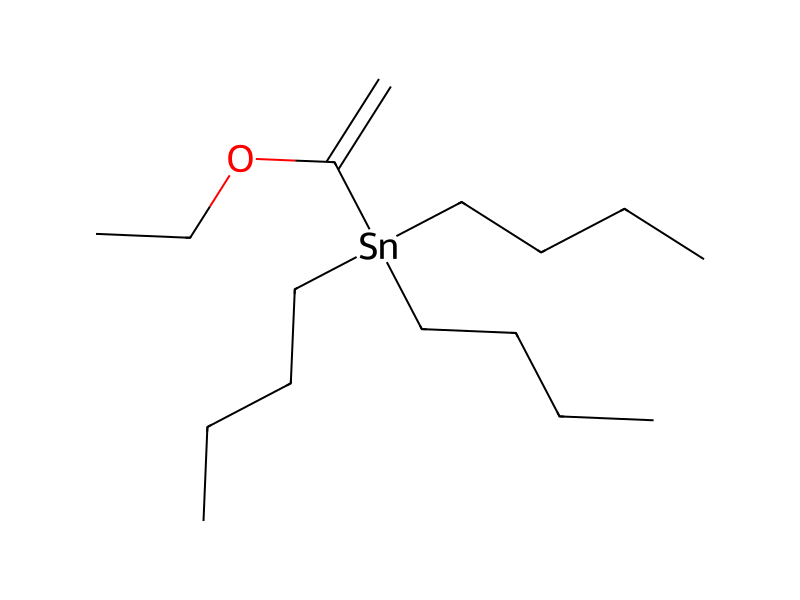
HCID 313Hydrochloric AcidHCID 11430Potassium CarbonateHCID 522689Potassium FluorideHCID 619414Stannane, tributyl(1-ethoxyethenyl)-HCID 867161771-(6-Bromo-pyridin-3-yl)-4,4-difluoro-cyclohexanecarbonitrile

Produkt 1

HCID 86716180
1-(6-Acetyl-pyridin-3-yl)-4,4-difluoro-cyclohexanecarbonitrile
Ausbeute 73,4 %

Reagenzien, Katalysatoren, Lösungsmittel 7

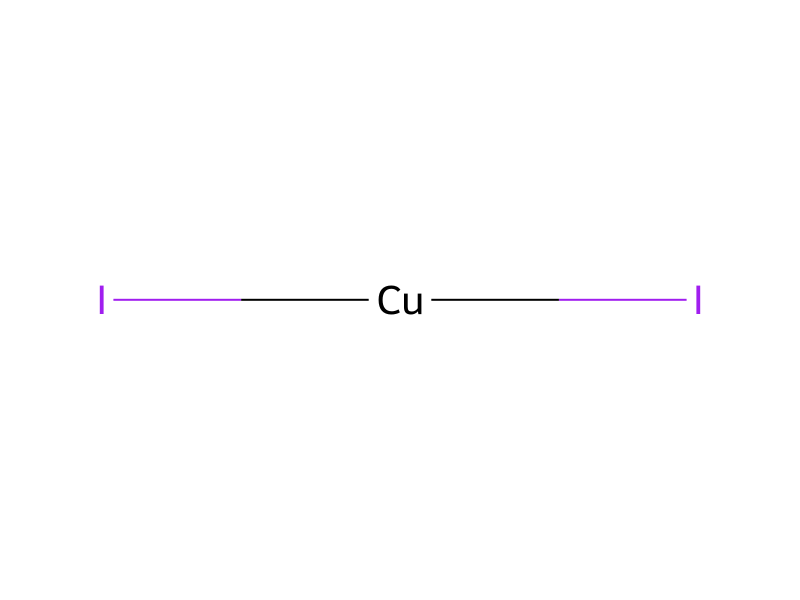
HCID 83717Copper iodideKatalysatorHCID 178418476HCID 178418476, VerbindungKatalysatorHCID 887MethanolLösungsmittelHCID 962WaterLösungsmittelHCID 6342AcetonitrileLösungsmittelHCID 6344DichloromethaneLösungsmittelHCID 312751,4-DioxaneLösungsmittel

Reaktionsbedingungen

Temperatur
80 °C

Versuchsvorschrift

To a microwave vial was added 1-(6-bromo-pyridin-3-yl)-4,4-difluoro-cyclohexanecarbonitrile (276 mg, 0.918 mmol), tributyl(1-ethoxyvinyl)tin (663 mg, 1.84 mmol), copper iodide (26.2 mg, 0.138 mmol), PdCl2(PPh3)2 (32.2 mg, 0.0459 mmol) and acetonitrile (7.3 mL). The vial was purged under nitrogen, capped then heated in an oil bath at 80° C. for 16 hours. After cooling to room temperature the crude reaction mixture was filtered through celite with acetonitrile and the volatiles were then removed under reduced pressure. The residue obtained was dissolved in 1,4-dioxane (20 mL), treated with 1.5; N aqueous HCl (20 mL) and stifled vigorously at room temperature for 1.5 hours. The mixture was then made basic by adding solid potassium carbonate and transferred to a 250-mL separatory funnel with water (50 mL). The aqueous layer was extracted with AcOEt (3×50 mL). The combined organic layers were washed with brine, dried over sodium sulfate, filtered and concentrated under reduced pressure. The residue obtained was treated with a saturated solution of potassium fluoride in methanol (6 mL), stifled for a few minutes, diluted with DCM, adsorbed onto silica gel and purified by silica gel chromatography to afford 1-(6-acetyl-pyridin-3-yl)-4,4-difluoro-cyclohexanecarbonitrile as a white solid (178 mg, 73%). LC-MS (m/z) 265.0 (MH+); tR=1.21. 11-1 NMR (300 MHz, CDCl3) δ ppm 8.86 (d, J=2.0 Hz, 1 H), 8.09 (dd, J=8.3, 0.5 Hz, 1 H), 7.95 (dd, J=8.3, 2.5 Hz, 1 H), 2.73 (s, 3 H), 2.46-2.14 (m, 8 H).


Aufarbeitung

  1. customThe vial was purged under nitrogen
  2. customcapped
  3. temperatureAfter cooling to room temperature the crude
  4. customreaction mixture
  5. filtrationwas filtered through celite with acetonitrile
  6. customthe volatiles were then removed under reduced pressure
  7. customThe residue obtained
  8. additiontreated with 1.5
  9. extractionThe aqueous layer was extracted with AcOEt (3×50 mL)
  10. washThe combined organic layers were washed with brine
  11. dry with materialdried over sodium sulfate
  12. filtrationfiltered
  13. concentrationconcentrated under reduced pressure
  14. customThe residue obtained
  15. waitstifled for a few minutes
  16. custompurified by silica gel chromatography

Quellen und Nachweise

ORD-Eintrag
ord-14fce74cd8ce416c983718ce0e1665e5
Quelldatensatz
uspto-grants-2015_08
DOI
10.6084/m9.figshare.5104873.v1
Patentnummer
US09102591B2

Notizen zur Reaktion

Auf dieser SeiteKomponentenReaktionsbedingungenVersuchsvorschriftAufarbeitungQuellen und NachweiseNotizen zur Reaktion