Reaktionsgleichung

[O:1]=[CH:2][C@@H:3]([C@H:5]([C@@H:7]([CH2:9][OH:10])[OH:8])[OH:6])[OH:4].[OH:11][CH2:12][C:13]([C@H:15]([C@@H:17]([CH2:19][OH:20])[OH:18])[OH:16])=[O:14].O=C[C@H]([C@H]([C@@H](CO)O)O)O.O=C[C@@H]([C@H]([C@@H]([C@@H](CO)O)O)O)O.OCC([C@H]([C@@H]([C@@H](CO)O)O)O)=O>O>[OH:1][CH2:2][C:3]([C@H:5]([C@@H:7]([CH2:9][OH:10])[OH:8])[OH:6])=[O:4].[O:11]=[CH:12][C@H:13]([C@H:15]([C@@H:17]([CH2:19][OH:20])[OH:18])[OH:16])[OH:14]Komponenten
Edukt 5


Produkt 1

Reagenzien, Katalysatoren, Lösungsmittel 1

Versuchsvorschrift
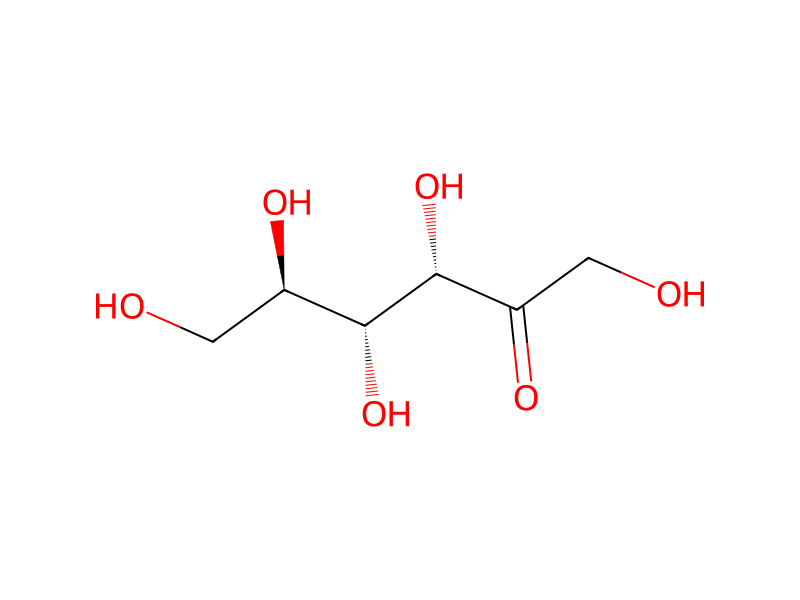
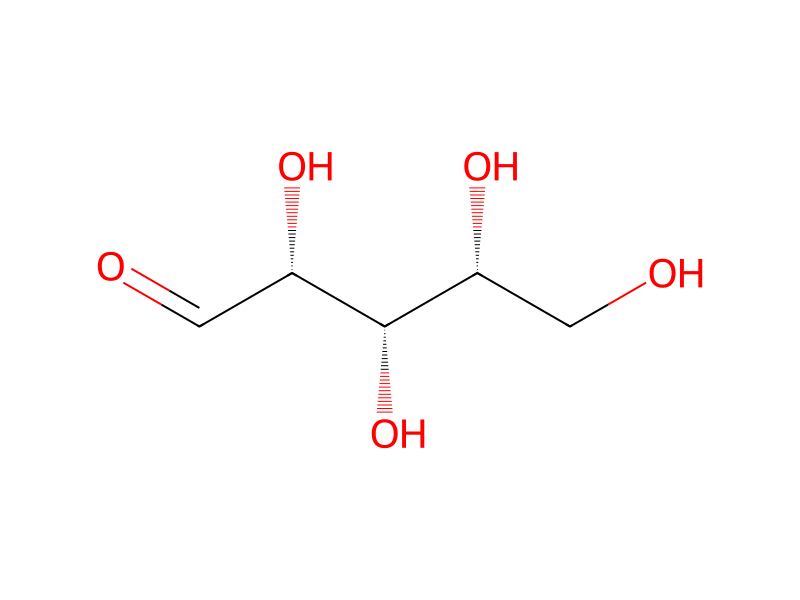
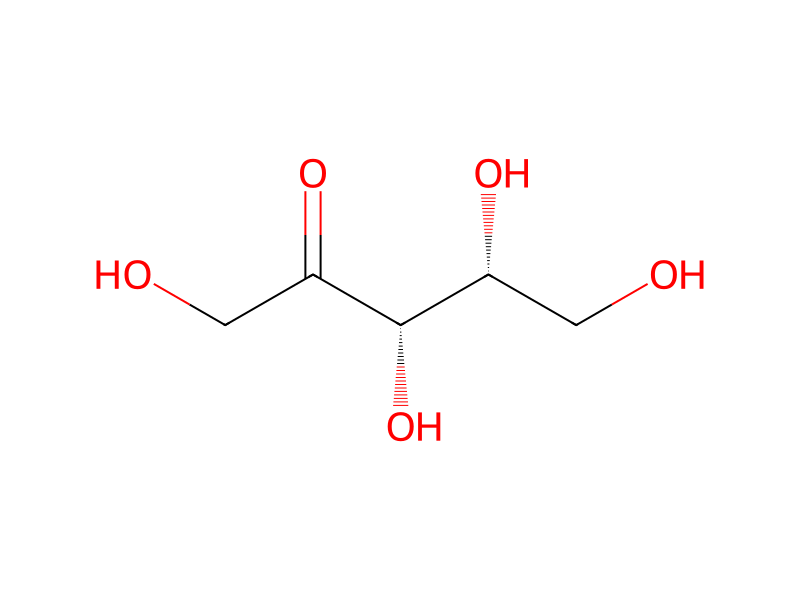
The catalytic performance of the synthesized Sn-Beta was further tested on the isomerization of xylose, a pentose sugar, in water at 100° C. (FIG. 7c). The products of the reaction are xylulose, lyxose and byproducts from degradation reactions and/or polymerization reactions. The isomerization of xylose to xylulose catalyzed by Sn-Beta is analogous to the isomerization of glucose to fructose. Since the HPLC column used in the analysis cannot separate xylulose and lyxose, the total yields of the two isomers were plotted with the reaction time in FIG. 7c. The isomerization reaction reached equilibrium at 0.5 h with a maximum xylulose+lyxose yield of 35% at xylose conversion of 61%. The xylulose+lyxose yield decreased with time as a result of the side reactions consuming xylose, xylulose and lyxose.
Aufarbeitung
- customat 100° C.
- customfrom degradation reactions and/or polymerization reactions
- customcannot separate xylulose and lyxose
- customthe total yields of the two isomers
- customThe isomerization reaction
- customat 0.5 h
Quellen und Nachweise
- ORD-Eintrag
- ord-f7fa420009a94a13b8fe22062800686b
- Quelldatensatz
- uspto-grants-2015_08
- Patentnummer
- US09108190B1
Verknüpfte Notizen
Wird geladen…