StartseiteMCPWorkbenchSkills
StartseiteWorkbenchBenachrichtigungenMein Bereich
llms.txt · MCP-AnleitungDatenschutz · Nutzungsbedingungen · Supportv1.8.3
  1. Startseite
  2. /Reaktion

Hydrochloric Acid → 7-Bromo-2,3-dihydro-1H-pyrrolo[1,2-a]indol-1-one

HRID 515655
Drucken

Reaktionsgleichung

Reaktionsgleichung von HRID 515655
[Br:1][C:2]1[CH:3]=[C:4]2[C:8](=[CH:9][CH:10]=1)[NH:7][C:6]([C:11]([O:13]CC)=O)=[CH:5]2.[H-].[Na+].[C:18](OCCCC)(=O)[CH:19]=C.Cl>C1(C)C=CC=CC=1>[Br:1][C:2]1[CH:10]=[CH:9][C:8]2[N:7]3[CH2:18][CH2:19][C:11](=[O:13])[C:6]3=[CH:5][C:4]=2[CH:3]=1
KomponentenReaktionsbedingungenVersuchsvorschriftAufarbeitungQuellen und NachweiseNotizen zur Reaktion

Komponenten

6

Edukt 4

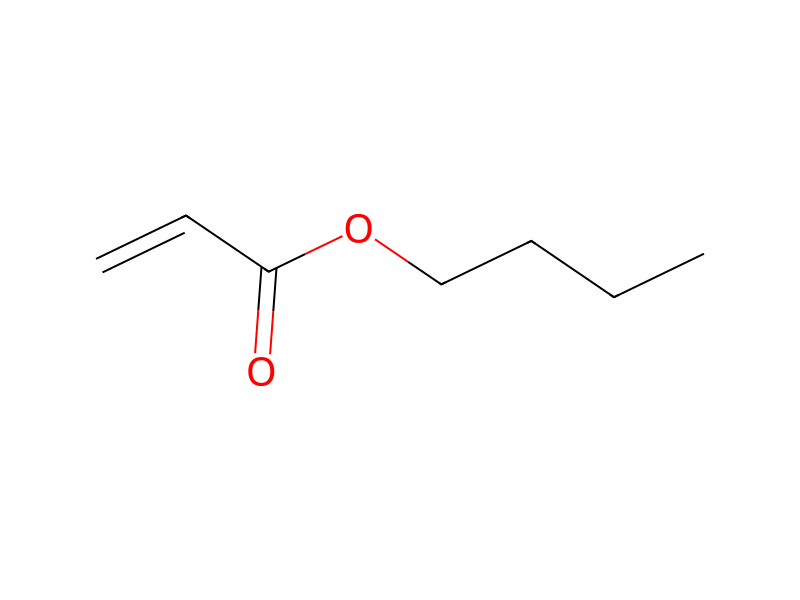
HCID 313Hydrochloric AcidHCID 8846Butyl Acrylate4×HCID 24758Sodium hydride2×HCID 259091Ethyl 5-Bromoindole-2-carboxylate

Produkt 1

HCID 582215357-Bromo-2,3-dihydro-1H-pyrrolo[1,2-a]indol-1-one

Reagenzien, Katalysatoren, Lösungsmittel 1

HCID 1140
Toluene
Lösungsmittel

Reaktionsbedingungen

Temperatur
110 °C

Versuchsvorschrift

To a solution of ethyl 5-bromo-1H-indole-2-carboxylate (30 g, 112 mmol) in toluene (500 mL) was added portionwise sodium hydride (60% dispersion in mineral oil, 9.40 g, 235 mmol). Vigorous gas evolution was observed. The resulting white suspension was heated to 110° C. Butyl acrylate (35.1 mL, 246 mmol) was added dropwise (using a syring pump) over 24 h while stirring vigorously at an internal temperature of 110° C. Additional butyl acrylate (10 mL) was added in one portion and stirring was continued at 110° C. for 4 h followed by additional sodium hydride (60% dispersion in mineral oil, 5 g) and butyl acrylate (10 mL). 4 h later, butyl acrylate (6 mL) was added. Stirring was continued at 110° C. for a total of 48 h. The reaction was cooled in an ice-bath and 2 M HCl (400 mL) was added carefully. The layers were separated and the aqueous layer was extracted with dichloromethane (2×200 mL). The combined organic extracts were washed with brine, dried over MgSO4, filtered and concentrated. The resulting orange residue was dissolved in acetic acid (900 mL) and water (100 mL). The orange solution was refluxed 16 h before the solvents were removed under vacuum. To the residue was added dichloromethane (300 mL). The resulting precipitate was collected by filtration and rinsed twice with dichloromethane to provide the title compound. LCMS m/z=250.2 [M+H]+; 1H NMR (400 MHz, DMSO-d6) δ ppm 3.20 (t, J=6.1 Hz, 2H), 4.46 (t, J=6.1 Hz, 2H), 6.92 (s, 1H), 7.46 (dd, J=8.8, 1.8 Hz, 1H), 7.63 (d, J=8.8 Hz, 1H), 7.98 (d, J=2.0 Hz, 1H).


Aufarbeitung

  1. customover 24 h
  2. stirringstirring
  3. stirringStirring
  4. customwas continued at 110° C. for a total of 48 h
  5. temperatureThe reaction was cooled in an ice-bath
  6. customThe layers were separated
  7. extractionthe aqueous layer was extracted with dichloromethane (2×200 mL)
  8. washThe combined organic extracts were washed with brine
  9. dry with materialdried over MgSO4
  10. filtrationfiltered
  11. concentrationconcentrated
  12. dissolutionThe resulting orange residue was dissolved in acetic acid (900 mL)
  13. temperatureThe orange solution was refluxed 16 h before the solvents
  14. customwere removed under vacuum
  15. additionTo the residue was added dichloromethane (300 mL)
  16. filtrationThe resulting precipitate was collected by filtration
  17. washrinsed twice with dichloromethane

Quellen und Nachweise

ORD-Eintrag
ord-bd4f2863b08d412e8f48d269f0ebecf7
Quelldatensatz
uspto-grants-2015_08
DOI
10.6084/m9.figshare.5104873.v1
Patentnummer
US09108969B2

Notizen zur Reaktion

Auf dieser SeiteKomponentenReaktionsbedingungenVersuchsvorschriftAufarbeitungQuellen und NachweiseNotizen zur Reaktion