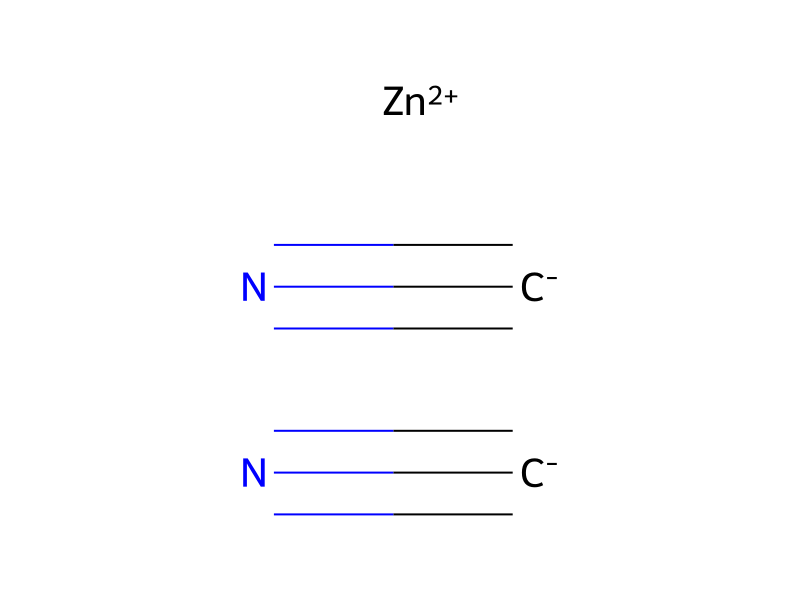
[Br:1][C:2]1[C:14]2[C:13]3[C:8](=[CH:9][C:10]([C:15]([OH:18])([CH3:17])[CH3:16])=[CH:11][CH:12]=3)[NH:7][C:6]=2[C:5]([C:19]([NH2:21])=[O:20])=[CH:4][C:3]=1I.[CH3:23][N:24](C=O)C>CCOC(C)=O.[C-]#N.[Zn+2].[C-]#N.C1C=CC([P]([Pd]([P](C2C=CC=CC=2)(C2C=CC=CC=2)C2C=CC=CC=2)([P](C2C=CC=CC=2)(C2C=CC=CC=2)C2C=CC=CC=2)[P](C2C=CC=CC=2)(C2C=CC=CC=2)C2C=CC=CC=2)(C2C=CC=CC=2)C2C=CC=CC=2)=CC=1>[Br:1][C:2]1[C:14]2[C:13]3[C:8](=[CH:9][C:10]([C:15]([OH:18])([CH3:17])[CH3:16])=[CH:11][CH:12]=3)[NH:7][C:6]=2[C:5]([C:19]([NH2:21])=[O:20])=[CH:4][C:3]=1[C:23]#[N:24]A mixture of 4-bromo-7-(2-hydroxypropan-2-yl)-3-iodo-9H -carbazole-1-carboxamide (0.609 g, 1.29 mmol) and zinc cyanide (0.076 g, 0.644 mmol) in DMF (7 mL) was subjected to three evacuate-fill cycles with nitrogen. The mixture was treated with tetrakis(triphenylphosphine)palladium (0.074 g, 0.064 mmol) and heated overnight at 95° C. The cooled mixture was diluted with EtOAc, washed twice with 10% aqueous LiCl, then with brine. The aqueous layers were extracted with EtOAc. The combined organic layers were dried and concentrated. The residue was triturated and sonicated with DCM and the precipitate was collected by filtration to give 4-bromo-3-cyano-7-(2-hydroxypropan-2-yl)-9H-carbazole-1-carboxamide as a pale yellow solid (0.400 g, 83% yield). Mass spectrum m/z 372, 374 (M+H—H2O)+. 1H NMR (500 MHz, DMSO-d6) δ 12.12 (s, 1H), 8.55 (d, J=8.6 Hz, 1H), 8.38 (s, 1H), 8.31 (br. s., 1H), 8.03 (s, 1H), 7.74 (br. s., 1H), 7.49 (dd, J=8.6, 1.1 Hz, 1H), and 1.52 (s, 6H).