StartseiteMCPWorkbenchSkills
StartseiteWorkbenchBenachrichtigungenMein Bereich
llms.txt · MCP-AnleitungDatenschutz · Nutzungsbedingungen · Supportv1.8.3
  1. Startseite
  2. /Reaktion

Potassium Carbonate → 5-{[(3S)-1-(cyclopropylcarbonyl)-3-pyrrolidinyl]methyl}-4-[2-fluoro-4-(6-fluoro-2-naphthalenyl)phenyl]-2,4-dihydro-3H-1,2,4-triazol-3-one

HRID 525263
Drucken

Reaktionsgleichung

Reaktionsgleichung von HRID 525263
Br[C:2]1[CH:7]=[CH:6][C:5]([N:8]2[C:12]([CH2:13][C@@H:14]3[CH2:18][CH2:17][N:16]([C:19]([CH:21]4[CH2:23][CH2:22]4)=[O:20])[CH2:15]3)=[N:11][NH:10][C:9]2=[O:24])=[C:4]([F:25])[CH:3]=1.B1(B2OC(C)(C)C(C)(C)O2)OC(C)(C)C(C)(C)O1.C([O-])(=O)C.[K+].Br[C:50]1[CH:59]=[CH:58][C:57]2[C:52](=[CH:53][CH:54]=[C:55]([F:60])[CH:56]=2)[CH:51]=1.C(=O)([O-])[O-].[K+].[K+]>C1C=CC(P(C2C=CC=CC=2)[C-]2C=CC=C2)=CC=1.C1C=CC(P(C2C=CC=CC=2)[C-]2C=CC=C2)=CC=1.Cl[Pd]Cl.[Fe+2].ClCCl.O1CCOCC1>[CH:21]1([C:19]([N:16]2[CH2:17][CH2:18][C@@H:14]([CH2:13][C:12]3[N:8]([C:5]4[CH:6]=[CH:7][C:2]([C:50]5[CH:59]=[CH:58][C:57]6[C:52](=[CH:53][CH:54]=[C:55]([F:60])[CH:56]=6)[CH:51]=5)=[CH:3][C:4]=4[F:25])[C:9](=[O:24])[NH:10][N:11]=3)[CH2:15]2)=[O:20])[CH2:23][CH2:22]1

KomponentenReaktionsbedingungenVersuchsvorschriftAufarbeitungQuellen und NachweiseNotizen zur Reaktion

Komponenten

8

Edukt 5

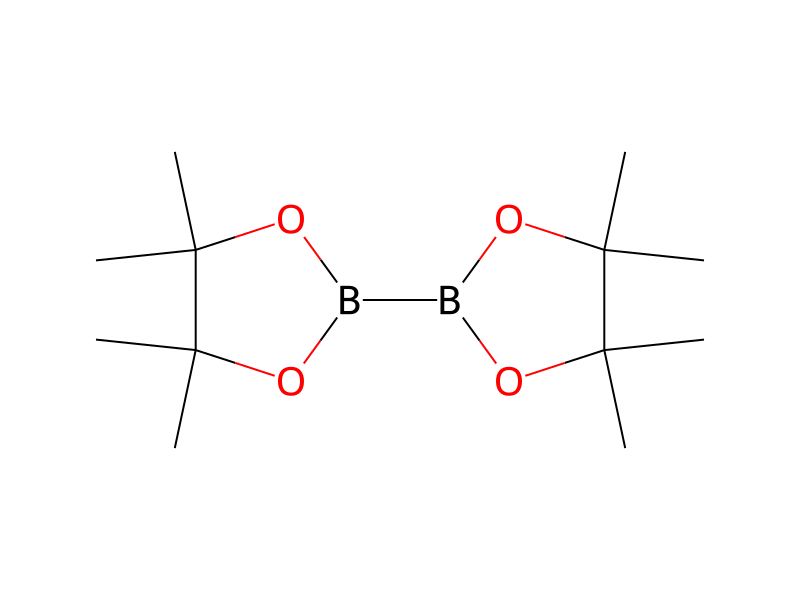
HCID 11430Potassium CarbonateHCID 3453972-Bromo-6-fluoronaphthaleneHCID 517044Potassium AcetateHCID 2733548Bis(pinacolato)diboraneHCID 673758864-(4-bromo-2-fluorophenyl)-5-{[(3S)-1-(cyclopropylcarbonyl)-3-pyrrolidinyl]methyl}-2,4-dihydro-3H-1,2,4-triazol-3-one

Produkt 1

HCID 68261488
5-{[(3S)-1-(cyclopropylcarbonyl)-3-pyrrolidinyl]methyl}-4-[2-fluoro-4-(6-fluoro-2-naphthalenyl)phenyl]-2,4-dihydro-3H-1,2,4-triazol-3-one

Reagenzien, Katalysatoren, Lösungsmittel 2

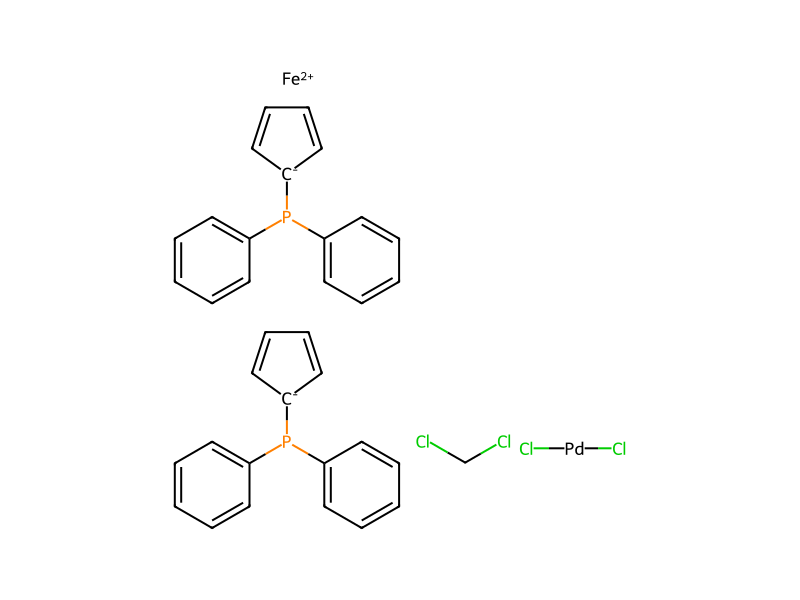
HCID 178418807HCID 178418807, VerbindungKatalysatorHCID 312751,4-DioxaneLösungsmittel

Reaktionsbedingungen

Temperatur
100 °C

Versuchsvorschrift

Into a 5 mL microwaveable vial was placed 4-(4-bromo-2-fluorophenyl)-5-{[(3S)-1-(cyclopropylcarbonyl)-3-pyrrolidinyl]methyl}-2,4-dihydro-3H-1,2,4-triazol-3-one (0.244 mmol), bis(pinacolato)diboron (0.244 mmol), potassium acetate (0.977 mmol), dichloro[1,1′-bis(diphenylphosphino)ferrocene]palladium(II)-dichloromethane adduct (0.024 mmol), and 1,4-dioxane (2 mL). The vial was capped and the contents were purged with nitrogen. The solution stirred at 100° C. for 16 h. LCMS analysis displayed boronic ester intermediate present (boronic ester cleavage to acid also observed on LCMS) as well as a small amount of bromide starting material. The reaction was cooled to room temperature. Added to the vial was 2-bromo-6-fluoronaphthalene (0.244 mmol) and 2M aq potassium carbonate (1 mL). The vial was capped, purged with nitrogen, and stirred at 100° C. for 1 h. The solution was cooled to room temperature, whereby the dioxane layer separated from the aqueous layer. The dioxane layer was removed via pipette and was passed through a plug of celite and sodium sulfate. The plug was washed with dioxane (2 mL). All dioxane filtrates were combined and concentrated in vacuo. Reverse phase HPLC (30-80% acetonitrile/water+0.1% NH4OH) was utilized in purifying the title compound (21 mg, 17%). MS(ES)+ m/e 475.1 [M+H]+.

Aufarbeitung

  1. customThe vial was capped
  2. customthe contents were purged with nitrogen
  3. temperatureThe reaction was cooled to room temperature
  4. additionAdded to the vial
  5. customThe vial was capped
  6. custompurged with nitrogen
  7. stirringstirred at 100° C. for 1 h
  8. temperatureThe solution was cooled to room temperature
  9. customwhereby the dioxane layer separated from the aqueous layer
  10. customThe dioxane layer was removed via pipette
  11. washThe plug was washed with dioxane (2 mL)
  12. concentrationconcentrated in vacuo
  13. customin purifying the title compound (21 mg, 17%)

Quellen und Nachweise

ORD-Eintrag
ord-39da47c26d1540b49de45dd0ac9c59de
Quelldatensatz
uspto-grants-2016_05
DOI
10.6084/m9.figshare.5104873.v1
Patentnummer
US09340529B2

Notizen zur Reaktion

Auf dieser SeiteKomponentenReaktionsbedingungenVersuchsvorschriftAufarbeitungQuellen und NachweiseNotizen zur Reaktion