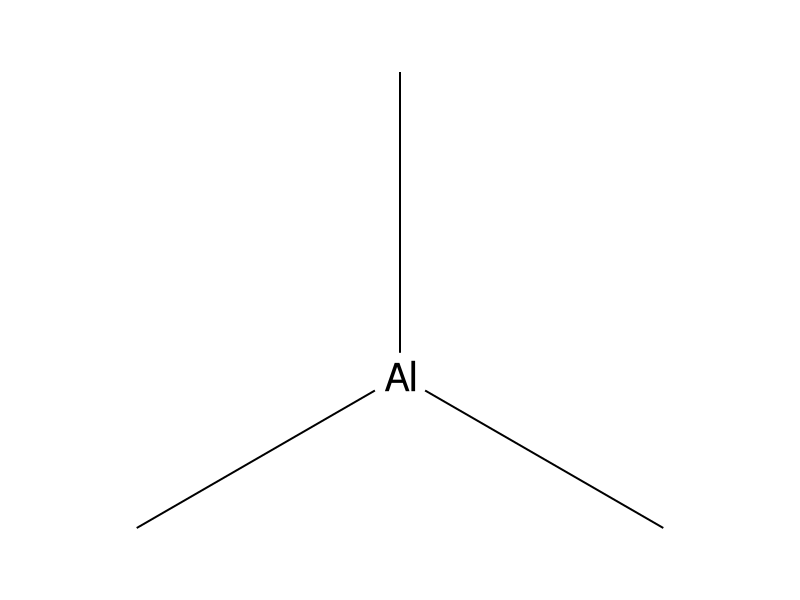
C[Al](C)C.[Br:5][C:6]1[CH:12]=[C:11]([F:13])[CH:10]=[CH:9][C:7]=1[NH2:8].[N:14]1([C:24]([O:26][C:27]([CH3:30])([CH3:29])[CH3:28])=[O:25])[CH2:19][CH2:18][CH:17]=[C:16]([C:20](OC)=[O:21])[CH2:15]1>C(Cl)Cl>[Br:5][C:6]1[CH:12]=[C:11]([F:13])[CH:10]=[CH:9][C:7]=1[NH:8][C:20]([C:16]1[CH2:15][N:14]([C:24]([O:26][C:27]([CH3:30])([CH3:29])[CH3:28])=[O:25])[CH2:19][CH2:18][CH:17]=1)=[O:21]Trimethylaluminium (2.0 M in hexanes, 3.98 mL, 7.96 mmol) was added dropwise to a solution of 2-bromo-4-fluoroaniline (1.26 g, 6.63 mmol) in DCM (15 mL) under N2. After gas evolution ceased, 1-tert-butyl 3-methyl 5,6-dihydropyridine-1,3(2H)-dicarboxylate (1.60 g, 6.63 mmol) in DCM (10 mL) was added and the resulting mixture was refluxed overnight. After cooling to about 0° C., the reaction was quenched by the addition of saturated aqueous NaHCO3 solution. The organic layer was separated. The aqueous phase was extracted with DCM. The combined organic layers were washed with brine, dried and concentrated. The residue was purified by column chromatography (hexanes:EtOAc, 6:1) to give tert-butyl 3-(2-bromo-4-fluorophenylcarbamoyl)-5,6-dihydropyridine-1(2H)-carboxylate (1.33 g, 50%) as a yellow oil. 1H NMR (CDCl3, 400 MHz) δ 8.36 (dd, J=9.2, 6.0 Hz, 1H), 7.87 (br s, 1H), 7.32 (dd, J=7.6, 2.8 Hz, 1H), 7.07 (ddd, J=9.2, 6.0, 2.8 Hz, 1H), 6.82 (br s, 1H), 4.27 (s, 2H), 3.54 (t, J=6.0 Hz, 2H), 2.38 (m, 2H), 1.49 (s, 9H).