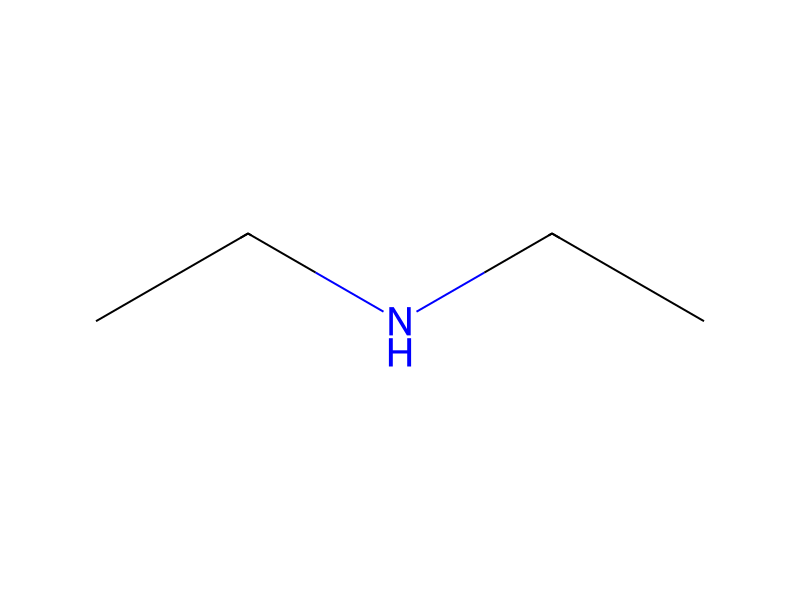
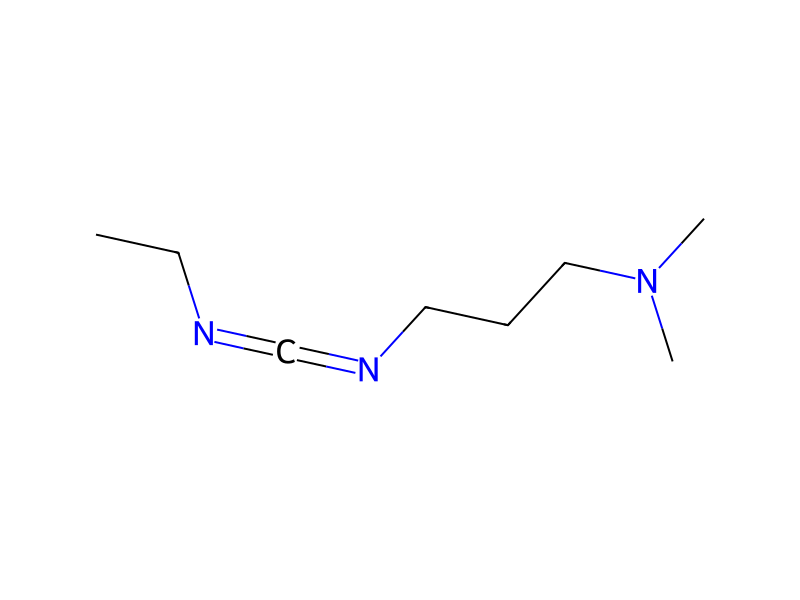
[Br:1][C:2]1[CH:3]=[CH:4][C:5]([O:11][C:12]2[CH:13]=[N:14][C:15]([Cl:18])=[CH:16][CH:17]=2)=[C:6]([CH:10]=1)[C:7]([OH:9])=O.[CH2:19]([NH:21][CH2:22][CH3:23])[CH3:20].C1C=CC2N(O)N=NC=2C=1.CCN(C(C)C)C(C)C.CCN=C=NCCCN(C)C>C(Cl)Cl>[Br:1][C:2]1[CH:3]=[CH:4][C:5]([O:11][C:12]2[CH:13]=[N:14][C:15]([Cl:18])=[CH:16][CH:17]=2)=[C:6]([CH:10]=1)[C:7]([N:21]([CH2:22][CH3:23])[CH2:19][CH3:20])=[O:9]A mixture of 5-bromo-2-(6-chloropyridin-3-yloxy)benzoic acid (1.28 kg, 4.44 mol), diethylamine (461 mL, 4.44 mol), HOBT (600 g, 4.44 mol), DIPEA (1.547 L, 8.88 mol) in anhydrous DCM (8 L) was cooled to 0° C. EDCI (851.2 g, 4.44 mol) was added to the reaction mixture and it was stirred at 0° C. for 30 minutes and then at RT overnight. The reaction mixture was sequentially washed with aqueous NaHCO3, brine and water before being dried over MgSO4. Filtration and concentrated under reduced pressure provided a residue that was purified by silica gel chromatography (5-20% EtOAc in hexane) to provide 950 g of 5-bromo-2-(6-chloropyridin-3-yloxy)-N,N-diethylbenzamide.