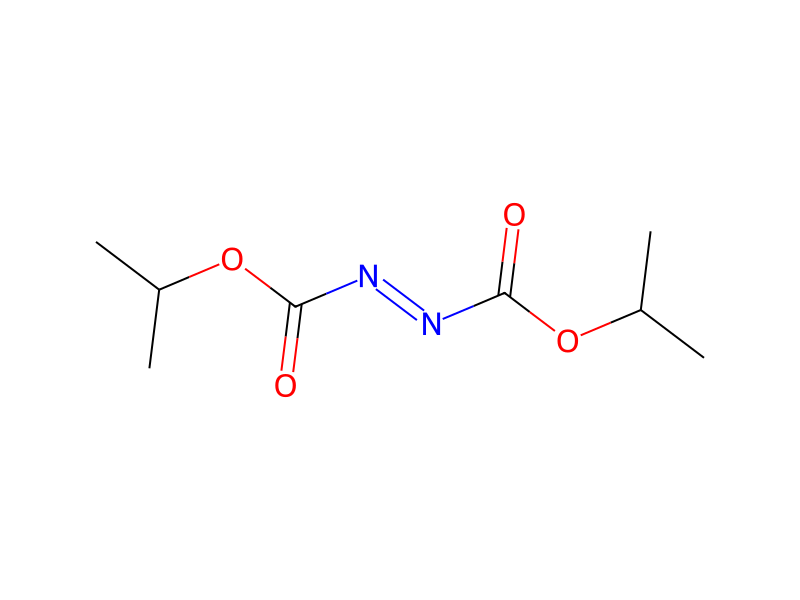
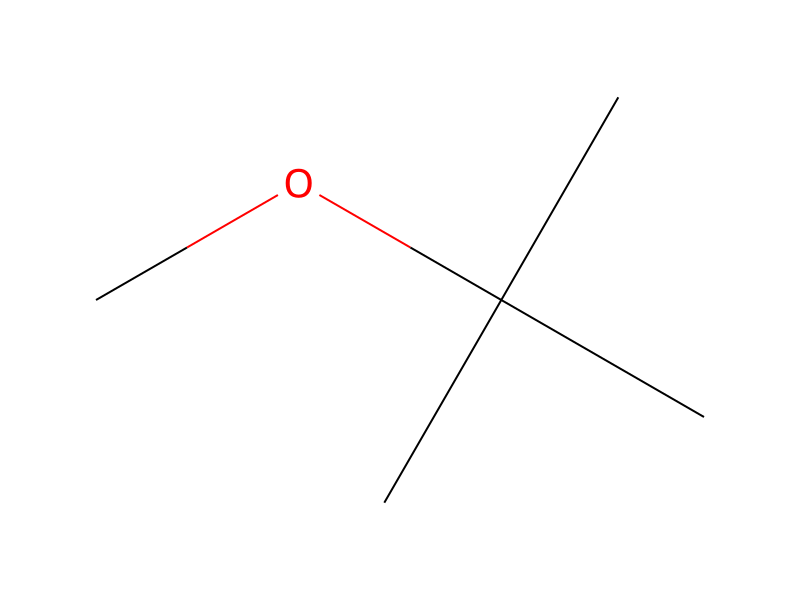
[Cl:1][C:2]1[CH:7]=[CH:6][C:5]([C@@H:8]([OH:21])[CH2:9][N:10]([CH2:18][CH2:19]O)[C:11](=[O:17])[O:12][C:13]([CH3:16])([CH3:15])[CH3:14])=[CH:4][C:3]=1[F:22].C1(P(C2C=CC=CC=2)C2C=CC=CC=2)C=CC=CC=1.N(C(OC(C)C)=O)=NC(OC(C)C)=O>COC(C)(C)C>[Cl:1][C:2]1[CH:7]=[CH:6][C:5]([C@H:8]2[O:21][CH2:19][CH2:18][N:10]([C:11]([O:12][C:13]([CH3:16])([CH3:15])[CH3:14])=[O:17])[CH2:9]2)=[CH:4][C:3]=1[F:22](R)-tert-butyl 2-(4-chloro-3-fluorophenyl)-2-hydroxyethyl(2-hydroxyethyl)carbamate (2.5 g, 7.49 mmol) was dissolved in methyl-t-butylether (20 mL) and triphenylphosphine (2.36 g, 8.99 mmol) was added. To this mixture was added diisopropyl azodicarboxylate (1.8 mL, 8.99 mmol) by dropwise addition. The solution was stirred at room temperature for 1 h. The white solid was filtered off and the filtrate was concentrated. The residue was purified by ISCO flash column chromatography (220 g silica gel, 0% to 20% ethyl acetate in hexanes) to afford (R)-tert-butyl 2-(4-chloro-3-fluorophenyl)morpholine-4-carboxylate as a white solid (1.02 g). 1H NMR (300 MHz, CHLOROFORM-d) δ ppm 1.49 (s, 9H) 2.75 (t, J=11.71 Hz, 1H) 2.94-3.11 (m, 1H) 3.67 (td, J=11.71, 3.02 Hz, 1H) 3.86-4.17 (m, 3H) 4.40 (dd, J=10.58, 2.64 Hz, 1H) 7.09 (dd, J=8.31, 1.51 Hz, 1H) 7.21 (dd, J=9.82, 1.89 Hz, 1H) 7.38 (t, J=7.93 Hz, 1H).