Reaktionsgleichung

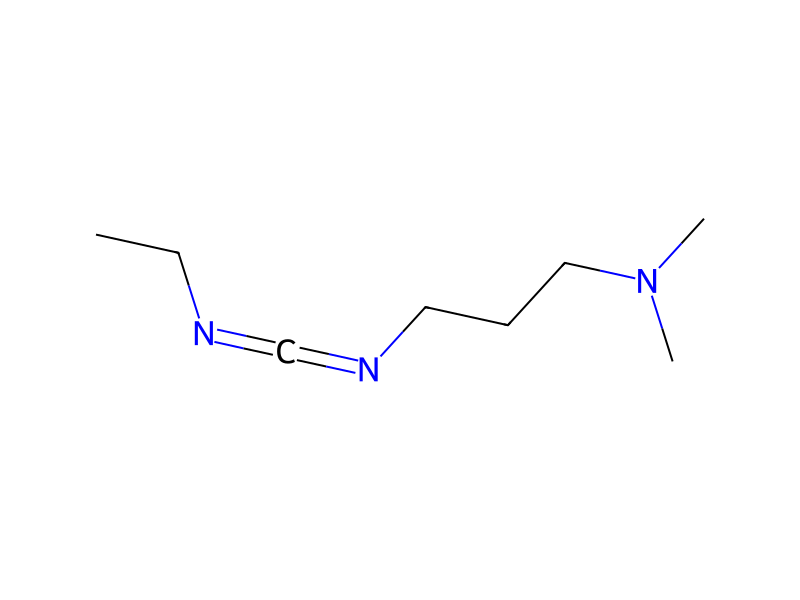
[Br:1][C:2]1[CH:7]=[C:6]([C:8]([F:11])([F:10])[F:9])[CH:5]=[C:4]([NH2:12])[C:3]=1[NH:13][CH3:14].[CH2:15]([S:17][C:18]1[CH:26]=[CH:25][CH:24]=[CH:23][C:19]=1[C:20](O)=O)[CH3:16].CCN=C=NCCCN(C)C.N1C=CC=CC=1>O>[Br:1][C:2]1[C:3]2[N:13]([CH3:14])[C:20]([C:19]3[CH:23]=[CH:24][CH:25]=[CH:26][C:18]=3[S:17][CH2:15][CH3:16])=[N:12][C:4]=2[CH:5]=[C:6]([C:8]([F:9])([F:10])[F:11])[CH:7]=1Komponenten
6
Edukt 4



Produkt 1

Reagenzien, Katalysatoren, Lösungsmittel 1

Reaktionsbedingungen
- Temperatur
- 115 °C
Versuchsvorschrift
A mixture of 3-bromo-N2-methyl-5-trifluoromethylbenzene-1,2-diamine (2.22 g), 2-ethylsulfanylbenzoic acid (1.80 g), WSC (1.40 g), and pyridine (10 ml) was stirred under reflux at 115° C. for 6 hours. Into the reaction mixture cooled to room temperature, water was poured, and extracted with ethyl acetate. The organic layer was dried over magnesium sulfate, and concentrated under reduced pressure. The resulting residue was subjected to silica gel column chromatography to give 1.48 g of 7-bromo-2-(2-ethylsulfanylphenyl)-1-methyl-5-trifluoromethyl-1H-benzimidazole (hereinafter referred to as Present Compound 74).
Aufarbeitung
- temperatureInto the reaction mixture cooled to room temperature
- extractionextracted with ethyl acetate
- dry with materialThe organic layer was dried over magnesium sulfate
- concentrationconcentrated under reduced pressure
Quellen und Nachweise
- ORD-Eintrag
- ord-e941f0879f0546ac9e7860b8073f78cb
- Quelldatensatz
- uspto-grants-2014_10
- Patentnummer
- US08853238B2
Verknüpfte Notizen
Wird geladen…