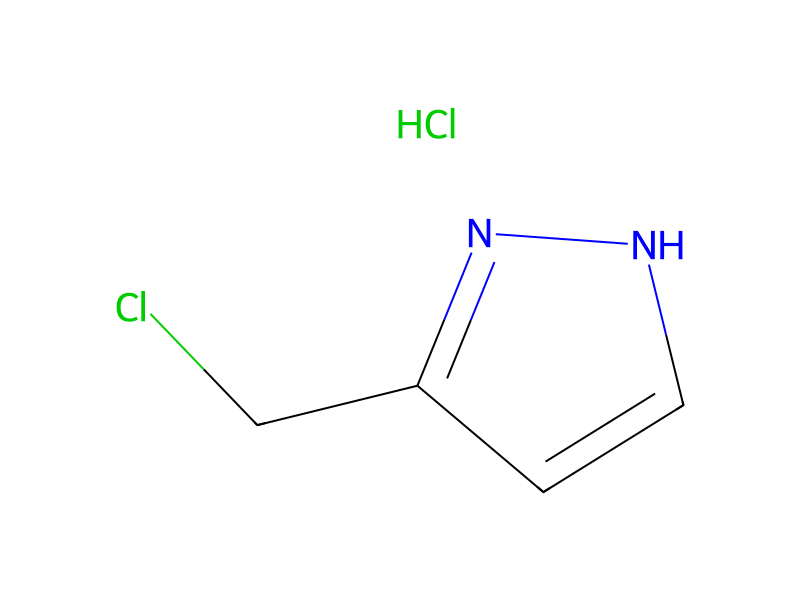
[CH3:1][N:2]([CH3:17])[C:3]1[C:8]([NH:9][C:10](=[O:13])[CH2:11][Cl:12])=[C:7]([O:14][CH2:15][CH3:16])[N:6]=[CH:5][N:4]=1.Cl.[NH:19]1[CH:23]=[CH:22][C:21]([CH2:24]Cl)=[N:20]1.[OH-].[Na+]>[Cl-].C([N+](CC)(CC)CC)C1C=CC=CC=1.C(Cl)Cl.O>[NH:19]1[CH:23]=[CH:22][C:21]([CH2:24][N:9]([C:8]2[C:3]([N:2]([CH3:17])[CH3:1])=[N:4][CH:5]=[N:6][C:7]=2[O:14][CH2:15][CH3:16])[C:10](=[O:13])[CH2:11][Cl:12])=[N:20]1To a mixture of 12.9 g (0.05 mol) N-(4-dimethylamino-6-ethoxypyrimidin-5-yl)-chloroacetamide and 2 g benzyltriethylammoniumchloride in 150 g of CH2Cl2 are added 8.4 g (0.055 mol) of 1-pyrazolylmethylchloride-hydrochloride. To this mixture are quickly added 25 ml of 40% NaOH, whereby the temperature rises from 18° to 32°. The mixture is then stirred for 2 hours and diluted with water. The organic phase is separated off and dried over Na2SO4. The dried solution is evaporated to give an orange oil that is chromatographed on silica gel with the aid of ethylacetate. The thus obtained yellow oil is dissolved in diethylether and crystallised in a deep-freezer. The title compound is obtained in the form of white crystals of m.p. 112°-114°.