3,4-dihydro-2H-pyran → 3beta-(2-Tetrahydropyranoxy)androst-5-ene-7,17-dione
HRID 551839
Reaktionsgleichung

[CH3:1][C@@:2]12[C:10](=[O:11])[CH2:9][CH2:8][C@H:7]1[C@@H:6]1[C:12]([CH:14]=[C:15]3[CH2:20][C@@H:19]([OH:21])[CH2:18][CH2:17][C@:16]3([CH3:22])[C@H:5]1[CH2:4][CH2:3]2)=[O:13].C1(C)C=CC(S([O-])(=O)=O)=CC=1.[NH+]1C=CC=CC=1.[O:40]1[CH:45]=[CH:44][CH2:43][CH2:42][CH2:41]1>>[O:40]1[CH2:45][CH2:44][CH2:43][CH2:42][CH:41]1[O:21][C@H:19]1[CH2:18][CH2:17][C@@:16]2([CH3:22])[C:15](=[CH:14][C:12](=[O:13])[C@@H:6]3[C@@H:5]2[CH2:4][CH2:3][C@@:2]2([CH3:1])[C@H:7]3[CH2:8][CH2:9][C:10]2=[O:11])[CH2:20]1Komponenten
4



Versuchsvorschrift
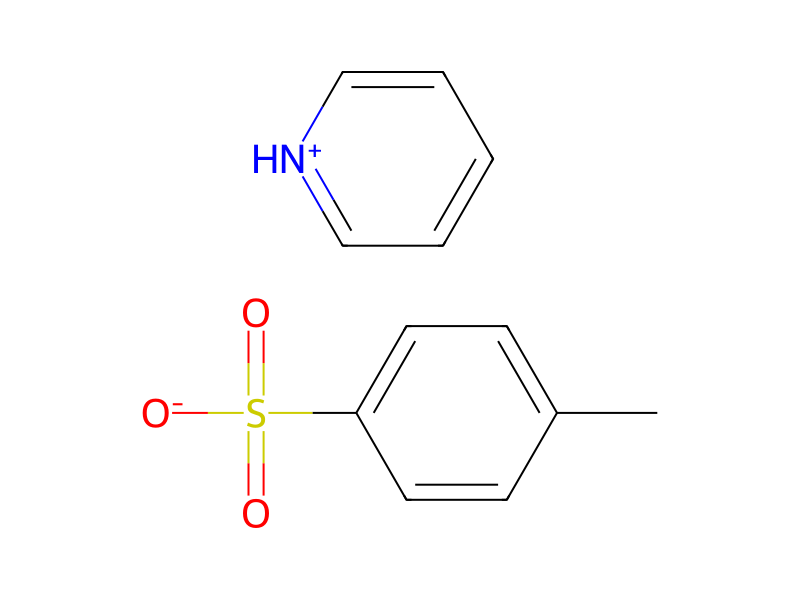
3β-hydroxyandrost-5-ene-7,17-dione (2) (0.5 g, 1.65 mmol) was placed in a dried, argon-flushed flask where it was dissolved in dry dichloromethane (20.0 mL). Pyridinium toluene-p-sulfonate (0.043 g. 0.17 mmol) was added followed by 3,4-dihydro-2H-pyran (0.23 mL, 2.5 mmol) and the solution was stirred at room temperature, under an atmosphere of argon, for 2-3 h. The reaction was quenched by adding water and the product was extracted thrice with ether (3×20 mL). The combined ether extracts were washed with dilute acetic acid, water and bicarbonate solution and dried (MgSO4). Solvent was removed and the crude product was purified using chromatography on silica gel (ethyl acetate-hexane, 15:85, v/v). The compound first eluted was identified as androsta-3,5-diene-7,17-dione (0.150 g), m.p. 167-8° C.