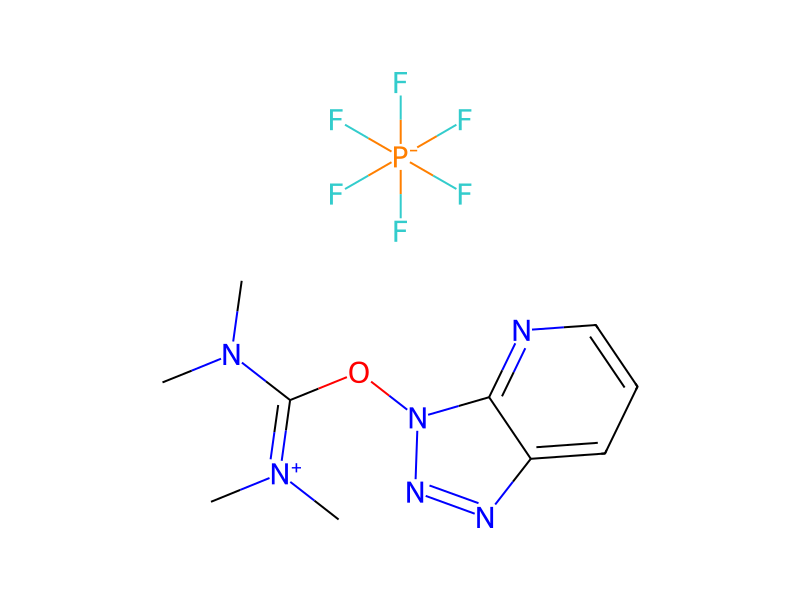
1-Methyl-5-oxo-proline (0.057 g, 0.4 mmol, prepared as described below) was dissolved in anhydrous dichloromethane (6 ml) and to this was added 1-hydroxybenzotriazole (0.060 g, 0.4 mmol), [(2,4-dichloro-phenyl)methyl]amine (0.055 ml, 0.4 mmol), diisopropylamine (0.140 ml, 0.8 mmol) and O-(7-azabenzotriazol-1-yl)-N,N,N′,N′-tetramethyluronium hexafluorophosphate (0.152 g, 0.4 mmol). The mixture was stirred at room temperature (20° C.) under argon for 3 hrs and then overnight. The mixture was diluted with more dichloromethane (25 ml) and washed sequentially with 2M aqueous hydrogen chloride (20 ml), saturated aqueous sodium hydrogen carbonate (20 ml), 10% aqueous sodium carbonate (20 ml) and brine (20 ml). The organic layer was filtered through a hydrophobic frit and then evaporated to give the crude product. The crude material was dissolved in a mixture of dimethylsulphoxide (0.9 ml) and acetonitrile (0.9 ml) and then purified by mass-directed automated HPLC to give pure N-[(2,4-dichlorophenyl)methyl]-1-methyl-5-oxo-prolinamide (0.085 g) as a white solid. LC/MS [M+H]+=301, retention time=2.16 minutes.