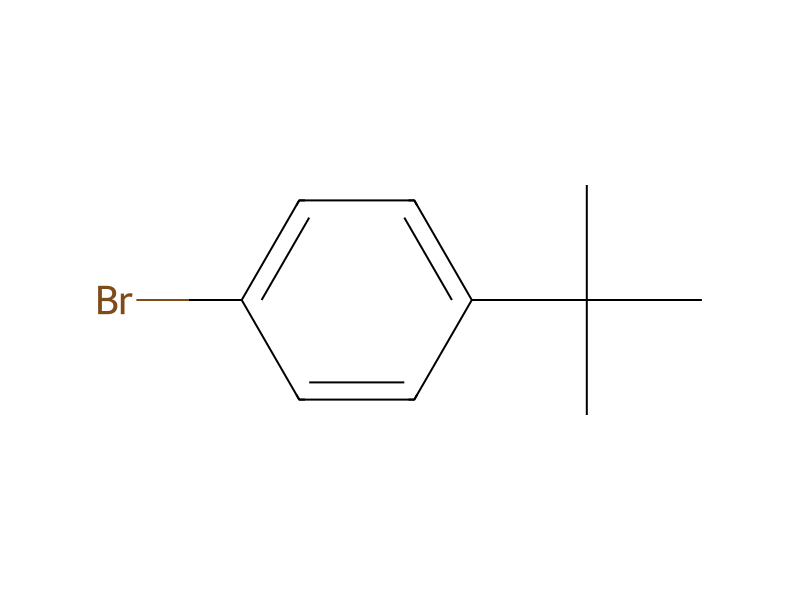
(CyPF-t-Bu)PdCl2 (7.30 mg, 1.00×10⁻² mmol), LiNH2 (0.230 g, 10.0 mmol) and 4-t-butyl-1-bromobenzene (0.213 g, 1.00 mmol) were weighed into a 24 mL vial. DME (20.0 mL) was then added. The vial was sealed with a cap containing a PTFE septum, and the reaction mixture was stirred for 24 h at 80° C. The reaction mixture was allowed to cool to room temperature before pouring into ice water (20.0 mL). To this mixture was added HCl aqueous solution (10.0 mL, 1.0 M). The mixture was stirred at room temperature for 5 min and was then neutralized with a saturated solution of NaHCO3 (5.00-10.0 mL). After extraction with CH2Cl2 (3×20.0 mL), the organic layer was separated and dried over MgSO4. The solvent was evaporated, and the crude product isolated by eluting with hexane/ethyl acetate (80/20) to give 107.0 mg (72%) of 4-t-butylaniline as a pale yellow liquid.