
Grundinformationen
- Standard-SMILES
CC(C)(C)c1ccc(N)cc1- InChIKey
WRDWWAVNELMWAM-UHFFFAOYSA-N- Summenformel
- C10H15N
- Durchschnittliche Molmasse
- 149,23 g/mol
- Monoisotopische Masse
- 149,12044948
Namen und Bezeichner
- Bevorzugter Name
- 4-Tert-Butylaniline
- IUPAC
- 4-tert-butylaniline
- Lokaler Name
- p-tert-Butylanilin
- Englischer Name
- 4-tert-Butylaniline
- Summenformel
- C10H15N
- Molmasse
- 149.23
Namen und Synonyme
4-tert-Butylanilinep-tert-Butylanilinep-t-Butylaniline4-t-Butylbenzeneamine4-tert-Butylbenzeneamine4-tert-ButylbenzenamineAniline, p-tert-butyl-DTXSID0048181Aniline, 4-tert-butyl-4-(1,1-dimethylethyl)benzenamineUNII-47H9440ZOW4-(t-Butyl)aniline
Weitere Namen anzeigen
ZR DX1&1&1Compound Fr14181BUTTPARK 44\03-77p-tert-ButylanilinTIMTEC-BB SBB0077384-t-Butylaniline 99%
DTXCID602815547H9440ZOWEINECS 212-215-94-Amino-tert-butylbenzeneWRDWWAVNELMWAM-UHFFFAOYSA-RefChem:100509212-215-9InChI=1/C10H15N/c1-10(2,3)8-4-6-9(11)7-5-8/h4-7H,11H2,1-3H3
Datenbank-Bezeichner
- CAS
769-92-6- PubChem CID
- 69861
- DTXSID
DTXSID0048181- ChEMBL
CHEMBL1800270- UNII
- 47H9440ZOW
- EC Number
- 212-215-9
- Nikkaji
- J193.149K
Eigenschaften
Berechnete Struktureigenschaften
- XLogP
- 2,7
- Polarare Oberfläche (TPSA)
- 26 Ų
- H-Brücken-Donoren
- 1
- H-Brücken-Akzeptoren
- 1
- Frei drehbare Bindungen
- 1
- Schwere Atome
- 11
- Formalladung
- 0
- Komplexität
- 115
Experimentelle und physikochemische Eigenschaften
Kovats Retention Index
1270.4
2011
Collision Cross Section147.6 Ų [M+H]+ [CCS Type: DT; Buffer gas: N2; Ionization: ESI+; Dataset: TOXCAST; Source Identifier: DTXSID0048181];147.3 Ų [M+H]+ [CCS Type: DT; Buffer gas: N2; Ionization: APCI+; Dataset: TOXCAST; Source Identifier: DTXSID0048181]
Physikochemische Eigenschaften
- Schmelzpunkt
- 15 · 15-16 °C (lit.)
- Siedepunkt
- 90 · 90-93 °C/3 mmHg (lit.)
- Dichte
- 0.937 g/mL · 0.937 g/mL at 25 °C (lit.)
- Dampfdruck
- 5.34 · 5.34-5.77Pa at 25℃
- Brechungsindex
- 20 · n20/D 1.538(lit.)
- Flammpunkt
- 215 °F · 215 °F
- storage temp.
- Keep in dark place,Sealed in dry,Room Temperature
- Aggregatzustand
- Liquid
- pka
- 1 · pK1: 3.78(+1) (25°C)
- Wichte
- 0.937 · 0.937
- Farbe
- Clear orange-red to brownish
- Wasserlöslichkeit
- Insoluble in water.
- BRN
- 2205786 · 2205786
- InChI
- 1S/C10H15N/c1-10(2,3)8-4-6-9(11)7-5-8/h4-7H,11H2,1-3H3
- InChIKey
- WRDWWAVNELMWAM-UHFFFAOYSA-N
- SMILES
- CC(C)(C)c1ccc(N)cc1
- LogP
- 2.7 · 2.7-2.99
- CAS Datenbank
- 769 · 769-92-6(CAS DataBase Reference)
- NIST chemische Informationen
- 4 · 4-Tert-butylbenzeneamine(769-92-6)
Sicherheit und Regulatorisches
GHS-Klassifizierung
GHS Classification
Danger
H302 (62.1%): Harmful if swallowed [Warning Acute toxicity, oral];H314 (11.7%): Causes severe skin burns and eye damage [Danger Skin corrosion/irritation];H315 (87.4%): Causes skin irritation [Warning Skin corrosion/irritation];H319 (89.3%): Causes serious eye irritation [Warning Serious eye damage/eye irritation];H332 (46.6%): Harmful if inhaled [Warning Acute toxicity, inhalation];H335 (86.4%): May cause respiratory irritation [Warning Specific target organ toxicity, single exposure; Respiratory tract irritation]
P260, P261, P264, P264+P265, P270, P271, P280, P301+P317, P301+P330+P331, P302+P352, P302+P361+P354, P304+P340, P305+P351+P338, P305+P354+P338, P316, P317, P319, P321, P330, P332+P317, P337+P317, P362+P364, P363, P403+P233, P405, and P501 (click each P-code to see the statement)
Aggregated GHS information provided per 103 reports by companies from 12 notifications to the ECHA C&L Inventory. Each notification may be associated with multiple companies.;Information may vary between notifications depending on impurities, additives, and other factors. The percentage value in parenthesis indicates the notified classification ratio from companies that provide hazard codes. Only hazard codes with percentage values above 10% are shown. For more detailed information, please visit ECHA C&L website.
Gefahrenhinweise
Regulatory Information
Chemical: Benzenamine, 4-(1,1-dimethylethyl)-
Status: Active Update: 27-03-2018 https://echa.europa.eu/registration-dossier/-/registered-dossier/23433
Hazard Classes and CategoriesAcute Tox. 4 (62.1%);Skin Corr. 1B (11.7%);Skin Irrit. 2 (87.4%);Eye Irrit. 2 (89.3%);Acute Tox. 4 (46.6%);STOT SE 3 (86.4%)
Regulatorische Informationen
Regulatory Information
Chemical: Benzenamine, 4-(1,1-dimethylethyl)-
Status: Active Update: 27-03-2018 https://echa.europa.eu/registration-dossier/-/registered-dossier/23433
Sicherheitsdaten
- wgk
- 2
- hs_code
- 29214980
- risk_code
- 36/37/38
- hazard_code
- Xi
- hazard_note
- Irritant
- safety_code
- 26-36
- Speicherklasse
- 10 - Combustible liquids
- Hazard Classifications
- Eye Irrit. 2Skin Irrit. 2STOT SE 3
Chemie und Industrie
Anwendungen
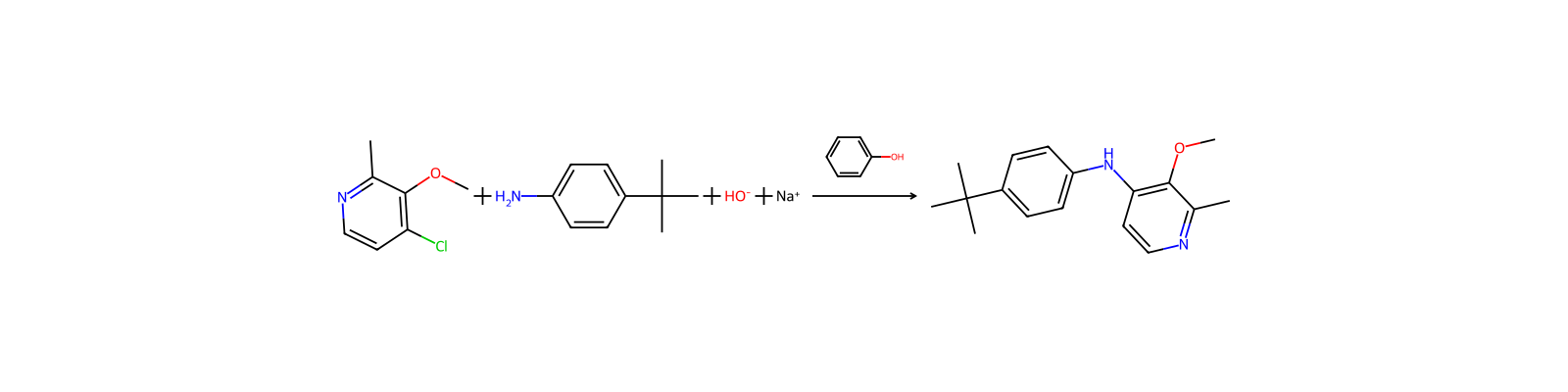
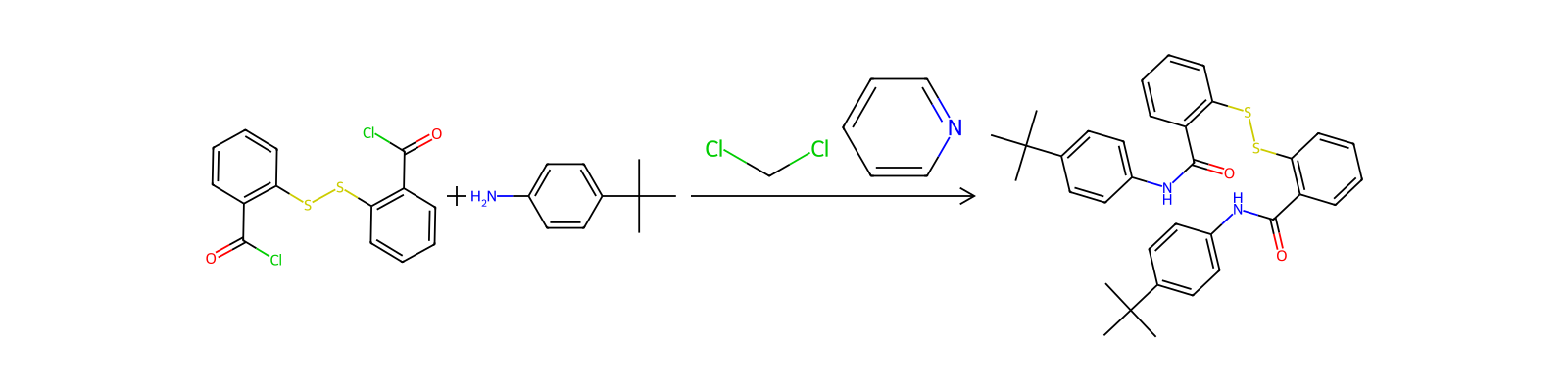
Verwenden4-tert-Butylaniline reacts with formic acid to produce formic acid-(4-tert-butyl-anilide). This reaction could happen in the presence of the solvent of toluene in the condition of heating. 4-tert-Butylaniline is used in the synthesis of 4-tert-Butyl-4,4-dinitrotriphenylamine, new triphenylamine-containing diamine monomer and 2-oxopyrimido[4,5-d]pyrimidin-5(6H)-one.
Vor- und nachgelagerte Produkte
Vorgelagerte Rohstoffe
Nachgelagerte Produkte
Anbieter50 Anbieter
国药集团化学试剂有限公司86-21-63210123 · [email protected]
梯希爱(上海)化成工业发展有限公司021-67121386 · [email protected]
衢州润东化工有限公司0570-8789886 18892685668 · [email protected]
上海阿拉丁生化科技股份有限公司400-6206333 13167063860 · [email protected]
郑州海阔光电材料有限公司67759225 13526468238 · [email protected]
爱斯特(成都)生物制药股份有限公司+86-28-85122536 85324413 · [email protected]
韶远科技(上海)有限公司021-50795510 4000665055 · [email protected]
科瑞迪化学400-821-5857 021-64326257 · [email protected]
上海拓磊化学试剂有限公司86-021-50318510
Syntechem Co.,Ltd[email protected]
上海迈瑞尔生化科技有限公司4006356688 18621169109 · [email protected]
宇瑞(上海)化学有限公司02150456736 18602143071 · [email protected]
阿法埃莎(中国)化学有限公司400-6106006 · [email protected]
太原市瑞和丰科贸有限公司+86 351 7031519 · [email protected]
上海德默医药科技有限公司400-021-7337 2355568890 · [email protected]
安耐吉化学&3A(安徽泽升科技股份有限公司)400-0056266 · [email protected]
武汉凯威斯科技有限公司86-027-67849912 · [email protected]
上海瀚鸿科技股份有限公司021-54306202 13764082696 · [email protected]
上海景颜化工科技有限公司13817811078 · [email protected]
Pure Chemistry Scientific Inc.001-857-928-2050 or 1-888-588-9418 · [email protected]
上海攀鸿化工科技有限公司021-56491756 13512199871 · [email protected]
苏州施亚生物科技有限公司86(512)5235 8471 17715136450 · [email protected]
山东西亚化学有限公司13355009207 13355009207 · [email protected]
玛雅试剂+86 (573) 82222445 (0)18006601000 452520369 · [email protected]
四川库利南科技有限公司400-1166-196 18981987031 · [email protected]
上海耐士化工科技有限公司400-188-0725 +86 21 34310725 13611771617
天津希恩思生化科技有限公司400 638 7771 · [email protected]
上海思域化工科技有限公司86-21-34053660 · [email protected]
北京世纪裕立化学有限公司010-64446226 13146983882 · [email protected]
赛默飞世尔科技(中国)有限公司800-810-5118 · [email protected]
北京伊诺凯科技有限公司400-810-7969 010-59572699 · [email protected]
TCI AMERICA800-4238616 · [email protected]
TOKYO CHEMICAL INDUSTRY CO., LTD.03-36680489 · [email protected]
TCI Europe320-37350700 · [email protected]
上海贤鼎生物科技有限公司4009209199 · [email protected]
深圳康特腾科技有限公司86-0755-86635001 · [email protected]
上海睿升化工科技有限公司+86-021-50935922
上海将来实业股份有限公司400-0066400 13621662912 · [email protected]
HBCChem, Inc.+1-510-219-6317 · [email protected]
上海爱蝶实业有限公司021-58957966 18930537195 · [email protected]
成都零六生物科技有限公司400-1166-196 13458535857 · [email protected]
广拓化学(上海)有限公司021-60899189-8001 18918189673 · [email protected]
上海卓因生物科技有限公司021-61317773 · [email protected]
天津安浩生物科技有限公司[email protected]
上海麦克林生化科技股份有限公司15221275939 15221275939 · [email protected]
杭州杰恒化工有限公司0571-87396432 · [email protected]
上海永叶生物科技有限公司86-021-61559134 15921386130 · [email protected]
上海有朋化工有限公司021-69005955 13701776567 · [email protected]
北京海力扬化学科技有限公司13718199399 · [email protected]
北京欣赛维化学科技有限公司010-56218822 13717722232 · [email protected]
Zugehörige Reaktionen
347


Verknüpfte Notizen
Wird geladen…