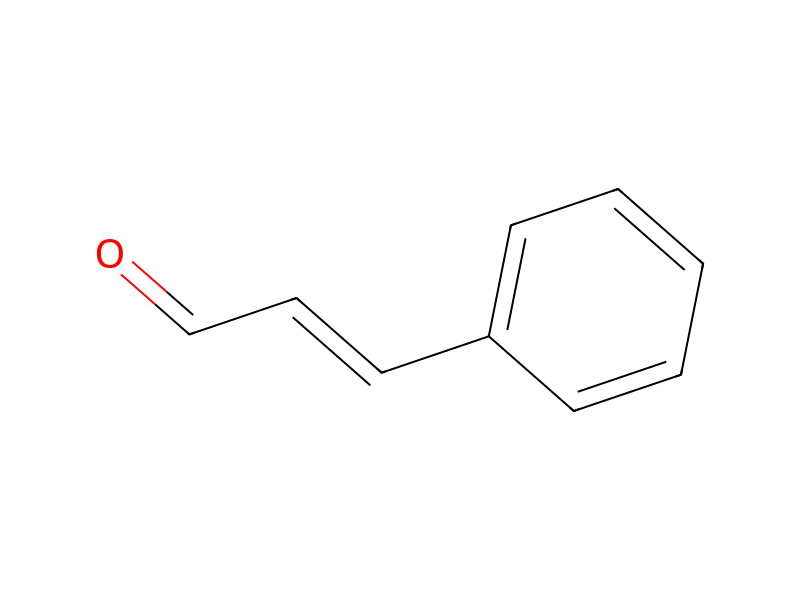
To a solution of 4-hydroxyphenethyl alcohol (Tyrosol) (5.0 g, 36 mmol, 1 equiv), piperazine (1.87 g, 22 mmol, 0.6 equiv) and toluene (50 ml) at reflux under N2 and Dean & Stark conditions was added cinnamaldehyde (6.4 ml, 51 mmol, 1.4 equiv) and the reaction mixture maintained at heat for 17 h. The reaction was cooled to 80° C. and quenched with aqueous HCl (0.7 molar, 1.3 equiv) then stirred at heat for 18 h. The biphasic mixture was allowed to cool to ambient temperature, separated, the organic phase washed with aqueous HCl and water and the organic phase concentrated to a black residue under reduced pressure. Flash chromatography eluting with 20% EtOAc/Heptane afforded the title compound as the main constituent of an approximately 80% pure yellow oil, Rf=0.37 (50% EtOAc/Heptane) and structure confirmed by 1H NMR and LC-MS (M+1=271).