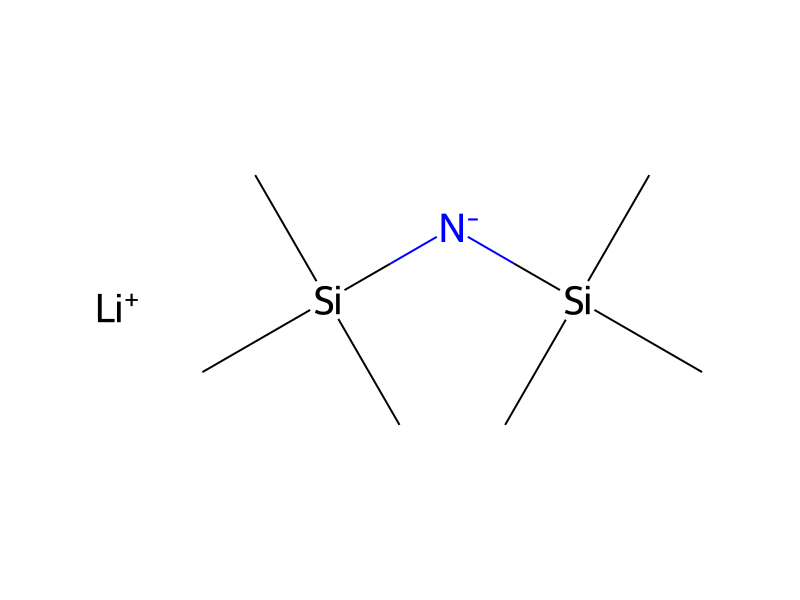
[Br:1][C:2]1[CH:7]=[CH:6][C:5]([NH2:8])=[C:4]([F:9])[CH:3]=1.[Li+].C[Si]([N-][Si](C)(C)C)(C)C.[CH2:20]([O:23][C:24]1[CH:29]=[C:28]([F:30])[C:27]([F:31])=[C:26](F)[C:25]=1[N+:33]([O-:35])=[O:34])[CH:21]=[CH2:22]>C1COCC1>[CH2:20]([O:23][C:24]1[C:25]([N+:33]([O-:35])=[O:34])=[C:26]([NH:8][C:5]2[CH:6]=[CH:7][C:2]([Br:1])=[CH:3][C:4]=2[F:9])[C:27]([F:31])=[C:28]([F:30])[CH:29]=1)[CH:21]=[CH2:22]To a solution of 4-bromo-2-fluoro-phenylamine (0.815 g, 4.3 mmol) in THF (50 mL) was dropwise added LHMDS solution (5.6 mL, 5.6 mmol, 1 M in THF) at −78° C. After stirring for 1 h at −78° C., a solution of 1-allyloxy-3,4,5-trifluoro-2-nitro-benzene (1.1 g, 4.7 mmol) in THF (10 mL) was dropwise added into the reaction mixture, which was stirred at −78° C. for 1 h and at room temperature for 16 h. The progress of reaction was monitored by 1H NMR. After completion, the solvent was removed under reduced pressure. The residue was dissolved in ethyl acetate, washed with water, dried over anhydrous Na2SO4 and concentrated. The residue obtained was triturated with hexane to yield (3-allyloxy-5,6-difluoro-2-nitro-phenyl)-(4-bromo-2-fluoro-phenyl)-amine as a yellow solid (724 mg). 1H-NMR (400 MHz, CDCl3): δ 4.55 (2H, d, J=5.6), 5.32-5.36 (2H, m), 5.42 (1H, d), 6.02-6.08 (1H, m), 6.35 (1H, t, J=8.8), 6.60-6.65 (1H, m), 7.06 (1H, d, J=8.4), 7.23 (1H, dd, J=2.0, 10.4).