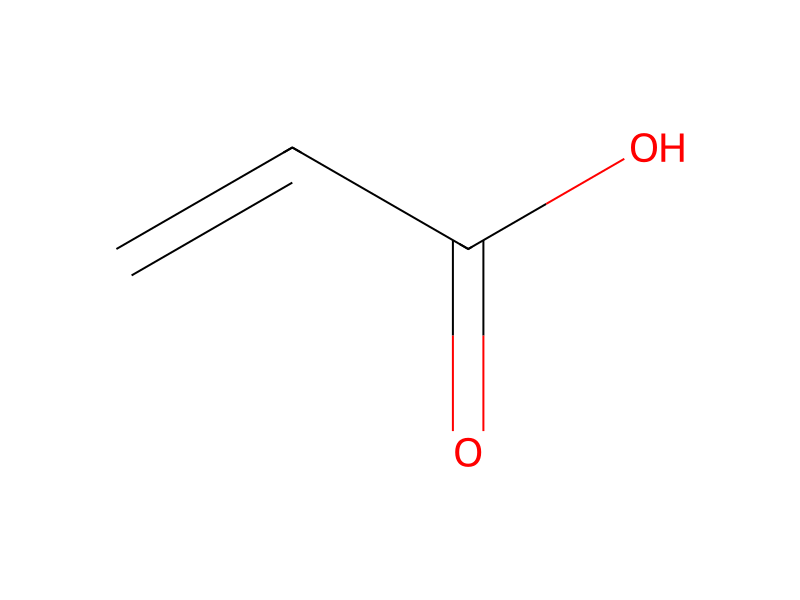
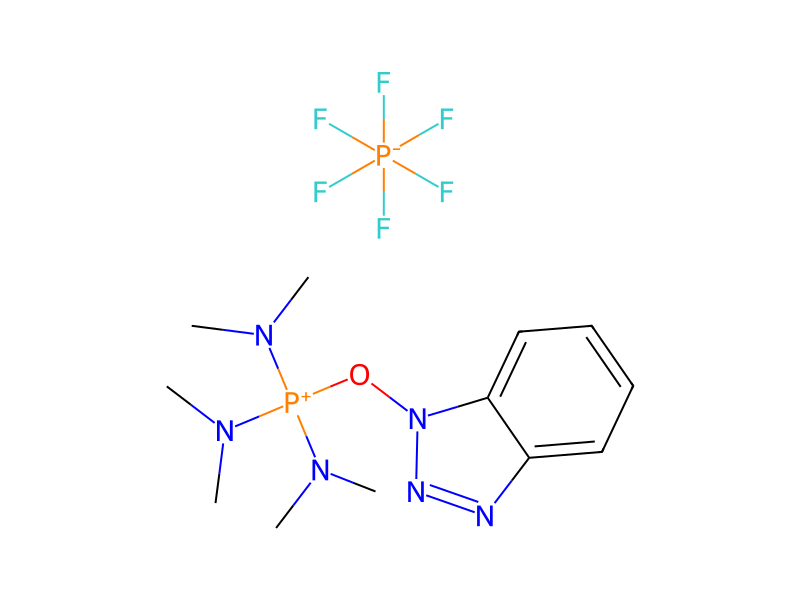
[Cl:1][C:2]1[CH:7]=[C:6]([Cl:8])[CH:5]=[CH:4][C:3]=1[C:9]1[CH:10]=[C:11]([C:14]([N:16]2[CH2:21][CH2:20][N:19]([C:22]([O:24]C(C)(C)C)=O)[CH2:18][CH2:17]2)=[O:15])[NH:12][CH:13]=1.Cl.CO.[C:32](O)(=O)[CH:33]=C.F[P-](F)(F)(F)(F)F.N1(O[P+](N(C)C)(N(C)C)N(C)C)C2C=CC=CC=2N=N1.CCN(C(C)C)C(C)C>>[Cl:1][C:2]1[CH:7]=[C:6]([Cl:8])[CH:5]=[CH:4][C:3]=1[C:9]1[CH:10]=[C:11]([C:14]([N:16]2[CH2:17][CH2:18][N:19]([C:22](=[O:24])[CH:32]=[CH2:33])[CH2:20][CH2:21]2)=[O:15])[NH:12][CH:13]=1The mixture of tert-butyl 4-(4-(2,4-dichlorophenyl)-1H-pyrrole-2-carbonyl)piperazine-1-carboxylate (270 mg, 0.64 mmol) in HCl/MeOH (20 mL, 57.2 mmol) was stirred for 1 h. The mixture was concentrated in vacuo and the residue was dissolved in DMF (5 mL). To this mixture, acrylic acid (50 mg, 0.7 mmol), BOP (437 mg, 0.72 mmol) and DIEA (248 mg, 1.92 mmol) were added. The reaction mixture was stirred at room temperature for 1 h. The mixture was partitioned between ethyl acetate and water. The organic layer was washed with brine, dried over Na2SO4 and concentrated in vacuo. The residue was purified by flash column chromatography on silica gel (dichloromethane/methanol=60:1) to afford the desired product (40 mg, 27% yield) as a white solid. 1H NMR (400 MHz, DMSO-d6) δ: 11.88 (s, 1H), 7.66-7.63 (m, 2H), 7.43 (m, 1H), 7.38 (s, 1H), 6.91 (s, 1H), 6.85-6.78 (m, 1H), 6.18-6.13 (dd, J=2.4, 12.4 Hz, 1H), 5.74-5.71 (dd, J=2.4, 10.4 Hz, 1H), 3.76 (s, 4H), 3.68-3.63 (m, 4H). ESI-MS m/z: 377.3 [M−H]−.