StartseiteMCPWorkbenchSkills
StartseiteWorkbenchBenachrichtigungenMein Bereich
llms.txt · MCP-AnleitungDatenschutz · Nutzungsbedingungen · Supportv1.8.3
  1. Startseite
  2. /Reaktion

3,4-dihydro-2H-pyran → 2-bromo-9-(tetrahydro-2H-pyran-2-yl)-9H-carbazole

HRID 591582
Drucken

Reaktionsgleichung

Reaktionsgleichung von HRID 591582
[Br:1][C:2]1[CH:14]=[CH:13][C:12]2[C:11]3[C:6](=[CH:7][CH:8]=[CH:9][CH:10]=3)[NH:5][C:4]=2[CH:3]=1.C1(C)C=CC(S([O-])(=O)=O)=CC=1.[NH+]1C=CC=CC=1.[O:32]1[CH:37]=[CH:36][CH2:35][CH2:34][CH2:33]1>ClCCl>[Br:1][C:2]1[CH:14]=[CH:13][C:12]2[C:11]3[C:6](=[CH:7][CH:8]=[CH:9][CH:10]=3)[N:5]([CH:33]3[CH2:34][CH2:35][CH2:36][CH2:37][O:32]3)[C:4]=2[CH:3]=1
KomponentenReaktionsbedingungenVersuchsvorschriftAufarbeitungQuellen und NachweiseNotizen zur Reaktion

Komponenten

5

Edukt 3

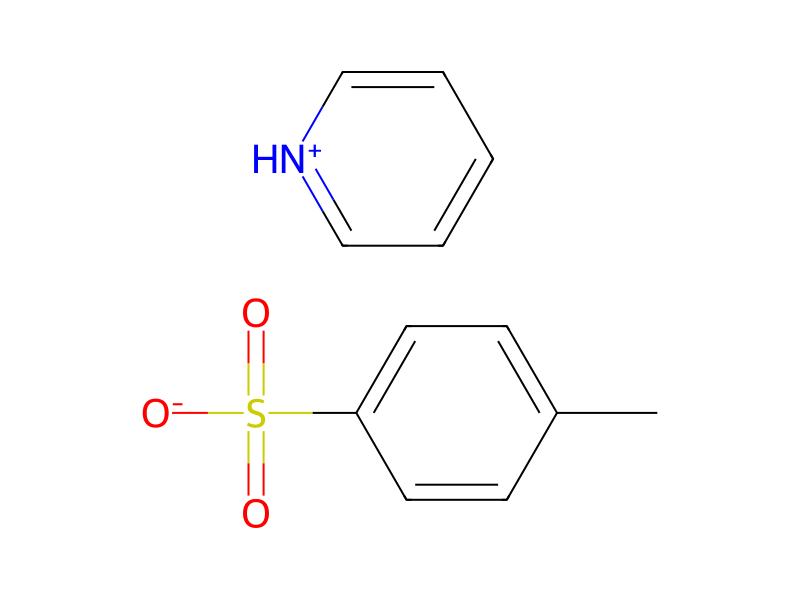
HCID 80803,4-dihydro-2H-pyranHCID 466102Benzenesulfonic acid, 4-methyl-, compd. with pyridine (1:1)HCID 127170892-Bromo-9H-carbazole

Produkt 1

HCID 177606792-bromo-9-(tetrahydro-2H-pyran-2-yl)-9H-carbazoleAusbeute 90 %

Reagenzien, Katalysatoren, Lösungsmittel 1

HCID 6344Dichloromethane
Lösungsmittel

Reaktionsbedingungen

Temperatur
50 °C

Versuchsvorschrift

10 mmol of 2-bromo-9H-carbazole, 0.1 mmol of pyridinium toluene-4-sulphonate, and 50 mmol of 3,4-dihydro-2H-pyran was added to dichloromethane at room temperature and let stir for 2 hours before the temperature was raised to 50° C. for 2 hours further. The solution was cooled, concentrated under reduced pressure, and subjected to column chromatography of silica with dichloromethane as the eluent. After concentrating under reduced pressure, 2-bromo-9-(tetrahydro-2H-pyran-2-yl)-9H-carbazole was isolated in 90% yield.

Aufarbeitung

  1. temperatureThe solution was cooled
  2. concentrationconcentrated under reduced pressure
  3. concentrationAfter concentrating under reduced pressure

Quellen und Nachweise

ORD-Eintrag
ord-3a70708bdc4e448a8ac33bb1b8ab87cf
Quelldatensatz
uspto-grants-2016_01
DOI
10.6084/m9.figshare.5104873.v1
Patentnummer
US09238668B2

Notizen zur Reaktion

Auf dieser SeiteKomponentenReaktionsbedingungenVersuchsvorschriftAufarbeitungQuellen und NachweiseNotizen zur Reaktion