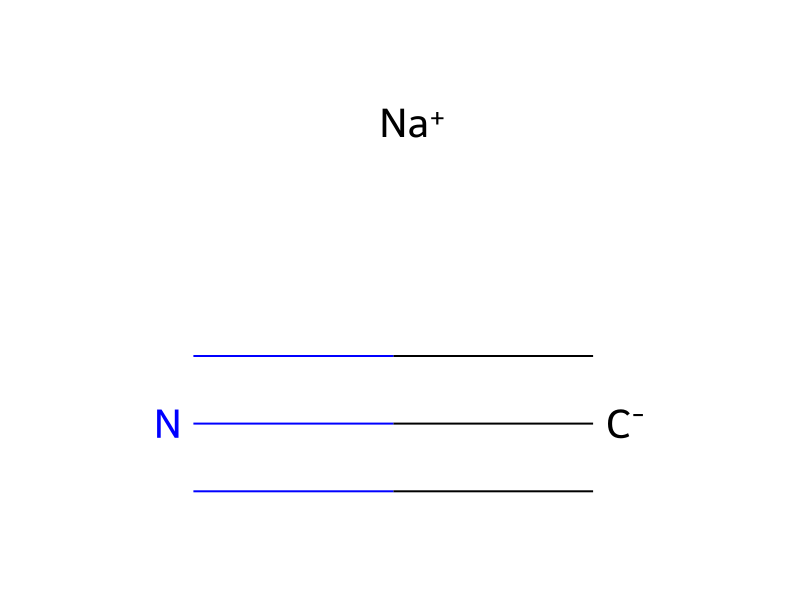
To a solution of 7-chloromethyl-3-(4-fluorophenyl)benzofuran (130.3 g., 0.50 mole) in acetone (750 ml.) and ethanol (500 ml.) is added a solution of sodium cyanide (39.5 g., 0.50 mole) in water 150 ml.). The mixture is heated to its reflux for 5 hours. The mixture is then evaporated in vacuo to concentrate it. The residue is dissolved in dichloromethane, then washed thoroughly with water, dried and concentrated by evaporation in vacuo. The oily residue is recrystallized twice from cyclohexane, then deposited on 70 g. of a magnesium silicate material used for elution chromatography and chromatographed on 400 g. of the silicate type column. Elution with hexane, benzene-hexane (1:4), (1:1) and (3:2), followed by benzene gives the desired product, 7-cyanomethyl-3-(4-fluorophenyl)benzofuran, in the benzene fractions.