StartseiteMCPWorkbenchSkills
StartseiteWorkbenchBenachrichtigungenMein Bereich
llms.txt · MCP-AnleitungDatenschutz · Nutzungsbedingungen · Supportv1.8.3
  1. Startseite
  2. /Reaktion

Cesium carbonate → 6-chloro-2-(5-chloro-2-nitrophenylamino)-9-(tetrahydro-2H-pyran-4-yl)-7H-purin-8(9H)-one

HRID 600401
Drucken

Reaktionsgleichung

Reaktionsgleichung von HRID 600401
C1C=CC(P(C2C(C3C(P(C4C=CC=CC=4)C4C=CC=CC=4)=CC=C4C=3C=CC=C4)=C3C(C=CC=C3)=CC=2)C2C=CC=CC=2)=CC=1.Br[C:48]1[CH:53]=[C:52]([Cl:54])[CH:51]=[CH:50][C:49]=1[N+:55]([O-:57])=[O:56].[NH2:58][C:59]1[N:67]=[C:66]2[C:62]([NH:63][C:64](=[O:74])[N:65]2[CH:68]2[CH2:73][CH2:72][O:71][CH2:70][CH2:69]2)=[C:61]([Cl:75])[N:60]=1.C(=O)([O-])[O-].[Cs+].[Cs+]>C1(C)C=CC=CC=1.CC([O-])=O.CC([O-])=O.[Pd+2]>[Cl:75][C:61]1[N:60]=[C:59]([NH:58][C:48]2[CH:53]=[C:52]([Cl:54])[CH:51]=[CH:50][C:49]=2[N+:55]([O-:57])=[O:56])[N:67]=[C:66]2[C:62]=1[NH:63][C:64](=[O:74])[N:65]2[CH:68]1[CH2:69][CH2:70][O:71][CH2:72][CH2:73]1

KomponentenVersuchsvorschriftAufarbeitungQuellen und NachweiseNotizen zur Reaktion

Komponenten

7

Edukt 4

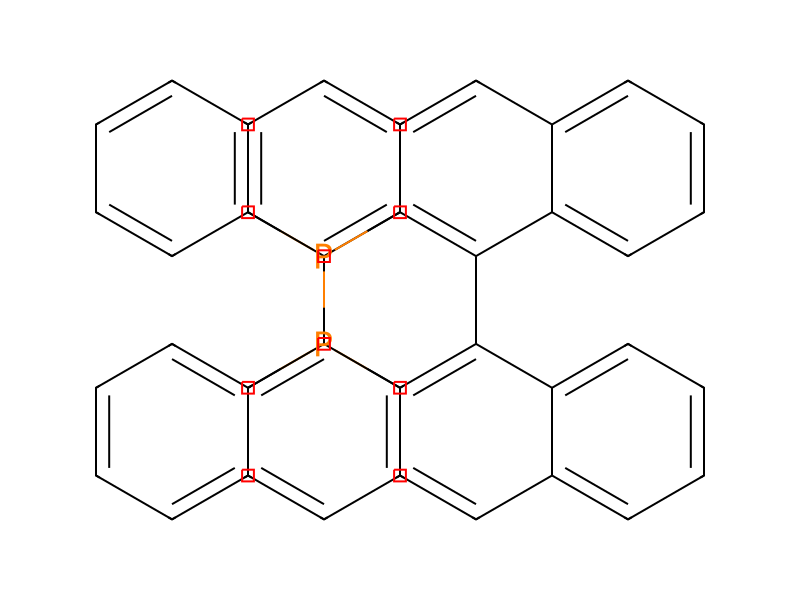
HCID 10796Cesium carbonateHCID 634876Binap, (A+-)-HCID 98561242-Bromo-4-chloro-1-nitrobenzeneHCID 576126442-amino-6-chloro-9-(tetrahydro-2H-pyran-4-yl)-7H-purin-8(9H)-one

Produkt 1

HCID 866229336-chloro-2-(5-chloro-2-nitrophenylamino)-9-(tetrahydro-2H-pyran-4-yl)-7H-purin-8(9H)-one
Ausbeute 37 %

Reagenzien, Katalysatoren, Lösungsmittel 2

HCID 167845palladium(II) acetateKatalysatorHCID 1140TolueneLösungsmittel3×

Versuchsvorschrift

To an oven-dried 2-neck flask under Ar was added racemic BINAP (2.27 g, 3.64 mmol, 0.35 equiv.) followed by anhydrous toluene (20 mL) and Pd(OAc)2 (1.05 g, 1.56 mmol, 0.15 equiv.) and the mixture was stirred under Ar, at room temperature for 15 min. A deep yellow paste is formed. Then, 2-bromo-4-chloro-1 nitrobenzene (3.19 g, 13.52 mmol, 1.3 equiv.), 2-amino-6-chloro-9-(tetrahydro-2H-pyran-4-yl)-7H-purin-8(9H)-one (2.80 g, 10.4 mmol, 1.0 equiv.) and cesium carbonate (5.08 g, 15.6 mmol, 1.5 equiv.) were added as solids, under Ar, followed by anhydrous toluene (22 mL), and the reaction mixture was stirred at room temperature for 10 min, then stirred at 100° C. for 17 h. The reaction mixture was cooled to room temperature, diluted with toluene (450 mL) and passed through Celite. The filtrate was concentrated in vacuo to give a dark brown residue. Flash chromatographic purification (silica gel, gradual elution with 1 to 5% methanol in methylene chloride), followed by recrystallization from hot ethyl acetate gave the desired product as a bright yellow solid (1.63 g, 37% yield) in high purity. 1H NMR (300 MHz, CDCl3+CD3OD) δ, ppm: 9.05 (s, 1H), 8.24 (d, 1H), 7.06 (d, 1H), 4.56-4.52 (m, 1H), 4.16 (dd, 2H), 3.58 (app t, 2H), 2.72 (tdd, 2H), 1.81 (br d, 2H); MS (EI) m/z 425.2 (MH)+.

Aufarbeitung

  1. customA deep yellow paste is formed
  2. stirringthe reaction mixture was stirred at room temperature for 10 min
  3. stirringstirred at 100° C. for 17 h
  4. temperatureThe reaction mixture was cooled to room temperature
  5. concentrationThe filtrate was concentrated in vacuo
  6. customto give a dark brown residue
  7. customFlash chromatographic purification (silica gel, gradual elution with 1 to 5% methanol in methylene chloride)
  8. customfollowed by recrystallization from hot ethyl acetate

Quellen und Nachweise

ORD-Eintrag
ord-e3b51b2a25994fbbba7714441d19c81c
Quelldatensatz
uspto-grants-2011_03
DOI
10.6084/m9.figshare.5104873.v1
Patentnummer
US07902187B2

Notizen zur Reaktion

Auf dieser SeiteKomponentenVersuchsvorschriftAufarbeitungQuellen und NachweiseNotizen zur Reaktion

