Phthalimide → cis-3-(1,3-Dioxo-1,3-dihydro-isoindol-2-ylmethyl)-3a,4,6,6a-tetrahydro-pyrrolo[3,4-d]isoxazole-5-carboxylic acid tert-butyl ester
HRID 600726
Reaktionsgleichung

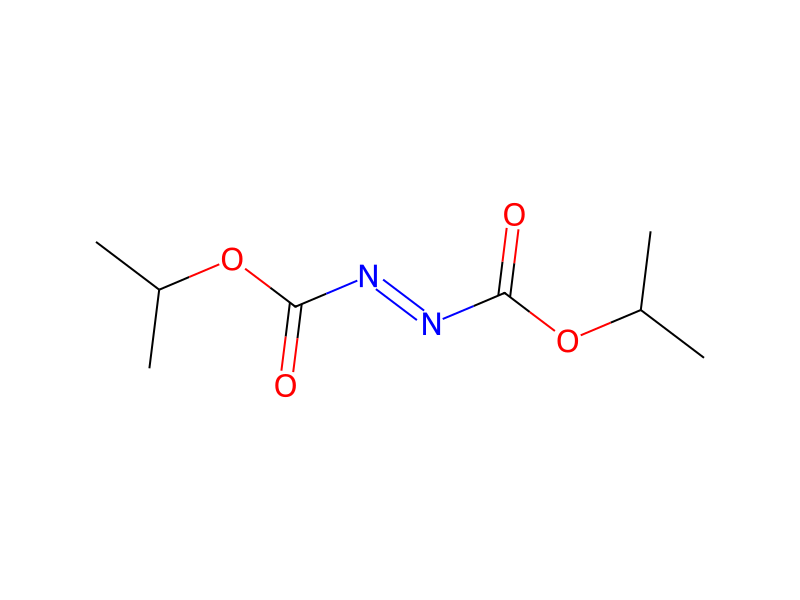
[C:1]([O:5][C:6]([N:8]1[CH2:15][C@H:14]2[C@H:10]([C:11]([CH2:16]O)=[N:12][O:13]2)[CH2:9]1)=[O:7])([CH3:4])([CH3:3])[CH3:2].C1(P(C2C=CC=CC=2)C2C=CC=CC=2)C=CC=CC=1.[C:37]1(=[O:47])[NH:41][C:40](=[O:42])[C:39]2=[CH:43][CH:44]=[CH:45][CH:46]=[C:38]12.CC(OC(/N=N/C(OC(C)C)=O)=O)C>C1COCC1>[C:1]([O:5][C:6]([N:8]1[CH2:15][C@H:14]2[C@H:10]([C:11]([CH2:16][N:41]3[C:37](=[O:47])[C:38]4[C:39](=[CH:43][CH:44]=[CH:45][CH:46]=4)[C:40]3=[O:42])=[N:12][O:13]2)[CH2:9]1)=[O:7])([CH3:2])([CH3:3])[CH3:4]Komponenten
6