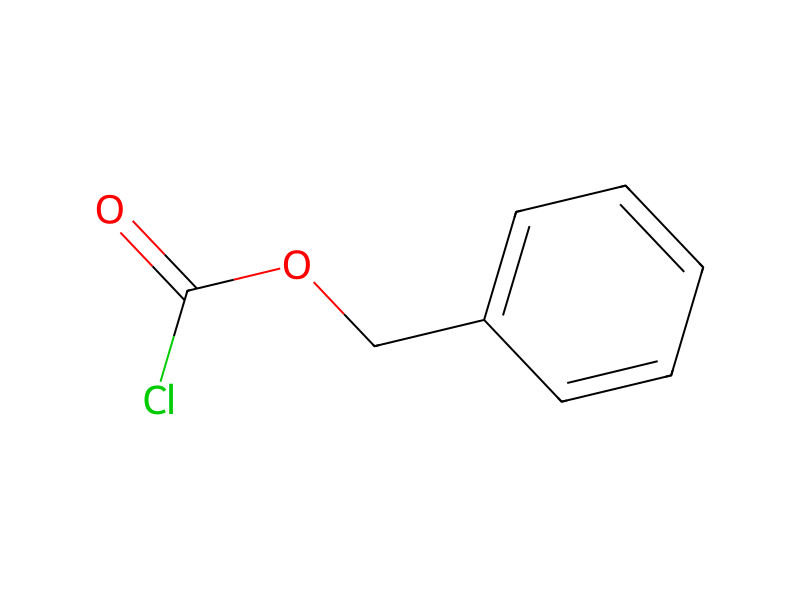
[N+:1]([C:4]1[CH:5]=[C:6]2[C:10](=[CH:11][CH:12]=1)[CH2:9][NH:8][CH2:7]2)([O-:3])=[O:2].C(N(C(C)C)CC)(C)C.[CH2:22]([O:29][C:30](Cl)=[O:31])[C:23]1[CH:28]=[CH:27][CH:26]=[CH:25][CH:24]=1>C(Cl)Cl>[N+:1]([C:4]1[CH:5]=[C:6]2[C:10](=[CH:11][CH:12]=1)[CH2:9][N:8]([C:30]([O:29][CH2:22][C:23]1[CH:28]=[CH:27][CH:26]=[CH:25][CH:24]=1)=[O:31])[CH2:7]2)([O-:3])=[O:2]To a solution of 5-nitroisoindoline (1.16 g, 7.79 mmol) in CH2Cl2 (100 mL), was added diisopropylethylamine (2.7 mL, 15.6 mmol) followed by benzylchloroformate (1.2 mL, 8.56 mmol). The mixture was stirred at room temperature under N2 for 1 h. The reaction mixture was diluted with CH2Cl2 and washed with 1N HCl. The organic layer was dried (Na2SO4), filtered and the solvent was evaporated in vacuo. The residue was purified by flash chromatography on silica gel to provide benzyl 5-nitro-1,3-dihydro-2H-isoindole-2-carboxylate. LCMS calc.=321.1; found=320.8 (M+Na)+. 1H NMR (500 MHz, CDCl3): δ 8.22-8.14 (m, 2H); 7.49-7.37 (m, 6H); 5.27 (s, 2H); 4.89 (s, 2H); 4.87 (s, 2H).