StartseiteMCPWorkbenchSkills
StartseiteWorkbenchBenachrichtigungenMein Bereich
llms.txt · MCP-AnleitungDatenschutz · Nutzungsbedingungen · Supportv1.8.3
  1. Startseite
  2. /Reaktion

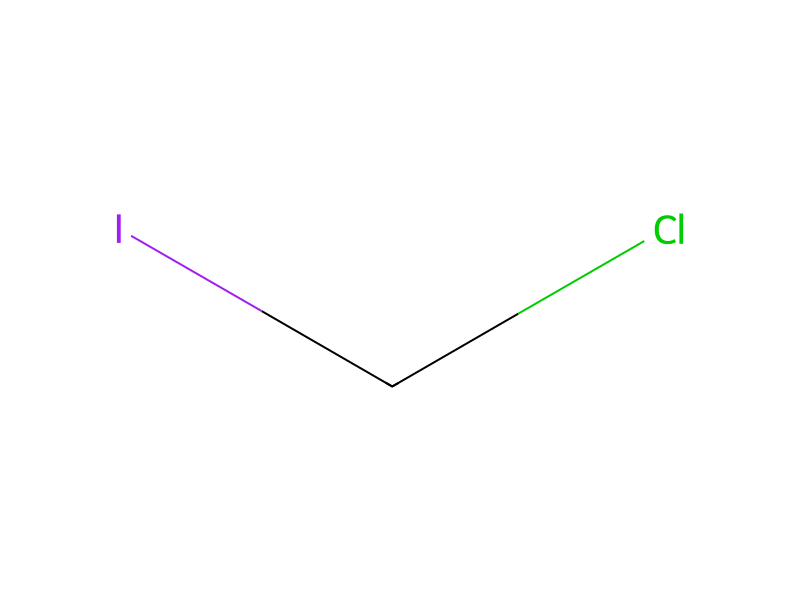
Chloroiodomethane → 1-(5,5,8,8-Tetramethyl-5,6,7,8-tetrahydronaphthalen-2-yl)-cyclopropaneacetaldehyde

HRID 612725
Drucken

Reaktionsgleichung

Reaktionsgleichung von HRID 612725
[CH2:1]([Zn]CC)[CH3:2].ClCI.[CH3:9][C:10]1([CH3:31])[CH2:19][CH2:18][C:17]([CH3:21])([CH3:20])[C:16]2[CH:15]=[C:14]([C:22](=C)[CH2:23][CH2:24][OH:25])[C:13](OCCC)=[CH:12][C:11]1=2.C1(O)CC1.C1C=C[NH+]=CC=1.[O-][Cr](Cl)(=O)=O>ClC(Cl)C.C(Cl)Cl>[CH3:9][C:10]1([CH3:31])[CH2:19][CH2:18][C:17]([CH3:21])([CH3:20])[C:16]2[CH:15]=[C:14]([C:22]3([CH2:23][CH:24]=[O:25])[CH2:2][CH2:1]3)[CH:13]=[CH:12][C:11]1=2
KomponentenReaktionsbedingungenVersuchsvorschriftAufarbeitungQuellen und NachweiseNotizen zur Reaktion

Komponenten

8

Edukt 5

HCID 11644ChloroiodomethaneHCID 123361CyclopropanolHCID 19595642HCID 19595642, VerbindungHCID 178418287HCID 178418287, VerbindungHCID 178418750HCID 178418750, Verbindung

Produkt 1

HCID 195956521-(5,5,8,8-Tetramethyl-5,6,7,8-tetrahydronaphthalen-2-yl)-cyclopropaneacetaldehyde
Ausbeute 93 %

Reagenzien, Katalysatoren, Lösungsmittel 2

HCID 6344DichloromethaneLösungsmittelHCID 63651,1-DichloroethaneLösungsmittel2×

Reaktionsbedingungen

Temperatur
0 °C

Versuchsvorschrift

In a 15 mL round-bottom flask (oven dried and under argon) was added anhydrous dichloroethane (6 mL) and diethyl zinc (0.34 mL, 3.3 mmol). The mixture was cooled to 0° C. and chloroiodomethane (0.43 mL, 6.0 mmol) was slowly added via syringe. The reaction mixture was stirred at 0° C. for 5 min. and a solution of the above homoallylic alcohol (2: R2 =H; 0.41 g, 1.57 mmol) in dichloroethane (2 mL) was slowly added. The mixture was allowed to warm to room temperature and stirred for one hour. The reaction mixture was then quenched with saturated NH4Cl and the aqueous phase was extracted with EtOAc (2×15 mL). The organic solution was washed with saturated NaCl, dried (Na2SO4) and concentrated in vacuo. Crude [1-(5,5,8,8-tetramethyl-3-propyloxy-5,6,7,8-tetrahydronaphthalen-2-yl)-cyclopropyl]ethanol (3: R2 =H) was recovered in 63% yield (0.27 g) and carried directly on to the next step. To a solution of the above cyclopropyl alcohol (3: R2 =H; 0.25 g, 0.92 mmol) in 5 mL CH2Cl2 at room temperature was added PCC (0.4 g, 1.84 mmol). The reaction mixture was stirred for 3 hours and then filtered and rinsed with 15% EtOAc/hexane through a pad of celite/silica gel. Solvent was removed in vacuo to provide 230 mg of 1-(5,5,8,8-tetramethyl-5,6,7,8-tetrahydronaphthalen-2-yl)-cyclopropaneacetaldehyde (4: R2 =H) as a white solid in 93% yield. 1H NMR (400 MHz, CDCl3) δ9.78 (t, J=2.5 Hz, 1H, aldehyde), 7.20 (d, J=8.1 Hz, 1H, aromatic), 7.18 (d, J=2.0 Hz, 1H, aromatic), 6.99 (dd, J=8.1 and 2.1 Hz, 1H, aromatic), 2.57 (d, J=2.6 Hz, 2H, CH2), 1.66 (s, 4H, 2CH2), 1.26 (s, 6H, 2CH3), 1.25 (s, 6H, 2CH3), 1.02 (dd, J=6.4, 4.7 Hz, 2H, CH2), 0.87 (dd, J=6.1,4.6 Hz, 2H, CH2).

Aufarbeitung

  1. customIn a 15 mL round-bottom flask (oven dried and under argon)
  2. temperatureto warm to room temperature
  3. stirringstirred for one hour
  4. customThe reaction mixture was then quenched with saturated NH4Cl
  5. extractionthe aqueous phase was extracted with EtOAc (2×15 mL)
  6. washThe organic solution was washed with saturated NaCl
  7. dry with materialdried (Na2SO4)
  8. concentrationconcentrated in vacuo
  9. customCrude [1-(5,5,8,8-tetramethyl-3-propyloxy-5,6,7,8-tetrahydronaphthalen-2-yl)-cyclopropyl]ethanol (3: R2 =H) was recovered in 63% yield (0.27 g)
  10. stirringThe reaction mixture was stirred for 3 hours
  11. filtrationfiltered
  12. washrinsed with 15% EtOAc/hexane through a pad of celite/silica gel
  13. customSolvent was removed in vacuo

Quellen und Nachweise

ORD-Eintrag
ord-4925a4afe763496bab973c8f8ce204b6
Quelldatensatz
uspto-grants-1999_12
DOI
10.6084/m9.figshare.5104873.v1
Patentnummer
US06005007

Notizen zur Reaktion

Auf dieser SeiteKomponentenReaktionsbedingungenVersuchsvorschriftAufarbeitungQuellen und NachweiseNotizen zur Reaktion

