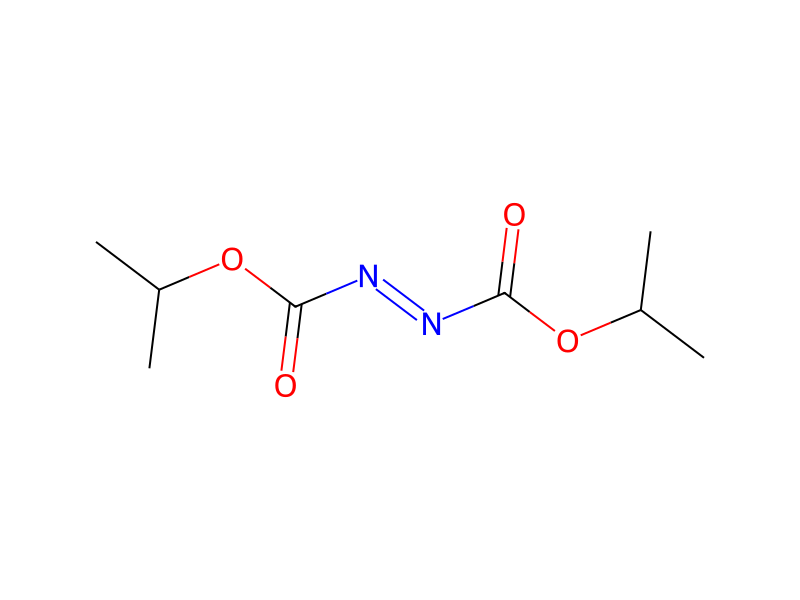
A mixture of 2-(2-methoxyimidazo[2,1-b][1,3,4]thiadiazol-6-yl)benzofuran-4-ol (Example 38G, 0.100 g, 0.349 mmol), triphenylphosphine (0.165 g, 0.627 mmol) and (2-phenylthiazol-4-yl)methanol (Example 3B, 0.080 g, 0.418 mmol) in a 50 ml flask was maintained under vacuum for 10 min and then purged with nitrogen. Dry tetrahydrofuran (10 mL) was added and the resulting mixture was slightly warmed and maintained in an ultrasonic bath for 5 min. The cooled mixture (still heterogeneous) was treated at 22° C. with a solution of diisopropyl azodicarboxylate (0.113 g, 0.558 mmol) in tetrahydrofuran (2 mL) added dropwise over 1 h. The mixture was then stirred at 2° C. for 4 h. The clear reaction mixture was quenched by the addition of dichloromethane (100 mL) and saturated sodium bicarbonate (10 mL). The organic phase was washed with brine, dried over anhydrous magnesium sulfate and concentrated in vacuo. Chromatography of the residue on silica gel (2.5×12 cm, elution dichloromethane-ethyl acetate 0-3%) followed by crystallization of the desired fraction from ethyl acetate (8 mL) gave 0.028 g (24% yield) of the title material as a white solid. LC (Method A): 2.426 min. HRMS (ESI) calcd for C23H17N4O3S2 [M+H]+ m/z 461.0737, found 461.0926. 1H NMR (CDCl3, 400 MHz) δ ppm: 4.22 (s, 3H), 5.45 (d, J=0.78 Hz, 2H), 6.80 (dd, J=7.04, 1.57 Hz, 1H), 7.15-7.21 (m, 2H), 7.22 (s, 1H), 7.38 (s, 1H), 7.42-7.51 (m, 3H), 7.92 (s, 1H), 7.95-8.03 (m, 2H).