StartseiteMCPSkillsWorkbenchOpenChem
StartseiteWorkbenchBenachrichtigungenMein Bereich
llms.txt · skill.md · MCP-AnleitungDatenschutz · Nutzungsbedingungen · Supportv1.8.5
  1. Startseite
  2. /Reaktion

Hydrochloric Acid → HCID 118435402, Verbindung

HRID 629819
Drucken

Reaktionsgleichung

CC(C)([O-])C.[Na+].C(P(C(C)(C)C)C1C=CC=CC=1C1C(C(C)C)=CC(C(C)C)=CC=1C(C)C)(C)(C)C.COC1C=C(OC)C=CC=1C[NH2:48].Br[C:50]1[N:51]=[C:52]([C@:55]23[CH2:64][O:63][C@@H:62]([CH3:65])[CH2:61][C@H:60]2[CH2:59][S:58][C:57]([NH:66][C:67](=[O:74])[C:68]2[CH:73]=[CH:72][CH:71]=[CH:70][CH:69]=2)=[N:56]3)[S:53][CH:54]=1.Cl>O1CCOCC1.C1C=CC(/C=C/C(/C=C/C2C=CC=CC=2)=O)=CC=1.C1C=CC(/C=C/C(/C=C/C2C=CC=CC=2)=O)=CC=1.C1C=CC(/C=C/C(/C=C/C2C=CC=CC=2)=O)=CC=1.[Pd].[Pd]>[NH2:48][C:50]1[N:51]=[C:52]([C@:55]23[CH2:64][O:63][C@@H:62]([CH3:65])[CH2:61][C@H:60]2[CH2:59][S:58][C:57]([NH:66][C:67](=[O:74])[C:68]2[CH:73]=[CH:72][CH:71]=[CH:70][CH:69]=2)=[N:56]3)[S:53][CH:54]=1
KomponentenReaktionsbedingungenVersuchsvorschriftAufarbeitungQuellen und NachweiseNotizen zur Reaktion

Komponenten

8

Edukt 5

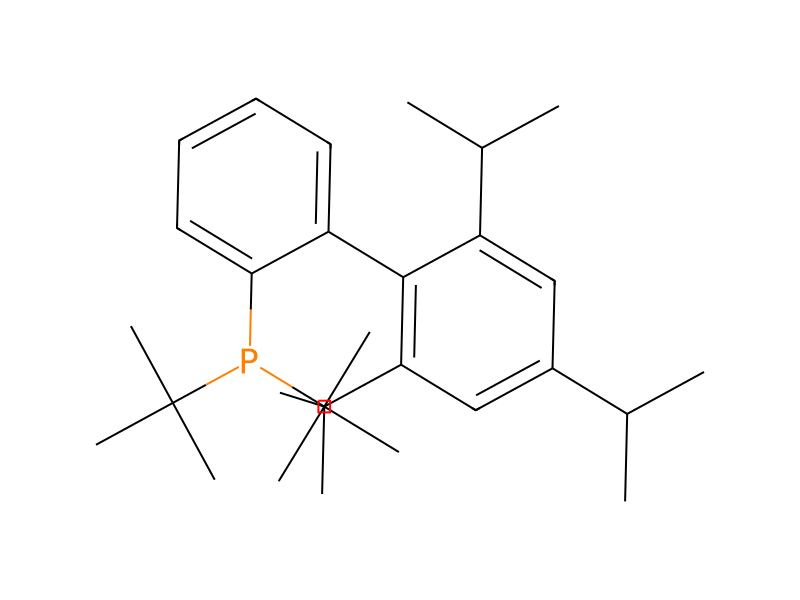
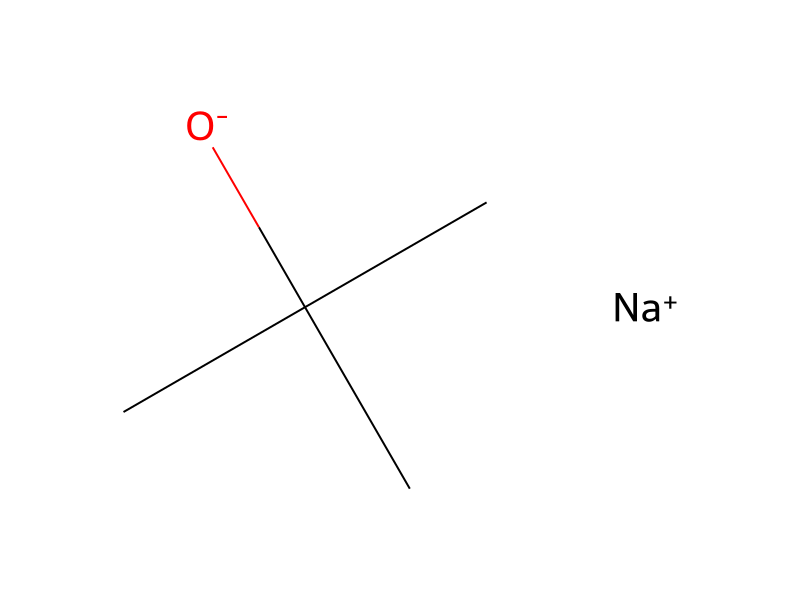
HCID 313Hydrochloric Acid2×HCID 5972502,4-DimethoxybenzylamineHCID 11618717Di-tert-butyl(2',4',6'-tris(propan-2-yl)-(1,1'-biphenyl)-2-yl)phosphaneHCID 23676156Sodium t-butoxideHCID 118435542N-[(4aR,6S,8aR)-8a-(4-bromo-1,3-thiazol-2-yl)-6-methyl-4,4a,5,6,8,8a-hexahydropyrano[3,4-d][1,3]thiazin-2-yl]benzamide

Produkt 1

HCID 118435402HCID 118435402, Verbindung

Reagenzien, Katalysatoren, Lösungsmittel 2

HCID 9811564Bis(dibenzylideneacetone)palladiumKatalysatorHCID 312751,4-DioxaneLösungsmittel2×

Reaktionsbedingungen

Temperatur
65 °C

Versuchsvorschrift

Sodium tert-butoxide (530 mg, 5.51 mmol), tris(dibenzylideneacetone)dipalladium(0) (102 mg, 0.111 mmol), and di-tert-butyl[2′,4′,6′-tri(propan-2-yl)biphenyl-2-yl]phosphane (141 mg, 0.332 mmol) were dissolved in degassed 1,4-dioxane (5 mL), and the reaction flask was purged with nitrogen and heated to 65° C. for 3 minutes. To this was added a solution of 1-(2,4-dimethoxyphenyl)methanamine (0.564 mL, 3.75 mmol) and C6 (1.00 g, 2.21 mmol) in 1,4-dioxane (5 mL), and the reaction mixture was heated at 95° C. for 80 minutes. It was then allowed to cool to room temperature and treated with concentrated hydrochloric acid (10 mL), whereupon it was stirred at room temperature for 1 hour. Additional concentrated hydrochloric acid (10 mL) was introduced, and the reaction was monitored until starting material had been consumed. Water (50 mL) was added, and the mixture was washed with dichloromethane (3×50 mL). The aqueous layer was poured into a 1:1 mixture of aqueous sodium hydroxide (5 M, 100 mL) and ice, and the pH was checked to ensure that it was >12. This mixture was saturated with solid sodium chloride and extracted with dichloromethane (4×100 mL); the combined organic layers were dried over magnesium sulfate and filtered. As the initial dichloromethane washes (3×50 mL) were found to contain additional material, they were concentrated to a volume of approximately 50 mL and mixed with aqueous hydrochloric acid (5 M, 50 mL). After being stirred at room temperature for 1 hour, the aqueous layer was separated and washed with dichloromethane (3×50 mL). The aqueous layer was then poured into a 1:1 mixture of aqueous sodium hydroxide (5 M, 75 mL) and ice, and the resulting mixture was saturated with solid sodium chloride and extracted with dichloromethane (3×60 mL). The combined organic layers were dried over magnesium sulfate, filtered, and added to the organic layers obtained above. This combined solution was concentrated to a volume of approximately 70 mL and washed with 5% aqueous citric acid solution, dried over magnesium sulfate, and filtered. The resulting filtrate was passed through a 0.45 μm nylon Acrodisc® to remove fine particulates, and subsequently concentrated in vacuo, affording the product as an orange solid. Yield: 608 mg, 1.56 mmol, 71%. LCMS m/z 389.1 [M+H]+. 1H NMR (400 MHz, CDCl3) δ 8.10-8.19 (br m, 2H), 7.49-7.55 (m, 1H), 7.42-7.48 (m, 2H), 5.94 (s, 1H), 3.95 (AB quartet, JAB=12.1 Hz, ΔνAB=6.2 Hz, 2H), 3.77 (dqd, J=11.2, 6.1, 2.3 Hz, 1H), 3.22 (dd, J=12.9, 4.1 Hz, 1H), 2.97-3.05 (m, 1H), 2.59 (dd, J=12.9, 2.8 Hz, 1H), 1.83-1.95 (m, 1H), 1.65 (ddd, J=13.7, 4.3, 2.4 Hz, 1H), 1.29 (d, J=6.2 Hz, 3H).


Aufarbeitung

  1. customthe reaction flask was purged with nitrogen
  2. temperaturethe reaction mixture was heated at 95° C. for 80 minutes
  3. temperatureto cool to room temperature
  4. customhad been consumed
  5. additionWater (50 mL) was added
  6. washthe mixture was washed with dichloromethane (3×50 mL)
  7. additionThe aqueous layer was poured into a 1:1 mixture of aqueous sodium hydroxide (5 M, 100 mL) and ice
  8. extractionextracted with dichloromethane (4×100 mL)
  9. dry with materialthe combined organic layers were dried over magnesium sulfate
  10. filtrationfiltered
  11. concentrationwere concentrated to a volume of approximately 50 mL
  12. additionmixed with aqueous hydrochloric acid (5 M, 50 mL)
  13. stirringAfter being stirred at room temperature for 1 hour
  14. customthe aqueous layer was separated
  15. washwashed with dichloromethane (3×50 mL)
  16. additionThe aqueous layer was then poured into a 1:1 mixture of aqueous sodium hydroxide (5 M, 75 mL) and ice
  17. extractionextracted with dichloromethane (3×60 mL)
  18. dry with materialThe combined organic layers were dried over magnesium sulfate
  19. filtrationfiltered
  20. additionadded to the organic layers
  21. customobtained above
  22. concentrationThis combined solution was concentrated to a volume of approximately 70 mL
  23. washwashed with 5% aqueous citric acid solution
  24. dry with materialdried over magnesium sulfate
  25. filtrationfiltered
  26. customto remove fine particulates
  27. concentrationsubsequently concentrated in vacuo

Quellen und Nachweise

ORD-Eintrag
ord-0a85f0a6435046e5a70bf889fded15cc
Quelldatensatz
uspto-grants-2016_04
DOI
10.6084/m9.figshare.5104873.v1
Patentnummer
US09315520B2

Notizen zur Reaktion

Auf dieser SeiteKomponentenReaktionsbedingungenVersuchsvorschriftAufarbeitungQuellen und NachweiseNotizen zur Reaktion