Diisopropylethylamine → N-{(2S)-4-{[(4-{(2S)-3-(Allyloxy)-2-[(tert-butoxycarbonyl)amino]-3-oxopropyl}phenoxy)-carbonyl]amino}-2-[(tert-butoxycarbonyl)amino]butanoyl}glycyl-S-trityl-L-cysteinamide
HRID 630665
Reaktionsgleichung

[CH2:1]([O:4][C:5](=[O:40])[C@@H:6]([NH:32][C:33]([O:35][C:36]([CH3:39])([CH3:38])[CH3:37])=[O:34])[CH2:7][C:8]1[CH:31]=[CH:30][C:11]([O:12][C:13]([NH:15][CH2:16][CH2:17][C@H:18]([NH:22][C:23]([O:25][C:26]([CH3:29])([CH3:28])[CH3:27])=[O:24])[C:19](O)=[O:20])=[O:14])=[CH:10][CH:9]=1)[CH:2]=[CH2:3].[NH2:41][CH2:42][C:43]([NH:45][C@H:46]([C:68]([NH2:70])=[O:69])[CH2:47][S:48][C:49]([C:62]1[CH:67]=[CH:66][CH:65]=[CH:64][CH:63]=1)([C:56]1[CH:61]=[CH:60][CH:59]=[CH:58][CH:57]=1)[C:50]1[CH:55]=[CH:54][CH:53]=[CH:52][CH:51]=1)=[O:44].C(N(CC)C(C)C)(C)C.CN(C(ON1N=NC2C=CC=NC1=2)=[N+](C)C)C.F[P-](F)(F)(F)(F)F>ClCCl>[CH2:1]([O:4][C:5](=[O:40])[C@@H:6]([NH:32][C:33]([O:35][C:36]([CH3:39])([CH3:38])[CH3:37])=[O:34])[CH2:7][C:8]1[CH:9]=[CH:10][C:11]([O:12][C:13]([NH:15][CH2:16][CH2:17][C@H:18]([NH:22][C:23]([O:25][C:26]([CH3:29])([CH3:28])[CH3:27])=[O:24])[C:19]([NH:41][CH2:42][C:43]([NH:45][C@H:46]([C:68]([NH2:70])=[O:69])[CH2:47][S:48][C:49]([C:50]2[CH:55]=[CH:54][CH:53]=[CH:52][CH:51]=2)([C:56]2[CH:57]=[CH:58][CH:59]=[CH:60][CH:61]=2)[C:62]2[CH:67]=[CH:66][CH:65]=[CH:64][CH:63]=2)=[O:44])=[O:20])=[O:14])=[CH:30][CH:31]=1)[CH:2]=[CH2:3]Komponenten
6
Edukt 4
 HCID 81531Diisopropylethylamine
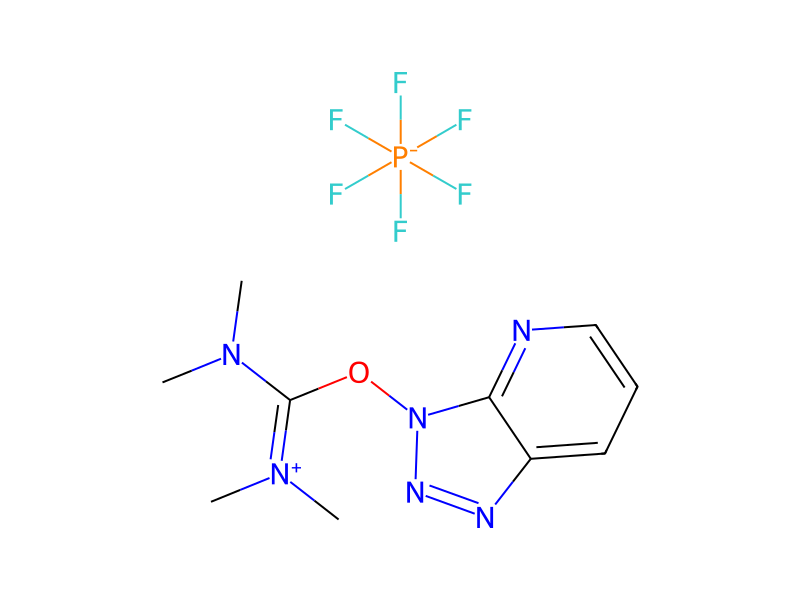 HCID 9886157Methanaminium, N-((dimethylamino)(3H-1,2,3-triazolo(4,5-b)pyridin-3-yloxy)methylene)-N-methyl-, hexafluorophosphate(1-) (1:1)
 HCID 89544878(2S)-4-{[(4-{(2S)-3-(Allyloxy)-2-[(tert-butoxycarbonyl)amino]-3-oxopropyl}phenoxy)carbonyl]-amino}-2-[(tert-butoxycarbonyl)amino]butanoic acid
 HCID 89554940Glycyl-S-trityl-L-cysteinamide

