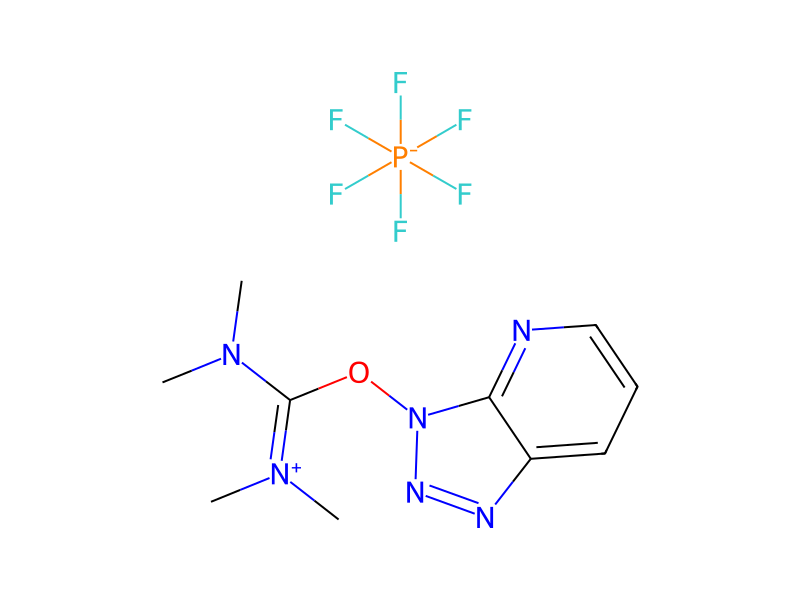
[CH2:1]([O:8][C:9]([NH:11][C:12]([CH3:17])([CH3:16])[C:13]([OH:15])=O)=[O:10])[C:2]1[CH:7]=[CH:6][CH:5]=[CH:4][CH:3]=1.CN(C(ON1N=NC2C=CC=NC1=2)=[N+](C)C)C.F[P-](F)(F)(F)(F)F.CN1CCOCC1.[NH:49]([CH:51]=[O:52])[NH2:50]>CN(C=O)C>[CH:51]([NH:49][NH:50][C:13](=[O:15])[C:12]([NH:11][C:9](=[O:10])[O:8][CH2:1][C:2]1[CH:3]=[CH:4][CH:5]=[CH:6][CH:7]=1)([CH3:17])[CH3:16])=[O:52]A mixture of 2-(benzyloxycarbonylamino)-2-methylpropanoic acid (Example 8 a, 1.9 g, 8 mmol), HATU (CAN 148893-10-1, 3.97 g, 10 mmol) and N-methylmorpholine (CAN 109-02-4, 2.43 g, 24 mmol) in DMF (20 mL) was stirred at room temperature for 15 min. Then hydrazinecarboxaldehyde (CAN 624-84-0, 0.53 g, 9 mmol) was added and the reaction mixture was stirred at room temperature overnight. After evaporation of solvents, the residue was diluted with ethyl acetate (30 mL) and water (30 mL). The organic layer was washed with saturated sodium bicarbonate solution (30 mL), hydrochloric acid (30 mL, 1 M), brine (30 mL) and dried over anhydrous sodium sulfate. Removal of the solvent under reduced pressure left the title compounds as yellow oil (2.1 g, 94%); MS: m/e 280.1 [M+H]+.