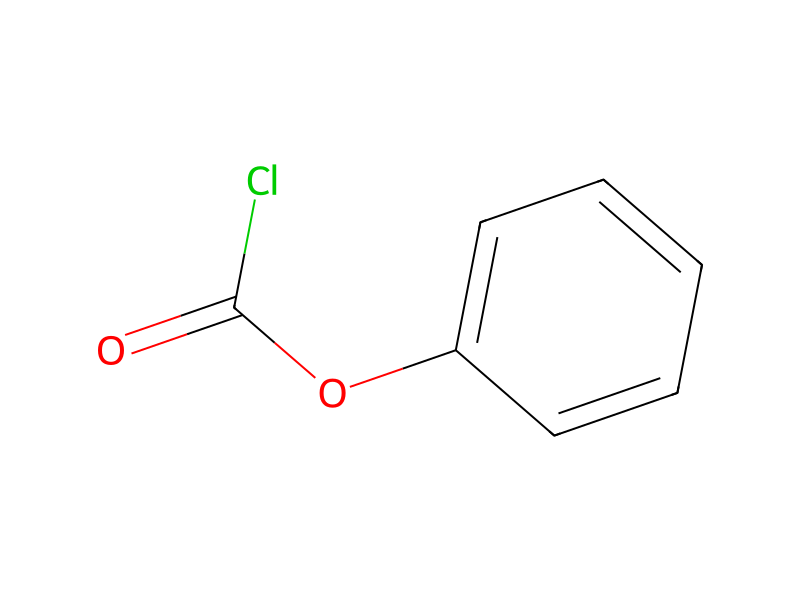
Into a 500-mL round-bottom flask, was placed (2-chloroethyl)(2,2,2-trifluoroethyl)amine (15 g, 92.85 mmol, 1.00 equiv), a solution of triethylamine (16.4 g, 162.07 mmol, 1.75 equiv) in dichloromethane (200 mL). This was followed by the addition of phenyl chloroformate (20.3 g, 129.66 mmol, 1.40 equiv) dropwise with stirring at 0° C. The resulting solution was stirred overnight at room temperature. The reaction was then quenched by the addition of 100 mL of 1M HCl. The resulting mixture was washed with 2×100 mL of sodium bicarbonate (sat.). The organic phase was dried over anhydrous sodium sulfate and concentrated under vacuum. The residue was applied onto a silica gel column with petroleum ether. This resulted in 10 g (22%) of phenyl N-(2-chloroethyl)-N-(2,2,2-trifluoroethyl)carbamate as light yellow oil. (ES, m/z): 283 [M+H]+