StartseiteMCPWorkbenchSkills
StartseiteWorkbenchBenachrichtigungenMein Bereich
llms.txt · MCP-AnleitungDatenschutz · Nutzungsbedingungen · Supportv1.8.3
  1. Startseite
  2. /Reaktion

Hydrochloric Acid → N-tetrahydrofurfuryl-3-(4-chloro-2-trifluoromethylphenyloxy)-5-methylpyrazole-1-carboxamide

HRID 644902
Drucken

Reaktionsgleichung

Reaktionsgleichung von HRID 644902
Cl[C:2](OC(Cl)(Cl)Cl)=[O:3].[Cl:9][C:10]1[CH:15]=[CH:14][C:13]([O:16][C:17]2[CH:21]=[C:20]([CH3:22])[NH:19][N:18]=2)=[C:12]([C:23]([F:26])([F:25])[F:24])[CH:11]=1.C(N(CC)CC)C.[CH2:34]([NH2:40])[CH:35]1[O:39][CH2:38][CH2:37][CH2:36]1.Cl>C(OCC)(=O)C>[CH2:34]([NH:40][C:2]([N:19]1[C:20]([CH3:22])=[CH:21][C:17]([O:16][C:13]2[CH:14]=[CH:15][C:10]([Cl:9])=[CH:11][C:12]=2[C:23]([F:25])([F:24])[F:26])=[N:18]1)=[O:3])[CH:35]1[O:39][CH2:38][CH2:37][CH2:36]1
KomponentenVersuchsvorschriftAufarbeitungQuellen und NachweiseNotizen zur Reaktion

Komponenten

7

Edukt 5

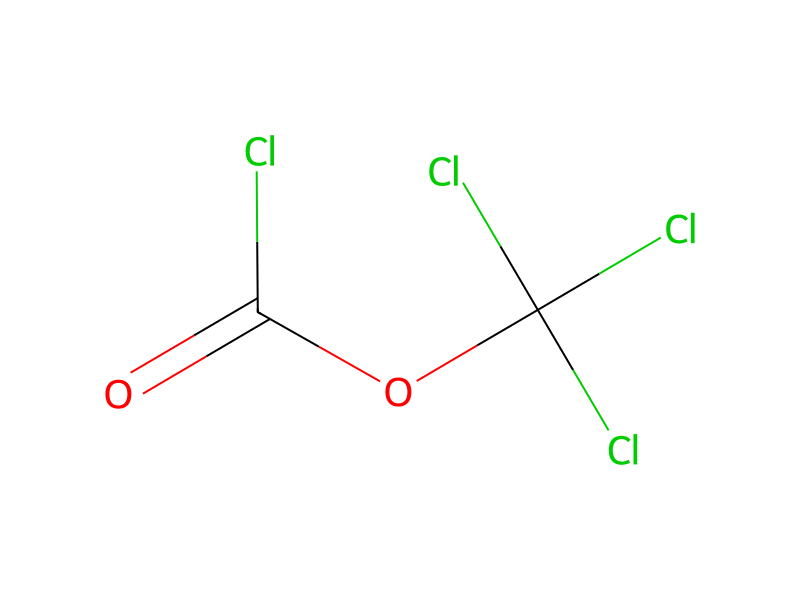
HCID 313Hydrochloric AcidHCID 8471TriethylamineHCID 10426DiphosgeneHCID 253298TetrahydrofurfurylamineHCID 178623473-(4-Chloro-2-trifluoromethylphenyloxy)-5-methylpyrazole

Produkt 1

HCID 17862366
N-tetrahydrofurfuryl-3-(4-chloro-2-trifluoromethylphenyloxy)-5-methylpyrazole-1-carboxamide
Ausbeute 49,5 %

Reagenzien, Katalysatoren, Lösungsmittel 1

HCID 8857Ethyl AcetateLösungsmittel

Versuchsvorschrift

Trichloromethyl chloroformate (0.58 g, 3.0 mmol) was added to a solution of 3-(4-chloro-2-trifluoromethylphenyloxy)-5-methylpyrazole (0.55 g, 2.0 mmol) in ethyl acetate (10 ml) at 0° C., and the mixture was further stirred at an ambient temperature for 30 minutes. Then, the mixture was refluxed under heating for 1 hour. The solvent was distilled off from the reaction mixture and then the reaction mixture was cooled to 0° C. and dissolved in toluene (10 ml). Triethylamine (0.61 g, 6.0 mmol) and tetrahydrofurfurylamine (1.01 g, 10.0 mmol) were added, and while the mixture was allowed to have room temperature gradually, it was stirred for 1 hour. Then, the mixture was refluxed under heating for 2 hours. After completion of the reaction, the reaction mixture was poured into 1N hydrochloric acid (10 ml), and the mixture was extracted with ethyl acetate (10 ml×2). An organic layer was washed with water (10 ml×3), dried over anhydrous magnesium sulfate and filtered to remove a desiccant, and the solvent was distilled off from the filtrate under reduced pressure. The resultant crude product was purified with a silica gel column (ethyl acetate/hexane=1/10), to give a colorless viscous substance of N-tetrahydrofurfuryl-3-(4-chloro-2-trifluoromethylphenyloxy)-5-methylpyrazole-1-carboxamide (0.40 g, yield: 48.9%). 1H-NMR (CDCl3, TMS, ppm): δ 1.55-1.66 (m, 1H), 1.84-2.02 (m, 3H), 2.59 (d, J=0.8 Hz, 3H), 3.26-3.37 (m, 1H), 3.54 (ddd, J=3.7, 6.2 and 13.8 Hz, 1H), 3.71-3.90 (m, 2H), 4.00-4.16 (m, 1H), 5.74 (q, J=0.8 Hz, 1H), 7.18 (br s, 1H), 7.25 (d, J=8.7 Hz, 1H), 7.48 (dd, J=2.5 and 8.7 Hz, 1H), 7.64 (d, J=2.5 Hz, 1H).


Aufarbeitung

  1. temperatureThen, the mixture was refluxed
  2. temperatureunder heating for 1 hour
  3. distillationThe solvent was distilled off from the reaction mixture
  4. temperaturethe reaction mixture was cooled to 0° C.
  5. dissolutiondissolved in toluene (10 ml)
  6. customto have room temperature
  7. stirringit was stirred for 1 hour
  8. temperatureThen, the mixture was refluxed
  9. temperatureunder heating for 2 hours
  10. customAfter completion of the reaction
  11. extractionthe mixture was extracted with ethyl acetate (10 ml×2)
  12. washAn organic layer was washed with water (10 ml×3)
  13. dry with materialdried over anhydrous magnesium sulfate
  14. filtrationfiltered
  15. customto remove a desiccant, and the solvent
  16. distillationwas distilled off from the filtrate under reduced pressure
  17. customThe resultant crude product was purified with a silica gel column (ethyl acetate/hexane=1/10)

Quellen und Nachweise

ORD-Eintrag
ord-09145722857142f68f3a98adf080519e
Quelldatensatz
uspto-grants-2010_04
DOI
10.6084/m9.figshare.5104873.v1
Patentnummer
US07700786B2

Notizen zur Reaktion

Auf dieser SeiteKomponentenVersuchsvorschriftAufarbeitungQuellen und NachweiseNotizen zur Reaktion