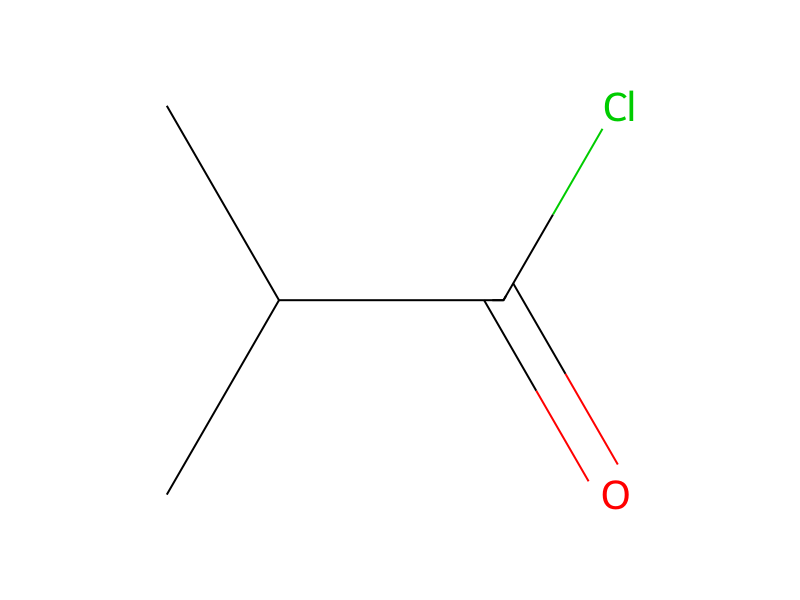
To an oven-dried round bottom flask was added anhydrous AlCl3 (24.1 g, 0.18 mol), which was subsequently purged with Ar. Methylene chloride (10 mL) was added via syringe and the resulting slurry was cooled to 0° C. in an ice bath. The isobutryl chloride (6.9 mL, 6.6×10⁻² mol) was added dropwise via syringe. The methyl phenoxy acetate (8.7 mL, 6.0×10⁻² mol) was added dropwise via syringe. The reaction was stirred until deemed complete by thin layer chromatography (TLC) (25% ethyl acetate in hexane) (approximately 2 h). The reaction mixture was poured slowly into a mixture of ice (100 g) and concentrated HCl (40 mL). The organic layer was separated and the organic layer extracted with methylene chloride (3×100 mL). The combined organic layers were washed with water (3×100 mL) and dried over MgSO4. The solvent was removed in vacuo to reveal 14 g of a white, crystalline solid (quantitative yield). 1H NMR (300 NMR, CDCl3) δ7.97 (2H, d, J=8.9 Hz), 6.96 (2H, J=8.9 Hz), 4.71 (2H, s), 3.82 (3H, s), 3.51 (1H, septet, J=6.8 Hz), 1.22 (6H, d, J=6.8 Hz).