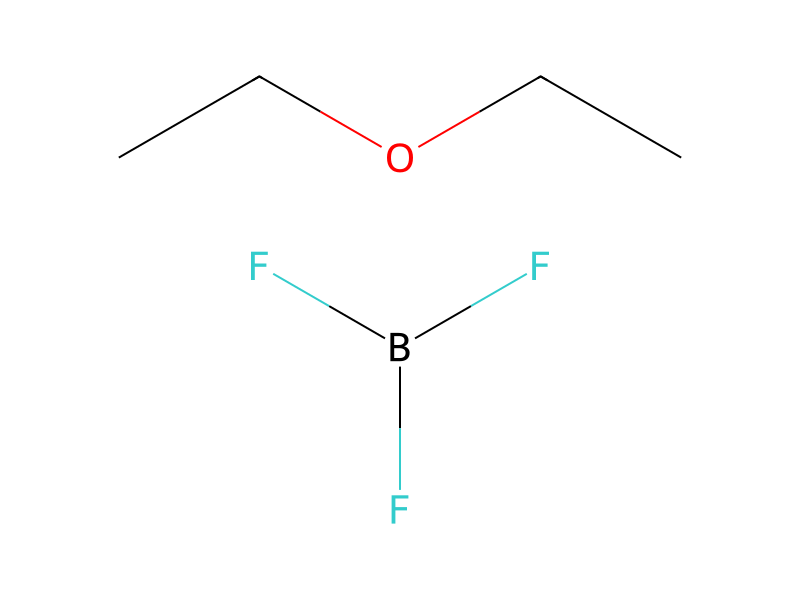
[Cl:1][C:2]1[CH:9]=[CH:8][C:5]([CH2:6][SH:7])=[CH:4][CH:3]=1.B(F)(F)F.CCOCC.[F:19][C:20]1[CH:25]=[CH:24][CH:23]=[CH:22][C:21]=1[C:26]1(O)[CH2:31][CH2:30][N:29]([CH3:32])[CH2:28][CH2:27]1>C(O)(=O)C>[ClH:1].[Cl:1][C:2]1[CH:9]=[CH:8][C:5]([CH2:6][S:7][C:26]2([C:21]3[CH:22]=[CH:23][CH:24]=[CH:25][C:20]=3[F:19])[CH2:31][CH2:30][N:29]([CH3:32])[CH2:28][CH2:27]2)=[CH:4][CH:3]=19.9 ml (11.9 g) of 4-chlorobenzyl mercaptan and 11.1 ml of boron trifluoride etherate are added sequentially to 5.00 g of 4-(2-fluorophenyl)-4-hydroxy-1-methylpiperidine. Example 1a, in 11.1 ml of glacial acetic acid. The reaction is stirred at 55°-60° C. for 48 hours. The excess reagents are removed at 80° C. in vacuo and the residue is taken up with a 1:1 ether-2 N hydrochloride acid mixture. This biphasic mixture is stirred for 2.5 hours and then for an additional ten minutes after 50 ml of ice are added. The ether layer is decanted off. The aqueous layer is sequentially washed with ether and filtered to collect a crude product. The product is washed with a small portion of water and then a large portion of ether to give a white powder. The powder is recrystallized from acetone to give white crystals, mp 164°-166° C. of 4-(4-chlorobenzylthio)-4-(2-fluorophenyl)- 1-methylpiperidine hydrochloride.