1,8-Diazabicyclo(5.4.0)undec-7-ene → 4-Bromo-1-ethenyl-2-fluorobenzene
Reaktionsgleichung

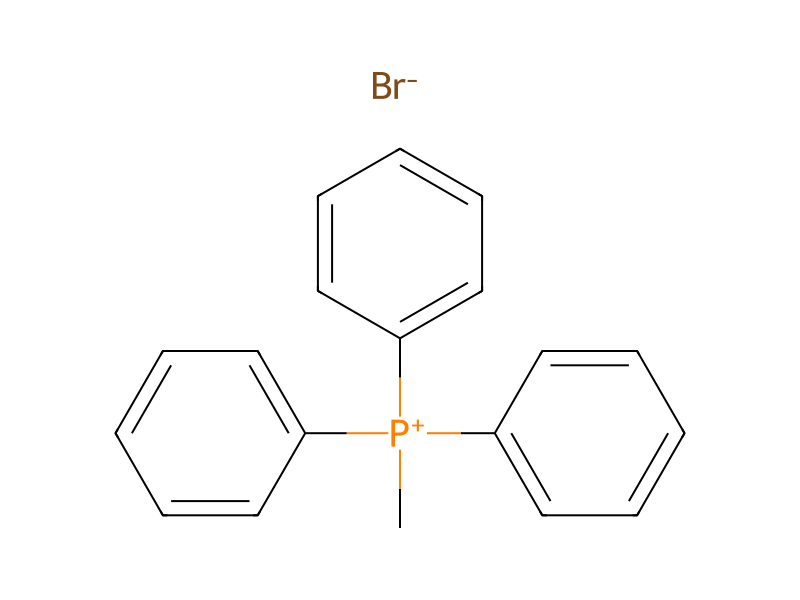
[Br:1][C:2]1[CH:9]=[CH:8][C:5]([CH:6]=O)=[C:4]([F:10])[CH:3]=1.N12CCCN=C1CCCC[CH2:12]2>ClCCl.[Br-].C[P+](C1C=CC=CC=1)(C1C=CC=CC=1)C1C=CC=CC=1>[Br:1][C:2]1[CH:9]=[CH:8][C:5]([CH:6]=[CH2:12])=[C:4]([F:10])[CH:3]=1Komponenten
5
Edukt 2


Produkt 1

Reagenzien, Katalysatoren, Lösungsmittel 2

Versuchsvorschrift
10.0 g (49.3 mmol) of 4-bromo-2-fluorobenzaldehyde were dissolved in 40 ml of dichloromethane, admixed with 9.6 ml (9.7 g, 64.0 mmol) of 1,8-diazabicyclo[5.4.0]undec-7-ene and 19.4 g (54.2 mmol) of methyltriphenylphosphonium bromide and stirred at RT for 3 h. The reaction mixture was purified on silica gel (eluent: dichloromethane). The product fractions were combined, concentrated under reduced pressure and dried under high vacuum. Yield: 4.5 g (41% of theory)
Aufarbeitung
- customThe reaction mixture was purified on silica gel (eluent: dichloromethane)
- concentrationconcentrated under reduced pressure
- customdried under high vacuum
Quellen und Nachweise
- ORD-Eintrag
- ord-faae670b9ace4328af610963ccf189b7
- Quelldatensatz
- uspto-grants-2011_12
- Patentnummer
- US08084469B2
Notizen zur Reaktion
Wird geladen…