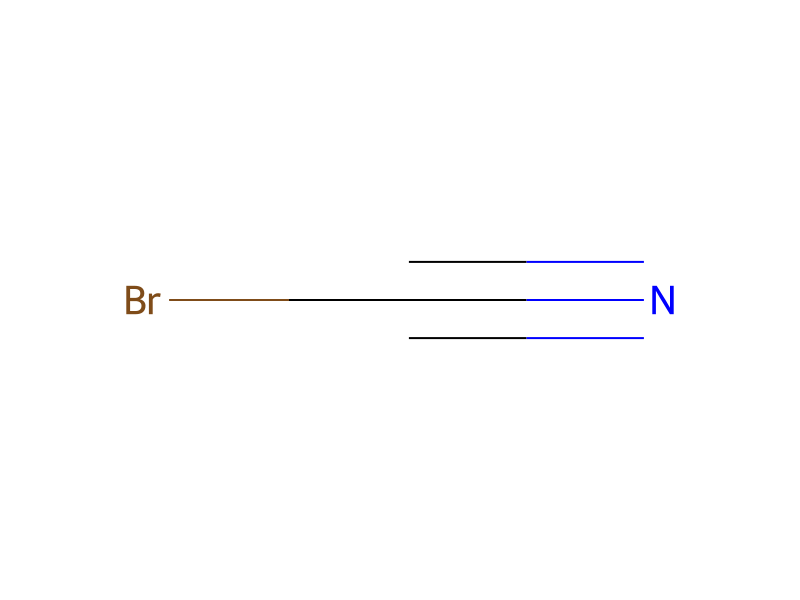
Cyanogen Bromide → 5-[4-(Pyridin-3-yloxy)phenyl]-1,3,4-oxadiazol-2-amine hydrobromide salt
HRID 661429
Reaktionsgleichung

[N:1]1[CH:6]=[CH:5][CH:4]=[C:3]([O:7][C:8]2[CH:17]=[CH:16][C:11]([C:12]([NH:14][NH2:15])=[O:13])=[CH:10][CH:9]=2)[CH:2]=1.[N:18]#[C:19][Br:20]>C1COCC1>[BrH:20].[N:1]1[CH:6]=[CH:5][CH:4]=[C:3]([O:7][C:8]2[CH:9]=[CH:10][C:11]([C:12]3[O:13][C:19]([NH2:18])=[N:15][N:14]=3)=[CH:16][CH:17]=2)[CH:2]=1Komponenten
4
Edukt 2

Produkt 1

Reagenzien, Katalysatoren, Lösungsmittel 1

Versuchsvorschrift
4-(pyridine-3-yloxy)benzohydrazide (3.7 g, 16.14 mmol) was dissolved in 100 mL of anhydrous THF and 3.0 M solution of cyanogen bromide (5.38 mL, 16.14 mmol) was added via syringe. Within 5-10 min of stirring an orange precipitate started to form. The reaction mixture was brought to reflux and refluxed for 1 hr. Then it was cooled down to ambient temperature and filtered. The collected orange precipitate was washed with ca. 100 mL of THF, ca. 100 mL of EtOAc, anhydrous Et20 and dried in vacuo to give the title product as an orange solid (4.40 g). Yield 81.4%.