Hydrochloric Acid → alpha-(3,4-Dimethoxyphenethylaminomethyl)-2-methoxybenzylalcohol hydrochloride
Reaktionsgleichung

[CH3:1][O:2][C:3]1[CH:8]=[CH:7][CH:6]=[CH:5][C:4]=1[CH:9]1[CH2:11][O:10]1.[CH3:12][O:13][C:14]1[CH:15]=[C:16]([CH:20]=[CH:21][C:22]=1[O:23][CH3:24])[CH2:17][CH2:18][NH2:19].C(Cl)(Cl)[Cl:26].Cl>C(O)C.C(OCC)C>[ClH:26].[CH3:12][O:13][C:14]1[CH:15]=[C:16]([CH:20]=[CH:21][C:22]=1[O:23][CH3:24])[CH2:17][CH2:18][NH:19][CH2:11][CH:9]([OH:10])[C:4]1[CH:5]=[CH:6][CH:7]=[CH:8][C:3]=1[O:2][CH3:1]Komponenten
7
Edukt 4


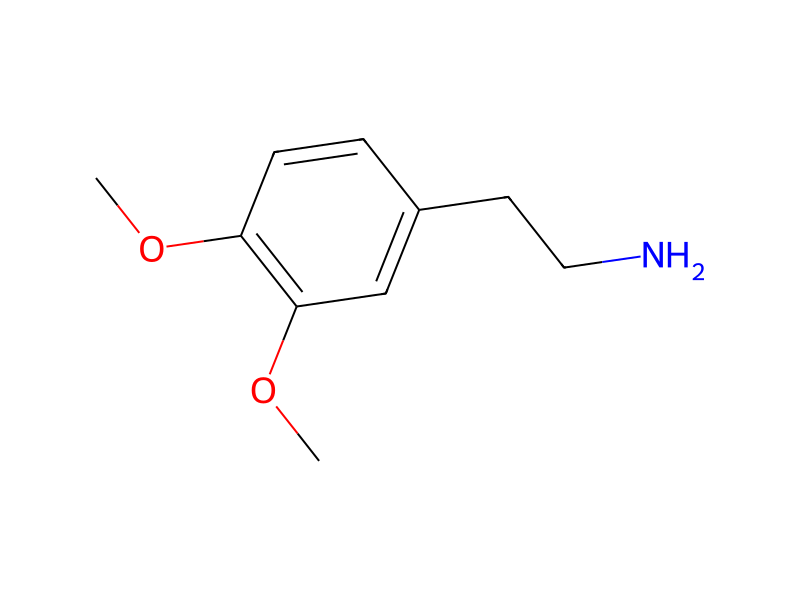

Produkt 1

Reagenzien, Katalysatoren, Lösungsmittel 2


Versuchsvorschrift
A mixture of 0.5 g of 2-(2-methoxyphenyl)oxirane (crude product) and 600 mg of 3,4-dimethoxyphenethylamine is heated at 130° to 140° C. for 2 hours. After cooling, chloroform is added to the reaction mixture, and said mixture is washed with water. The mixture is dried and evaporated to remove solvent. 2 ml of ethanol are added to the residue obtained. Then, hydrochloric acid-containing diethylether is added to the ethanol mixture, and crystalline precipitates are collected by filtration. 290 mg of α-(3,4-dimethoxyphenethylaminomethyl)-2-methoxybenzylalcohol hydrochloride are obtained as crystals. M.p. 142°-143° C.
Aufarbeitung
- temperatureis heated at 130° to 140° C. for 2 hours
- temperatureAfter cooling
- washis washed with water
- customThe mixture is dried
- customevaporated
- customto remove solvent
- addition2 ml of ethanol are added to the residue
- customobtained
- customcrystalline precipitates
- filtrationare collected by filtration
Quellen und Nachweise
- ORD-Eintrag
- ord-3c46bf617041418a86107e3f0c445eca
- Quelldatensatz
- uspto-grants-1978_12
- Patentnummer
- US04131686
Notizen zur Reaktion
Wird geladen…