Reaktionsgleichung
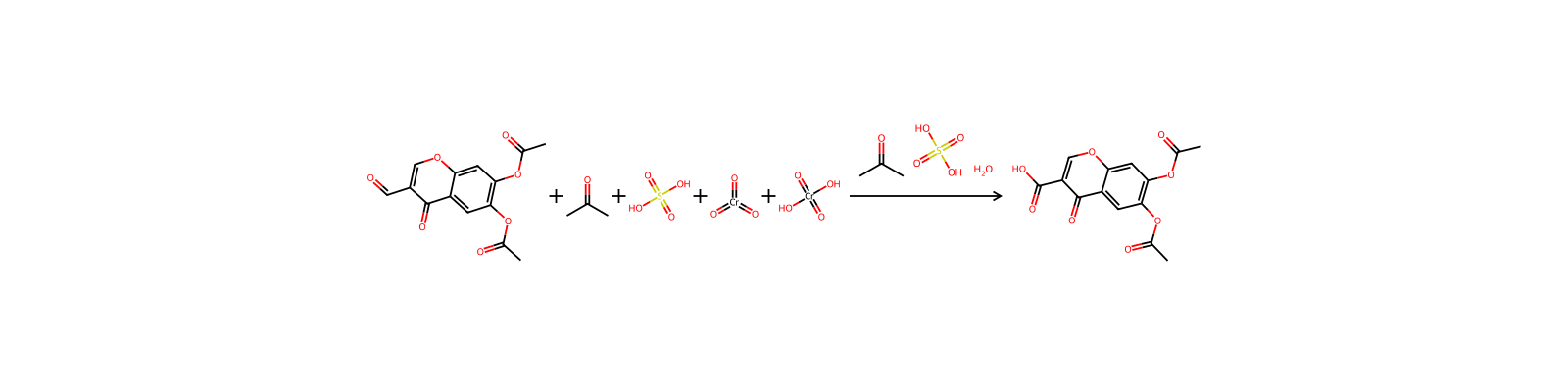
[C:1]([O:4][C:5]1[CH:6]=[C:7]2[C:12](=[CH:13][C:14]=1[O:15][C:16](=[O:18])[CH3:17])[O:11][CH:10]=[C:9]([CH:19]=[O:20])[C:8]2=[O:21])(=[O:3])[CH3:2].CC(C)=[O:24].OS(O)(=O)=O.O=[Cr](=O)=O.[Cr](O)(O)(=O)=O>CC(C)=O.S(=O)(=O)(O)O.O>[C:1]([O:4][C:5]1[CH:6]=[C:7]2[C:12](=[CH:13][C:14]=1[O:15][C:16](=[O:18])[CH3:17])[O:11][CH:10]=[C:9]([C:19]([OH:24])=[O:20])[C:8]2=[O:21])(=[O:3])[CH3:2]Komponenten
7
Edukt 3

Produkt 1

Reagenzien, Katalysatoren, Lösungsmittel 3



Versuchsvorschrift
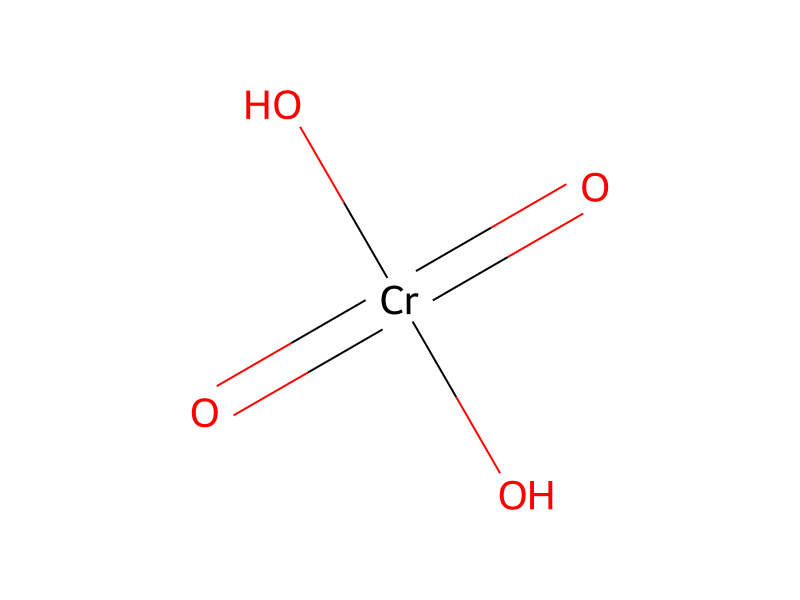
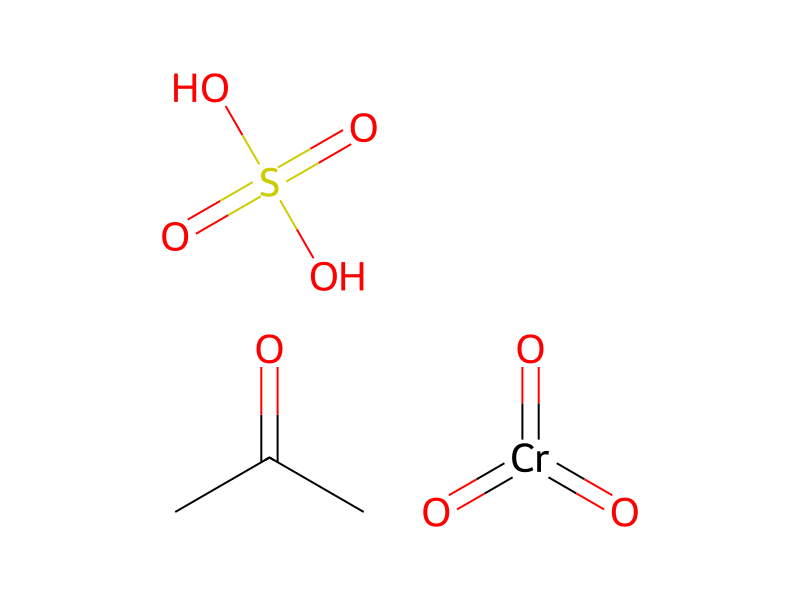
6,7-Diacetoxychromone-3-carboxaldehyde (17.8 g) was dissolved in acetone (1 liter). To this solution was added dropwise with stirring Jones reagent (32.8 ml) which had been previously prepared by dissolving chromic acid (133.6 g) in concentrated sulfuric acid (115 ml) diluted with water to a volume of 500 ml.
Aufarbeitung
- customhad been previously prepared
Quellen und Nachweise
- ORD-Eintrag
- ord-1797cad0a35a4ba999469932486ad23a
- Quelldatensatz
- uspto-grants-1982_08
- Patentnummer
- US04344944
Verknüpfte Notizen
Wird geladen…