Hydrochloric Acid → 4-(2,3-Dihydro-indol-1-yl)-4-oxo-butyric acid
HRID 705522
Reaktionsgleichung

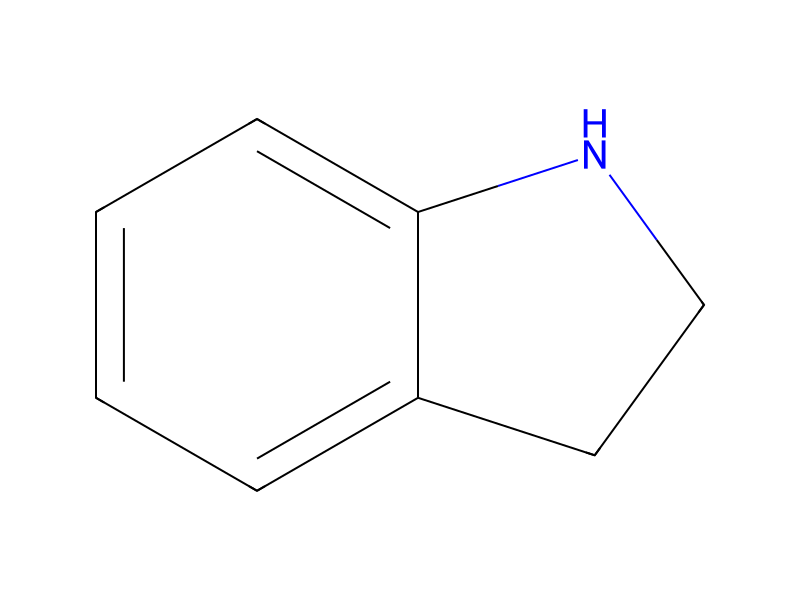
[NH:1]1[C:9]2[C:4](=[CH:5][CH:6]=[CH:7][CH:8]=2)[CH2:3][CH2:2]1.[C:10]1(=[O:16])[O:15][C:13](=[O:14])[CH2:12][CH2:11]1.Cl>N1C=CC=CC=1>[N:1]1([C:10](=[O:16])[CH2:11][CH2:12][C:13]([OH:15])=[O:14])[C:9]2[C:4](=[CH:5][CH:6]=[CH:7][CH:8]=2)[CH2:3][CH2:2]1Komponenten
5
Edukt 3


Produkt 1

Reagenzien, Katalysatoren, Lösungsmittel 1

Versuchsvorschrift
The procedure was modified from the reported one. In a 20 mL microwave reaction tube equipped with a magnetic stirring bar, indoline (1.196 g, 10 mmol), succinic anhydride (1.004 g, 10 mmol) and pyridine (8 mL) was mixed at room temperature. The tube was capped and irradiated in the microwave reactor (Biotage Initiator I) at 90° C. for 20 minutes. The reaction mixture was acidified to pH=1 using 2 M HCl. The resulting precipitate was filtered, washed with water and dried under high vacuum to afford light pink solid product (1.849 g, 92%). 1H NMR (400 MHz, CDCl3) d 8.19 (d, 1H, J=8.5 Hz), 7.18 (m, 2H), 7.03 (t, 1H, J=7.4 Hz), 4.08 (t, 2H, J=8.4 Hz), 3.22 (t, 2H, J=8.4 Hz), 2.78 (m, 4H).