StartseiteMCPWorkbenchSkills
StartseiteWorkbenchBenachrichtigungenMein Bereich
llms.txt · MCP-AnleitungDatenschutz · Nutzungsbedingungen · Supportv1.8.0
  1. Startseite
  2. /Reaktion

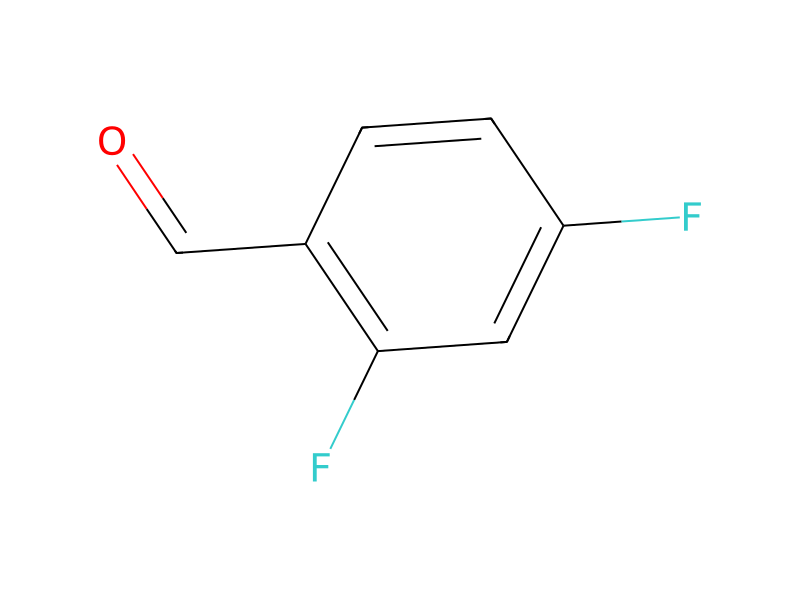
2,4-Difluorobenzaldehyde → 9-[1-(2,4-Difluoro-benzyl)-azetidin-3-yl]-2-(2-isopropyl-2H-[1,2,4]triazol-3-yl)-4,5-dihydro-6-oxa-3-thia-1-aza-benzo[e]azulene

HRID 708123
Notizen
Druckvorschau

Reaktionsgleichung

Reaktionsgleichung von HRID 708123
[NH:1]1[CH2:4][CH:3]([C:5]2[CH:6]=[CH:7][C:8]3[O:17][CH2:16][CH2:15][C:14]4[S:13][C:12]([C:18]5[N:19]([CH:23]([CH3:25])[CH3:24])[N:20]=[CH:21][N:22]=5)=[N:11][C:10]=4[C:9]=3[CH:26]=2)[CH2:2]1.[F:27][C:28]1[CH:35]=[C:34]([F:36])[CH:33]=[CH:32][C:29]=1[CH:30]=O.C(O[BH-](OC(=O)C)OC(=O)C)(=O)C.[Na+].C(=O)(O)[O-].[Na+]>C(Cl)(Cl)Cl>[F:27][C:28]1[CH:35]=[C:34]([F:36])[CH:33]=[CH:32][C:29]=1[CH2:30][N:1]1[CH2:4][CH:3]([C:5]2[CH:6]=[CH:7][C:8]3[O:17][CH2:16][CH2:15][C:14]4[S:13][C:12]([C:18]5[N:19]([CH:23]([CH3:24])[CH3:25])[N:20]=[CH:21][N:22]=5)=[N:11][C:10]=4[C:9]=3[CH:26]=2)[CH2:2]1
KomponentenVersuchsvorschriftAufarbeitungQuellen und NachweiseNotizen zur Reaktion

Komponenten

6

Edukt 4

HCID 737702,4-DifluorobenzaldehydeHCID 516892Sodium BicarbonateHCID 5049666Sodium triacetoxyborohydrideHCID 670505299-azetidin-3-yl-2-(2-isopropyl-2H-[1,2,4]triazol-3-yl)-4,5-dihydro-6-oxa-3-thia-1-aza-benzo[e]azulene

Produkt 1

HCID 582039679-[1-(2,4-Difluoro-benzyl)-azetidin-3-yl]-2-(2-isopropyl-2H-[1,2,4]triazol-3-yl)-4,5-dihydro-6-oxa-3-thia-1-aza-benzo[e]azulene
Ausbeute 50,4 %

Reagenzien, Katalysatoren, Lösungsmittel 1

HCID 6212ChloroformLösungsmittel

Versuchsvorschrift

A mixture of 9-azetidin-3-yl-2-(2-isopropyl-2H-[1,2,4]triazol-3-yl)-4,5-dihydro-6-oxa-3-thia-1-aza-benzo[e]azulene (0.18 g, 0.49 mmol), 2,4-difluorobenzaldehyde (64 μL, 0.59 mmol) and 4 Å molecular sieves in chloroform (7 mL) was heated to reflux for 3.5 hours. After cooling sodium triacetoxyborohydride (0.50 g, 2.36 mmol) was added and the mixture was stirred at RT overnight. Aqueous saturated sodium bicarbonate solution was added and the phases were separated. The aqueous phase was extracted with 10% MeOH/DCM (×4) and the combined organic phase was dried (Na2SO4) and concentrated in vacuo. The resultant residue was purified by flash chromatography (SiO2, 50-100% EtOAc in cyclohexane) to give 372 (122 mg, 50%). LCMS: RT=8.65 min, [M+H]+=494. 1H NMR δ (ppm) (CDCl3): 8.31 (1H, d, J=2.33 Hz), 7.90 (1H, s), 7.33 (1H, q, J=7.71 Hz), 7.14 (1H, dd, J=8.27, 2.33 Hz), 7.01 (1H, d, J=8.26 Hz), 6.86-6.74 (2H, m), 5.94-5.84 (1H, m), 4.37 (2H, t, J=5.06 Hz), 3.83-3.73 (3H, m), 3.68 (2H, s), 3.39 (2H, t, J=5.07 Hz), 3.29-3.23 (2H, m), 1.61 (6H, d, J=6.65 Hz)

Aufarbeitung

  1. temperaturewas heated
  2. temperatureto reflux for 3.5 hours
  3. additionwas added
  4. customthe phases were separated
  5. extractionThe aqueous phase was extracted with 10% MeOH/DCM (×4)
  6. dry with materialthe combined organic phase was dried (Na2SO4)
  7. concentrationconcentrated in vacuo
  8. customThe resultant residue was purified by flash chromatography (SiO2, 50-100% EtOAc in cyclohexane)

Quellen und Nachweise

ORD-Eintrag
ord-2d51b790169a43edbd8a98ac0a1d481d
Quelldatensatz
uspto-grants-2015_11
DOI
10.6084/m9.figshare.5104873.v1
Patentnummer
US09175009B2

Notizen zur Reaktion

Wird geladen…

Auf dieser SeiteKomponentenVersuchsvorschriftAufarbeitungQuellen und NachweiseNotizen zur Reaktion