StartseiteMCPWorkbenchSkills
StartseiteWorkbenchBenachrichtigungenMein Bereich
llms.txt · MCP-AnleitungDatenschutz · Nutzungsbedingungen · Supportv1.8.3
  1. Startseite
  2. /Reaktion

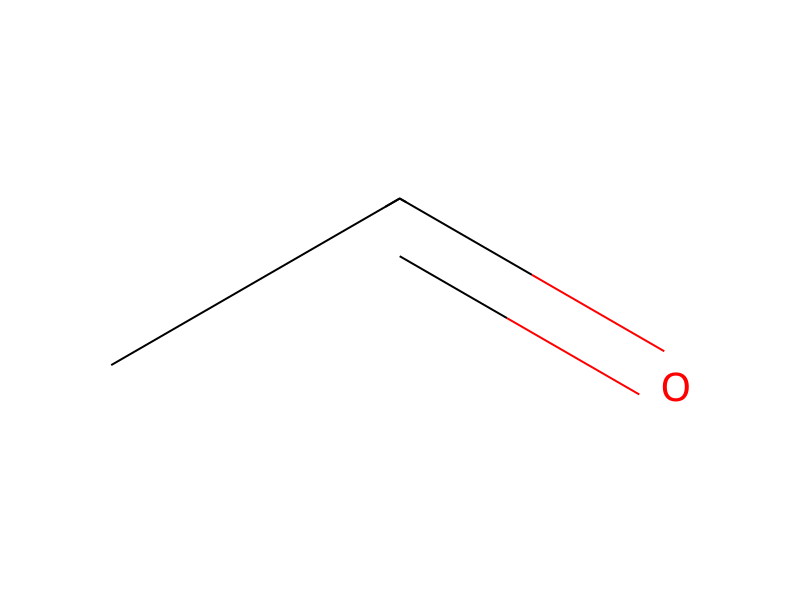
Acetaldehyde → 1-(3,5-Dibromopyridin-4-yl)ethanol

HRID 712705
Drucken

Reaktionsgleichung

Reaktionsgleichung von HRID 712705
[Br:1][C:2]1[CH:3]=[N:4][CH:5]=[C:6]([Br:8])[CH:7]=1.[Li+].CC([N-]C(C)C)C.[CH:17](=[O:19])[CH3:18].[NH4+].[Cl-]>C1COCC1>[Br:1][C:2]1[CH:3]=[N:4][CH:5]=[C:6]([Br:8])[C:7]=1[CH:17]([OH:19])[CH3:18]
KomponentenReaktionsbedingungenVersuchsvorschriftAufarbeitungQuellen und NachweiseNotizen zur Reaktion

Komponenten

6

Edukt 4

HCID 177AcetaldehydeHCID 25517Ammonium ChlorideHCID 693693,5-DibromopyridineHCID 2724682Lithium diisopropylamide

Produkt 1

HCID 586226311-(3,5-Dibromopyridin-4-yl)ethanolAusbeute 67 %

Reagenzien, Katalysatoren, Lösungsmittel 1

HCID 8028
Tetrahydrofuran
Lösungsmittel
3×

Reaktionsbedingungen

Temperatur
-78 °C

Versuchsvorschrift

To a cooled (−78° C.) solution of 3,5-dibromo-pyridine (2.0 g, 8.4 mmol) in dry THF (80 mL) is added LDA in THF solution (2M; 5.1 mL, 10.1 mmol) and the mixture is stirred at −78° C. for 2 h. Acetaldehyde in THF solution (5M; 3.4 mL, 16.9 mmol) is added and the mixture is stirred at −78° C. for 30 min, then at room temperature for 16 h. Saturated aqueous NH4Cl solution is added and the mixture is extracted with EtOAc. The organic layers are combined and concentrated to give the crude product. Purification by flash column chromatography affords 2.9 g (67% purity) of 1-(3,5-dibromo-pyridin-4-yl)-ethanol.

Aufarbeitung

  1. stirringthe mixture is stirred at −78° C. for 30 min
  2. waitat room temperature for 16 h
  3. extractionthe mixture is extracted with EtOAc
  4. concentrationconcentrated
  5. customto give the crude product
  6. customPurification by flash column chromatography

Quellen und Nachweise

ORD-Eintrag
ord-94da2646746c43a48491731164f96134
Quelldatensatz
uspto-grants-2015_11
DOI
10.6084/m9.figshare.5104873.v1
Patentnummer
US09181272B2

Notizen zur Reaktion

Auf dieser SeiteKomponentenReaktionsbedingungenVersuchsvorschriftAufarbeitungQuellen und NachweiseNotizen zur Reaktion