StartseiteMCPWorkbenchSkills
StartseiteWorkbenchBenachrichtigungenMein Bereich
llms.txt · MCP-AnleitungDatenschutz · Nutzungsbedingungen · Supportv1.8.3
  1. Startseite
  2. /Reaktion

Acetone → N,N'-1,10-Decanediylbis(2-propenamide)

HRID 713169
Drucken

Reaktionsgleichung

Reaktionsgleichung von HRID 713169
[NH2:1][CH2:2][CH2:3][CH2:4][CH2:5][CH2:6][CH2:7][CH2:8][CH2:9][CH2:10][CH2:11][NH2:12].C(N([CH2:18][CH3:19])CC)C.[C:20](Cl)(=[O:23])[CH:21]=[CH2:22].O.C[C:27](C)=[O:28]>>[CH2:11]([NH:12][C:27](=[O:28])[CH:18]=[CH2:19])[CH2:10][CH2:9][CH2:8][CH2:7][CH2:6][CH2:5][CH2:4][CH2:3][CH2:2][NH:1][C:20](=[O:23])[CH:21]=[CH2:22]
KomponentenReaktionsbedingungenVersuchsvorschriftAufarbeitungQuellen und NachweiseNotizen zur Reaktion

Komponenten

6

Edukt 5

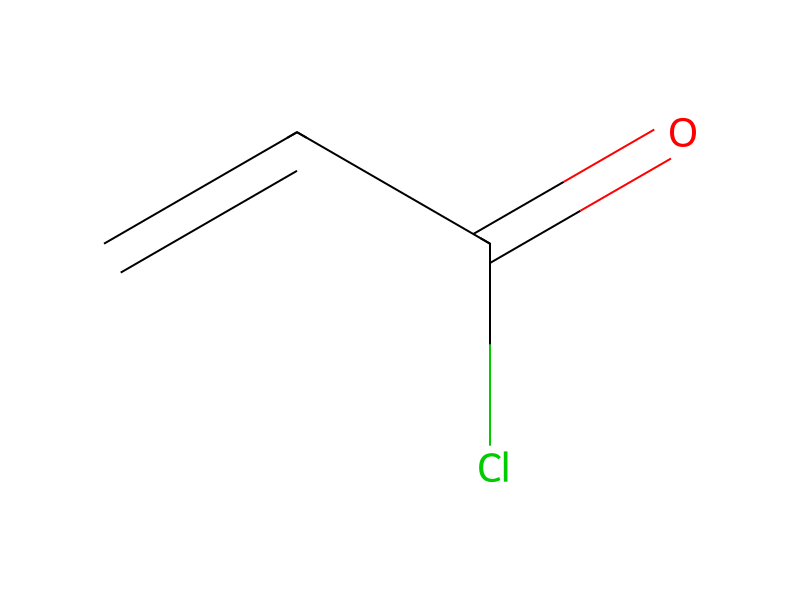
HCID 180AcetoneHCID 962WaterHCID 13171,10-DecanediamineHCID 8471TriethylamineHCID 13140Acryloyl chloride2×

Produkt 1

HCID 22719084N,N'-1,10-Decanediylbis(2-propenamide)

Reaktionsbedingungen

Temperatur
15 °C

Versuchsvorschrift

Into a dry 1000-mL, three-necked round-bottom flask equipped with an overhead stirrer and a dropping funnel were placed 8.6 g (0.05 mol) of 1,10-diaminodecane, 34 g (0.33 mol) of triethylamine and 200 mL of acetone (Aldrich acetone HPLC≧99.9%). The mixture was cooled to 15° C. in an ice bath under nitrogen and a total of 27 g (0.3 mol) of acryloyl chloride (97% Aldrich) was added dropwise with constant stirring over a period of 1 hour. The reaction was monitored with an internal temperature probe. When the addition was complete, the reaction was allowed to warm to ambient temperature and was stirred overnight. The reaction was terminated by the addition of 1 equivalent of water to the acryloyl chloride and allowed to stir for 30 minutes. The triethylamine hydrochloride salt was removed by passing the reaction solution through a filter. The reaction mixture was concentrated under reduced pressure and washed with 5% sodium bicarbonate, bubble evolved and a precipitate resulted. The white precipitate was washed with an excess of water and diethyl ether. The white precipitate was dissolved in a small amount of methanol and the product was precipitated again into water. The white precipitate was washed with diethyl ether and then dried under vacuum. The resulting powder was further purified by column chromatography over silica (dichloromethane/methanol, 9:1 v/v). The resulting yields were in the range of 50-70%. 1H NMR (CD3OD, 25° C., δ ppm, [6.2, 5.6, Olefin], [3.2-3.4 br-CH2-acrylamide, 1.6 br, 1.3 br-alkane]. MS m/e (MH+), calcd 280.22. found 281.3. A similar synthesis procedure can be used to make other N,N′-(Cmalkane-1,m-diyl)diacrylamides.


Aufarbeitung

  1. customInto a dry 1000-mL, three-necked round-bottom flask equipped with an overhead stirrer and a dropping funnel
  2. additionWhen the addition
  3. temperatureto warm to ambient temperature
  4. stirringwas stirred overnight
  5. stirringto stir for 30 minutes
  6. customThe triethylamine hydrochloride salt was removed
  7. concentrationThe reaction mixture was concentrated under reduced pressure
  8. washwashed with 5% sodium bicarbonate
  9. custombubble
  10. customa precipitate resulted
  11. washThe white precipitate was washed with an excess of water and diethyl ether
  12. dissolutionThe white precipitate was dissolved in a small amount of methanol
  13. customthe product was precipitated again into water
  14. washThe white precipitate was washed with diethyl ether
  15. customdried under vacuum
  16. customThe resulting powder was further purified by column chromatography over silica (dichloromethane/methanol, 9:1 v/v)
  17. customThe resulting yields
  18. customA similar synthesis procedure

Quellen und Nachweise

ORD-Eintrag
ord-e17d55ee42e54eb2b48e7e64e6c19688
Quelldatensatz
uspto-grants-2015_11
DOI
10.6084/m9.figshare.5104873.v1
Patentnummer
US09181364B2

Notizen zur Reaktion

Auf dieser SeiteKomponentenReaktionsbedingungenVersuchsvorschriftAufarbeitungQuellen und NachweiseNotizen zur Reaktion