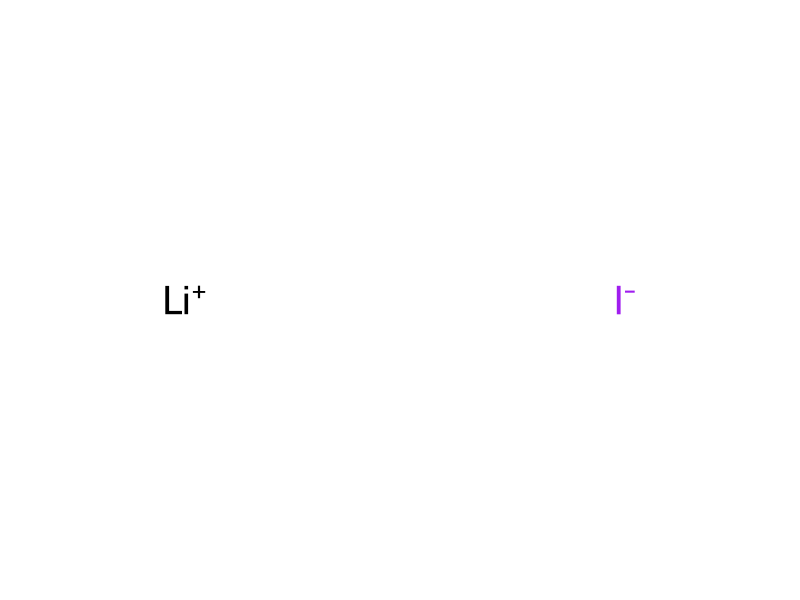
Lithium iodide → 2-(3,5-Difluorophenyl)-1,6-dihydro-1-(2-methoxyethyl)-6-oxo-5-pyrimidinecarboxylic acid
HRID 714424
Reaktionsgleichung

[F:1][C:2]1[CH:3]=[C:4]([C:9]2[N:10]([CH2:21][CH2:22][O:23][CH3:24])[C:11](=[O:20])[C:12]([C:15]([O:17]CC)=[O:16])=[CH:13][N:14]=2)[CH:5]=[C:6]([F:8])[CH:7]=1.[I-].[Li+]>C(OCC)(=O)C>[F:1][C:2]1[CH:3]=[C:4]([C:9]2[N:10]([CH2:21][CH2:22][O:23][CH3:24])[C:11](=[O:20])[C:12]([C:15]([OH:17])=[O:16])=[CH:13][N:14]=2)[CH:5]=[C:6]([F:8])[CH:7]=1Komponenten
4
Edukt 2

Produkt 1

Reagenzien, Katalysatoren, Lösungsmittel 1

Versuchsvorschrift
To a stirred solution of ethyl ethyl 2-(3,5-difluorophenyl)-1,6-dihydro-1-(2-methoxyethyl)-6-oxo-5-pyrimidinecarboxyate (i.e. the product from Example 9, Step C) (1.14 g, 3.37 mmol) in ethyl acetate (10 mL) was added lithium iodide powder (1.35 g, 10.0 mmol). The reaction mixture was heated to reflux for 24 h, cooled, and then stirred at room temperature for 72 h. The reaction mixture was concentrated under reduced pressure. To the resulting residue was added water (10 mL), followed by 6 N hydrochloric acid until the pH was 2. The mixture was extracted with dichloromethane, and the organic layer was dried (MgSO4) and concentrated under reduced pressure to afford a solid, which was washed with diethyl ether and dried under reduced pressure to afford the title product as a white solid (700 mg).