StartseiteMCPSkillsWorkbenchOpenChem
StartseiteWorkbenchBenachrichtigungenMein Bereich
llms.txt · skill.md · MCP-AnleitungDatenschutz · Nutzungsbedingungen · Supportv1.8.5
  1. Startseite
  2. /Reaktion

Diethyl Oxalate → Ethyl 2,3-dioxo-1,2,3,4-tetrahydroquinoxaline-6-carboxylate

HRID 716928
Drucken

Reaktionsgleichung

[NH2:1][C:2]1[CH:3]=[C:4]([CH:10]=[CH:11][C:12]=1[NH2:13])[C:5]([O:7][CH2:8][CH3:9])=[O:6].[C:14](OCC)(=[O:20])[C:15](OCC)=[O:16]>>[O:16]=[C:15]1[C:14](=[O:20])[NH:1][C:2]2[C:12](=[CH:11][CH:10]=[C:4]([C:5]([O:7][CH2:8][CH3:9])=[O:6])[CH:3]=2)[NH:13]1
KomponentenReaktionsbedingungenVersuchsvorschriftAufarbeitungQuellen und NachweiseNotizen zur Reaktion

Komponenten

3

Edukt 2

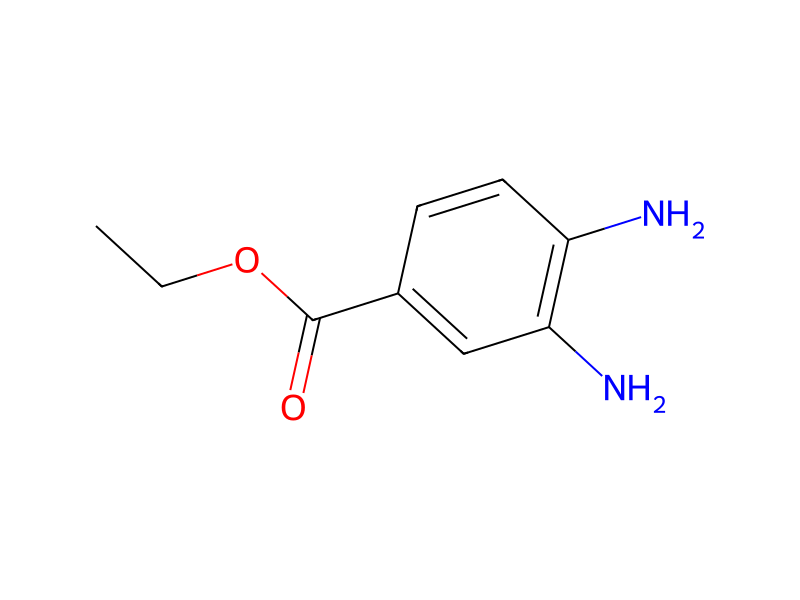
HCID 7268Diethyl OxalateHCID 458855Ethyl 3,4-Diaminobenzoate

Produkt 1

HCID 67042124Ethyl 2,3-dioxo-1,2,3,4-tetrahydroquinoxaline-6-carboxylate

Reaktionsbedingungen

Temperatur
140 °C

Versuchsvorschrift

Into a 250-mL round-bottom flask, was placed a solution of ethyl 3,4-diaminobenzoate (5 g, 27.75 mmol, 1.00 equiv) in diethyl oxalate (100 mL). The resulting solution was stirred overnight at 140° C. in an oil bath. Then the resulting solution was cooled to room temperature. The solids were collected by filtration. The solid was dried in an oven under reduced pressure. This resulted in 3.5 g (54%) of ethyl 2,3-dioxo-1,2,3,4-tetrahydroquinoxaline-6-carboxylate as a brown solid.

Aufarbeitung

  1. customInto a 250-mL round-bottom flask, was placed
  2. temperatureThen the resulting solution was cooled to room temperature
  3. filtrationThe solids were collected by filtration
  4. customThe solid was dried in an oven under reduced pressure
  5. customThis resulted in 3.5 g (54%) of ethyl 2,3-dioxo-1,2,3,4-tetrahydroquinoxaline-6-carboxylate as a brown solid

Quellen und Nachweise

ORD-Eintrag
ord-4db93266b9e0469082681957646160e3
Quelldatensatz
uspto-grants-2015_11
DOI
10.6084/m9.figshare.5104873.v1
Patentnummer
US09193693B2

Notizen zur Reaktion

Auf dieser SeiteKomponentenReaktionsbedingungenVersuchsvorschriftAufarbeitungQuellen und NachweiseNotizen zur Reaktion