StartseiteMCPWorkbenchSkills
StartseiteWorkbenchBenachrichtigungenMein Bereich
llms.txt · MCP-AnleitungDatenschutz · Nutzungsbedingungen · Supportv1.8.0
  1. Startseite
  2. /Reaktion

Toluene → 3-(4-isocyanatophenyl)-1-(4-(perfluoroethoxy)-phenyl)-1H-1,2,4-triazole

HRID 718128
Notizen
Druckvorschau

Reaktionsgleichung

Reaktionsgleichung von HRID 718128
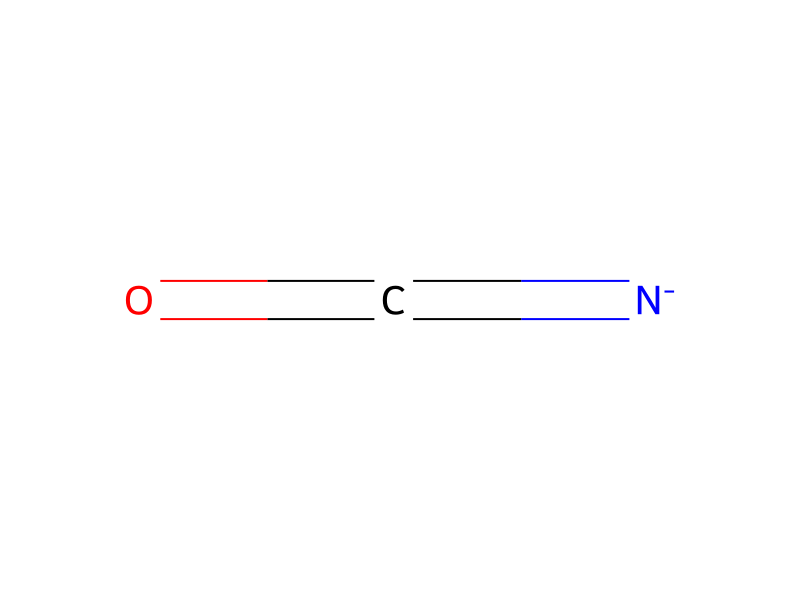
[F:1][C:2]([F:30])([O:7][C:8]1[CH:13]=[CH:12][C:11]([N:14]2[CH:18]=[N:17][C:16]([C:19]3[CH:29]=[CH:28][C:22](C(N=[N+]=[N-])=O)=[CH:21][CH:20]=3)=[N:15]2)=[CH:10][CH:9]=1)[C:3]([F:6])([F:5])[F:4].C1(C)C=CC=CC=1.[N-:38]=[C:39]=[O:40]>ClCCl>[N:38]([C:22]1[CH:28]=[CH:29][C:19]([C:16]2[N:17]=[CH:18][N:14]([C:11]3[CH:12]=[CH:13][C:8]([O:7][C:2]([F:30])([F:1])[C:3]([F:4])([F:5])[F:6])=[CH:9][CH:10]=3)[N:15]=2)=[CH:20][CH:21]=1)=[C:39]=[O:40]
KomponentenReaktionsbedingungenVersuchsvorschriftAufarbeitungQuellen und NachweiseNotizen zur Reaktion

Komponenten

5

Edukt 3

HCID 1140TolueneHCID 105034IsocyanateHCID 866333834-[1-(4-pentafluoroethyloxy-phenyl)-1H-[1,2,4]triazol-3-yl]-benzoyl azide

Produkt 1

HCID 1177606533-(4-isocyanatophenyl)-1-(4-(perfluoroethoxy)-phenyl)-1H-1,2,4-triazole

Reagenzien, Katalysatoren, Lösungsmittel 1

HCID 6344DichloromethaneLösungsmittel

Reaktionsbedingungen

Temperatur
100 °C

Versuchsvorschrift

A 250 mL, three-neck flask, fitted with magnetic stirring, air condenser, temperature probe and nitrogen inlet, was charged with 4-(1-(4-(perfluoroethoxy)-phenyl)-1H-1,2,4-triazol-3-yl)benzoyl azide (5.00 g, 11.2 mmol) and toluene (100 mL). The brown solution was heated to 100° C. slowly and allowed to stir for 1 hour. Analysis of crude reaction mixture by LCMS shows the desired isocyanate. The reaction was cooled to 25° C. and the solvent removed by rotary evaporation to give a solid. The solid was dissolved in dichloromethane and the solution filtered to remove a small amount of a black insoluble material. The light-brown filtrate was rotary evaporated to yield 4.6 g of a tan solid. The solid was taken up in 30 mL of methyl tert-butyl ether, heated to effect a slightly turbid solution and filtered hot. The filtrate was re-heated to effect solution again and heptane (about 10-15 mL) was slowly added. The solution was placed on a rotary evaporator and the solvent was slowly removed under reduced pressure. When the first sign of solid was noted, the vacuum was broken and the mixture was allowed to slowly rotate at 40° C. to effect precipitation of solid. The solid was collected by vacuum filtration to give 3.4 g (77% yield) of a light tan solid, mp=119-121° C. 1H NMR (600 MHz, DMSO-d6) δ 9.41 (s, 1H), 8.10-8.05 (m, 4H), 7.60 (d, J=8.7 Hz, 2H), 7.38 (dd, J=8.3, 1.6 Hz, 2H). 13C NMR (151 MHz, DMSO) δ 161.77, 146.66, 144.37, 136.23, 134.45, 128.26, 127.78, 125.91, 124.93, 123.57, 121.59.


Aufarbeitung

  1. customA 250 mL, three-neck flask, fitted with magnetic stirring, air condenser, temperature probe and nitrogen inlet
  2. customAnalysis of crude reaction mixture by LCMS
  3. temperatureThe reaction was cooled to 25° C.
  4. customthe solvent removed by rotary evaporation
  5. customto give a solid
  6. filtrationthe solution filtered
  7. customto remove a small amount of a black insoluble material
  8. customThe light-brown filtrate was rotary evaporated

Quellen und Nachweise

ORD-Eintrag
ord-0c022e8d60d84f0eaf198473ff35a799
Quelldatensatz
uspto-grants-2015_11
DOI
10.6084/m9.figshare.5104873.v1
Patentnummer
US09193750B2

Notizen zur Reaktion

Wird geladen…

Auf dieser SeiteKomponentenReaktionsbedingungenVersuchsvorschriftAufarbeitungQuellen und NachweiseNotizen zur Reaktion