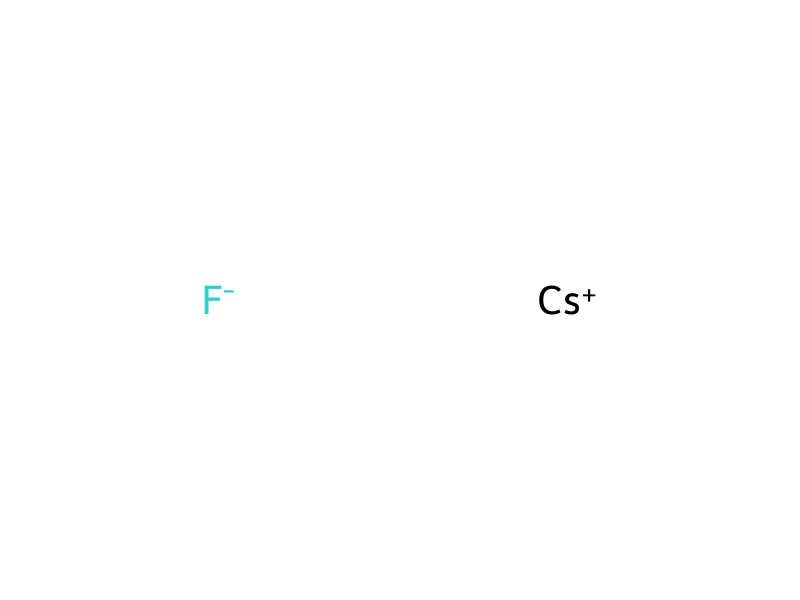
Cesium fluoride → (1,1-dimethylethyl) 3-[[5-methyl-6-[4-(1,2,3,4-tetrahydro-1,8-naphthyridin-7-yl)-1-piperidinyl]-4-pyrimidinyl]amino]-N-[(phenylmethoxy)carbonyl]alaninate
Reaktionsgleichung

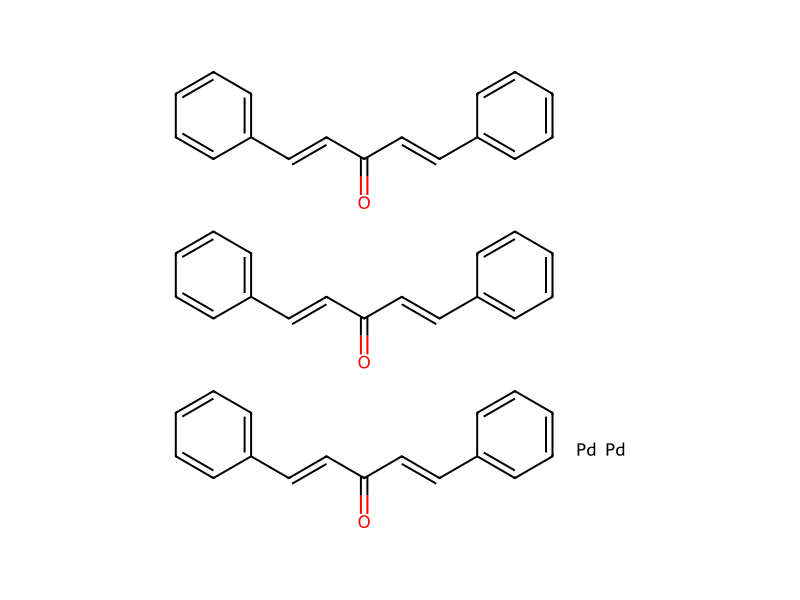
Br[C:2]1[C:7]([CH3:8])=[C:6]([N:9]2[CH2:14][CH2:13][CH:12]([C:15]3[N:24]=[C:23]4[C:18]([CH2:19][CH2:20][CH2:21][NH:22]4)=[CH:17][CH:16]=3)[CH2:11][CH2:10]2)[N:5]=[CH:4][N:3]=1.[CH3:25][C:26]([O:29][C:30](=[O:45])[C@H:31]([CH2:43][NH2:44])[NH:32][C:33]([O:35][CH2:36][C:37]1[CH:42]=[CH:41][CH:40]=[CH:39][CH:38]=1)=[O:34])([CH3:28])[CH3:27].[F-].[Cs+]>O1CCOCC1.[Pd].[Pd].C(=CC(C=CC1C=CC=CC=1)=O)C1C=CC=CC=1.C(=CC(C=CC1C=CC=CC=1)=O)C1C=CC=CC=1.C(=CC(C=CC1C=CC=CC=1)=O)C1C=CC=CC=1>[CH3:8][C:7]1[C:2]([NH:44][CH2:43][C@@H:31]([C:30]([O:29][C:26]([CH3:28])([CH3:27])[CH3:25])=[O:45])[NH:32][C:33]([O:35][CH2:36][C:37]2[CH:42]=[CH:41][CH:40]=[CH:39][CH:38]=2)=[O:34])=[N:3][CH:4]=[N:5][C:6]=1[N:9]1[CH2:14][CH2:13][CH:12]([C:15]2[N:24]=[C:23]3[C:18]([CH2:19][CH2:20][CH2:21][NH:22]3)=[CH:17][CH:16]=2)[CH2:11][CH2:10]1Komponenten
Edukt 3


Produkt 1

Reagenzien, Katalysatoren, Lösungsmittel 2

Versuchsvorschrift
A mixture of 620 mg (1.6 mmoles) of 4-bromo-5-methyl-6-[4-(1,2,3,4-tetrahydro-1,8-naphthyridin-7-yl)-1-piperidinyl]-pyrimidine, 565 mg (1.92 mmoles) of (1,1-dimethylethyl)3-amino-N-[(phenylmethoxy)carbonyl]alaninate (prepared according to J. Med. Chem.(2001), 44(8), 1158-1176), 340 mg (2.25 mmoles) of caesium fluoride, 73 mg (0.08 mmoles) of tris(dibenzylideneacetone) dipalladium(0), 100 mg (0.16 mmoles) of S(−)2,2′-bis(diphenyl-phosphino)-1,1′-binaphthyl in 50 ml of dioxane is heated under reflux for 5 hours. After cooling down another 280 mg (0.96 mmoles) of (1,1-dimethylethyl)3-amino-N-[(phenylmethoxy)carbonyl]alaninate, 340 mg (2.25 mmoles) of caesium fluoride, 73 mg (0.08 mmoles) of tris(dibenzylideneacetone) dipalladium(0),and 100 mg (0.16 mmoles) of S(−)2,2′-bis(diphenyl-phosphino)-1,1′-binaphthyl are then added and the reaction mixture is heated under reflux for 5 hours. The reaction mixture is evaporated to dryness under reduced pressure (2 kPa) and the residue is taken up in ethyl acetate, water and a saturated solution of sodium bicarbonate. The organic phase is separated, dried over magnesium sulphate and the solvent is evaporated off under reduced pressure (2 kPa). The residue is chromatographed a first time on silicagel eluting with a gradient of ethyl acetate-methylene chloride-triethylamine-methanol from 50-50-0-0 to 50-50-2-2. The product obtained is chromatographed a second time on alumina eluting with a mixture of heptane-methylene chloride 50-50 then with ethyl acetate-diisopropyl ether 50-50. 360 mg (Yield=37%) of expected product is obtained in the form of an amorphous white solid.
Aufarbeitung
- temperatureis heated
- temperatureunder reflux for 5 hours
- additionare then added
- temperaturethe reaction mixture is heated
- temperatureunder reflux for 5 hours
- customThe reaction mixture is evaporated to dryness under reduced pressure (2 kPa)
- customThe organic phase is separated
- dry with materialdried over magnesium sulphate
- customthe solvent is evaporated off under reduced pressure (2 kPa)
- customThe residue is chromatographed a first time
- washon silicagel eluting with a gradient of ethyl acetate-methylene chloride-triethylamine-methanol from 50-50-0-0 to 50-50-2-2
- customThe product obtained
- customis chromatographed a second time on alumina eluting
- additionwith a mixture of heptane-methylene chloride 50-50
Quellen und Nachweise
- ORD-Eintrag
- ord-d2989b773a784f50a34b642470575111
- Quelldatensatz
- uspto-grants-2009_09
- Patentnummer
- US07582640B2
Notizen zur Reaktion
Wird geladen…