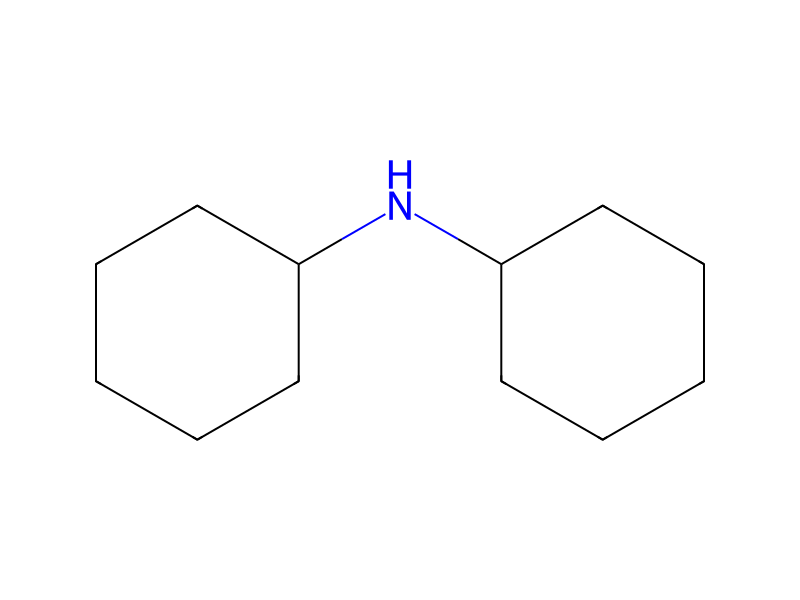
[S:1]([C:4]1[S:8][C:7]([NH2:9])=[N:6][CH:5]=1)[C:2]#[N:3].[CH:10]1([NH:16][CH:17]2[CH2:22][CH2:21][CH2:20][CH2:19][CH2:18]2)[CH2:15][CH2:14][CH2:13][CH2:12][CH2:11]1.C1C[O:26][CH2:25]C1>CN(C1C=CN=CC=1)C>[CH:17]1([N:16]([CH:10]2[CH2:11][CH2:12][CH2:13][CH2:14][CH2:15]2)[C:25]([NH:9][C:7]2[S:8][C:4]([S:1][C:2]#[N:3])=[CH:5][N:6]=2)=[O:26])[CH2:18][CH2:19][CH2:20][CH2:21][CH2:22]1An equimolar mixture of 1,1-carbonyldiimidazole, 5-thiocyanato-thiazol-2-ylamine (commercial available or prepared as described in J. Am. Chem. Soc 71, 4007, 1949 or J. Med. Chem., 20, 572, 1977) and DMAP (5 mol %) in THF was heated for 2 h at 60-70° C. and then cooled to room temperature. Dicyclohexyl amine (1 equivalent) was added and the reaction is stirred overnight at room temperature. The reaction mixture was quenched with water. The organic phase was isolated and the aqueous phase was extracted with CH2Cl2, and the combined organic phases were dried and concentrated in vacuo. The crude product was purified by flash chromatography (heptane:EtOAc 100:0 50:50) affording 1,1-dicyclohexyl-3-(5-thiocyanato-thiazol-2-yl)-urea as an oil.