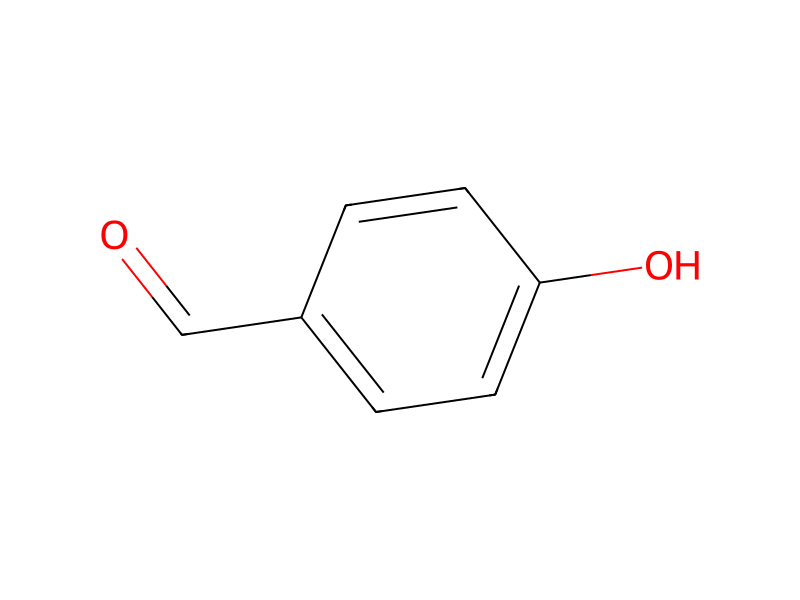
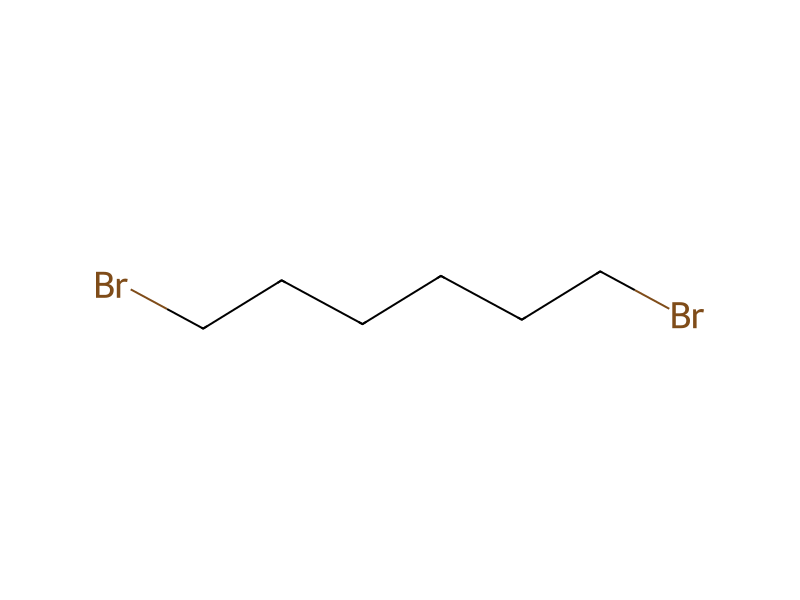
A mixture of 73.3 g (0.6 mol) p-hydroxybenzaldehyde, 73.2 g (0.3 mol) 1,6-dibromohexane, 39.6 g (0.6 mol) potassium hydroxide and 240 ml dimethylformamide was heated under reflux, accompanied by stirring for 1 h, in a 500 ml three-necked flask with reflux condenser, internal thermometer and magnetic stirrer. After cooling the reaction mixture to room temperature, the obtained crystal slurry was placed in a 2-1 beaker containing 1 l of deionized water. The formed suspension was stirred intensively by means of a mechanical stirrer until the initially increased temperature had returned to room temperature. The crystals present were then filtered off, washed thoroughly with water and the product recrystallized from a mixture of 1200 ml ethanol and 300 ml water. After drying to constant weight in the vacuum drying cupboard at 70-80° C. 63.5 g (65% of the theoretical value) 1,6-bis(4-formylphenoxy)hexane (m.p.: 109.8-111.2° C.) was obtained in the form of white crystals.