Reaktionsgleichung

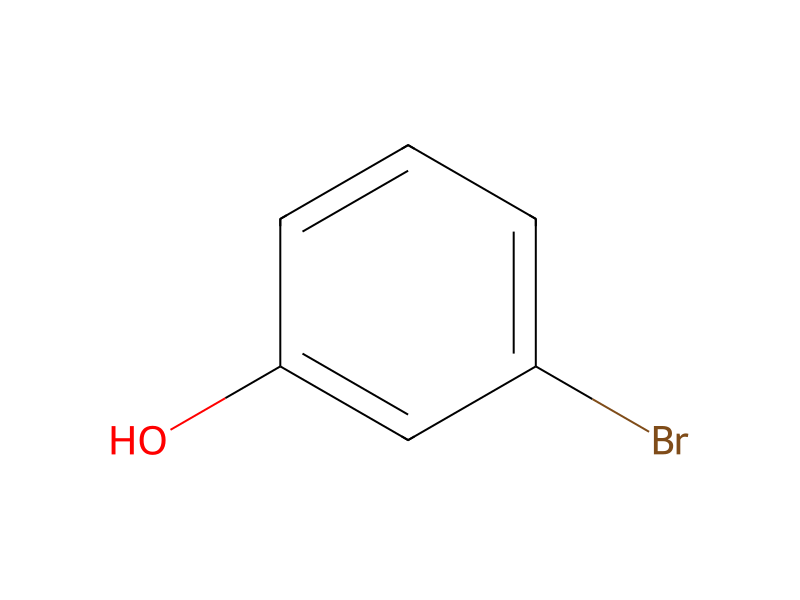
O=O.[Br:3][C:4]1[CH:13]=[CH:12][CH:11]=[C:10]2[C:5]=1[CH2:6][C:7](=O)[CH2:8][O:9]2.BrC1C=C(O)C=CC=1.C(Br)C=C.C(=O)([O-])[O-].[K+].[K+]>>[Br:3][C:4]1[CH:5]=[C:10]([O:9][CH2:8][CH:7]=[CH2:6])[CH:11]=[CH:12][CH:13]=1Komponenten





Versuchsvorschrift
The compounds of this invention in which X is oxygen are available by reductive amination and bromo replacement as in the foregoing, but using 5-bromo-3-chromanone. The latter can be produced by a sequence of reactions beginning with m-bromophenol. Briefly, m-bromophenol is treated with allyl bromide in the presence of potassium carbonate to produce allyl 3-bromophenyl ether. The ether is converted to 2-allyl-3-bromophenol upon heating it in the presence of N,N-dimethylaniline. The phenol, upon reaction with ethyl chloroacetate, is converted to the ethyl ester of 2-allyl-3-(carboxymethoxy)bromobenzene. Upon oxidation using ozone followed by reductive work up, the allyl group is converted to a formylmethyl substituent which is then further oxidized using Jones' Reagent to the carboxymethyl substituent, the resulting product being the ethyl ester of (2-carboxymethyl-3-bromo)phenoxyacetic acid. The partial ester is converted to the diethyl ester using ethanol and gaseous hydrogen chloride. In the presence of potassium t-butoxide, the diester is cyclized to a mixture of 4-ethoxycarbonyl-5-bromo-3-chromanone and 2-ethoxycarbonyl-5-bromo-3-chromanone. Upon heating in the presence of acid, the latter is converted to 5-bromo-3-chromanone.
Aufarbeitung
- customThe latter can be produced by a sequence of reactions
Quellen und Nachweise
- ORD-Eintrag
- ord-72828882c09b477f8f0a9fb9e03807af
- Quelldatensatz
- uspto-grants-1996_09
- Patentnummer
- US05552444
Verknüpfte Notizen
Wird geladen…