StartseiteMCPWorkbenchSkills
StartseiteWorkbenchBenachrichtigungenMein Bereich
llms.txt · MCP-AnleitungDatenschutz · Nutzungsbedingungen · Supportv1.8.3
  1. Startseite
  2. /Reaktion

Dichloromethane → Benzyl 4-(2-Hydroxyethyl)piperazine-1-carboxylate

HRID 742538
Drucken

Reaktionsgleichung

Reaktionsgleichung von HRID 742538
[OH:1][CH2:2][CH2:3][N:4]1[CH2:9][CH2:8][NH:7][CH2:6][CH2:5]1.[OH-].[Na+].Cl[C:13]([O:15][CH2:16][C:17]1[CH:22]=[CH:21][CH:20]=[CH:19][CH:18]=1)=[O:14].ClCCl>O>[OH:1][CH2:2][CH2:3][N:4]1[CH2:9][CH2:8][N:7]([C:13]([O:15][CH2:16][C:17]2[CH:22]=[CH:21][CH:20]=[CH:19][CH:18]=2)=[O:14])[CH2:6][CH2:5]1
KomponentenVersuchsvorschriftAufarbeitungQuellen und NachweiseNotizen zur Reaktion

Komponenten

6

Edukt 4

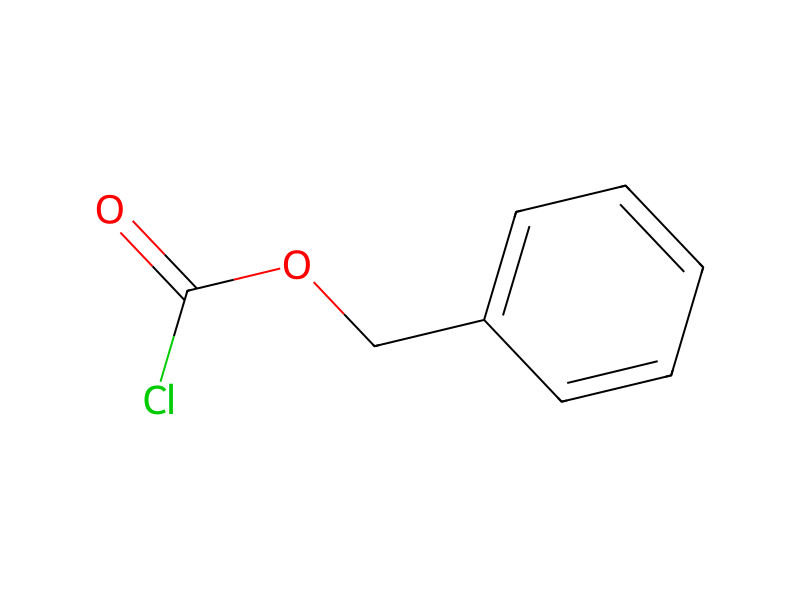
HCID 6344DichloromethaneHCID 76771-(2-Hydroxyethyl)piperazineHCID 10387Benzyl chloroformateHCID 14798Sodium Hydroxide2×

Produkt 1

HCID 22393803Benzyl 4-(2-Hydroxyethyl)piperazine-1-carboxylate

Reagenzien, Katalysatoren, Lösungsmittel 1

HCID 962
Water
Lösungsmittel

Versuchsvorschrift

A mechanically-stirred solution of 1-(2-hydroxyethyl)piperazine (10.0 g, 9.4 mL, 0.07 mol) in 30 mL of deionized water is cooled to 0 C. Then portions of 4N sodium hydroxide (total 28 mL) and portions of benzyl chloroformate (18.8 g, 15.7 mL, 0.11 mol) are added over 15 minute periods, keeping the temperature at 0 C. to 5 C. At the end of the additions, 4N sodium hydroxide solution is added to bring the pH of the reaction mixture to 10. After 1 hour dichloromethane (200 mL) is added and the layers are separated. The organic solution is dried over anhydrous sodium sulfate and evaporated under reduced pressure to give 1-(2-hydroxyethyl)-4-carbobenzyloxypiperazine.

Aufarbeitung

  1. customthe layers are separated
  2. dry with materialThe organic solution is dried over anhydrous sodium sulfate
  3. customevaporated under reduced pressure

Quellen und Nachweise

ORD-Eintrag
ord-dfa4e0241a1b49c0b60eac833a465091
Quelldatensatz
uspto-grants-1996_09
DOI
10.6084/m9.figshare.5104873.v1
Patentnummer
US05554749

Notizen zur Reaktion

Auf dieser SeiteKomponentenVersuchsvorschriftAufarbeitungQuellen und NachweiseNotizen zur Reaktion